New to Dobermans or researching the breed? These core guides cover the most important topics before choosing, raising, training, or living with a Doberman.
-
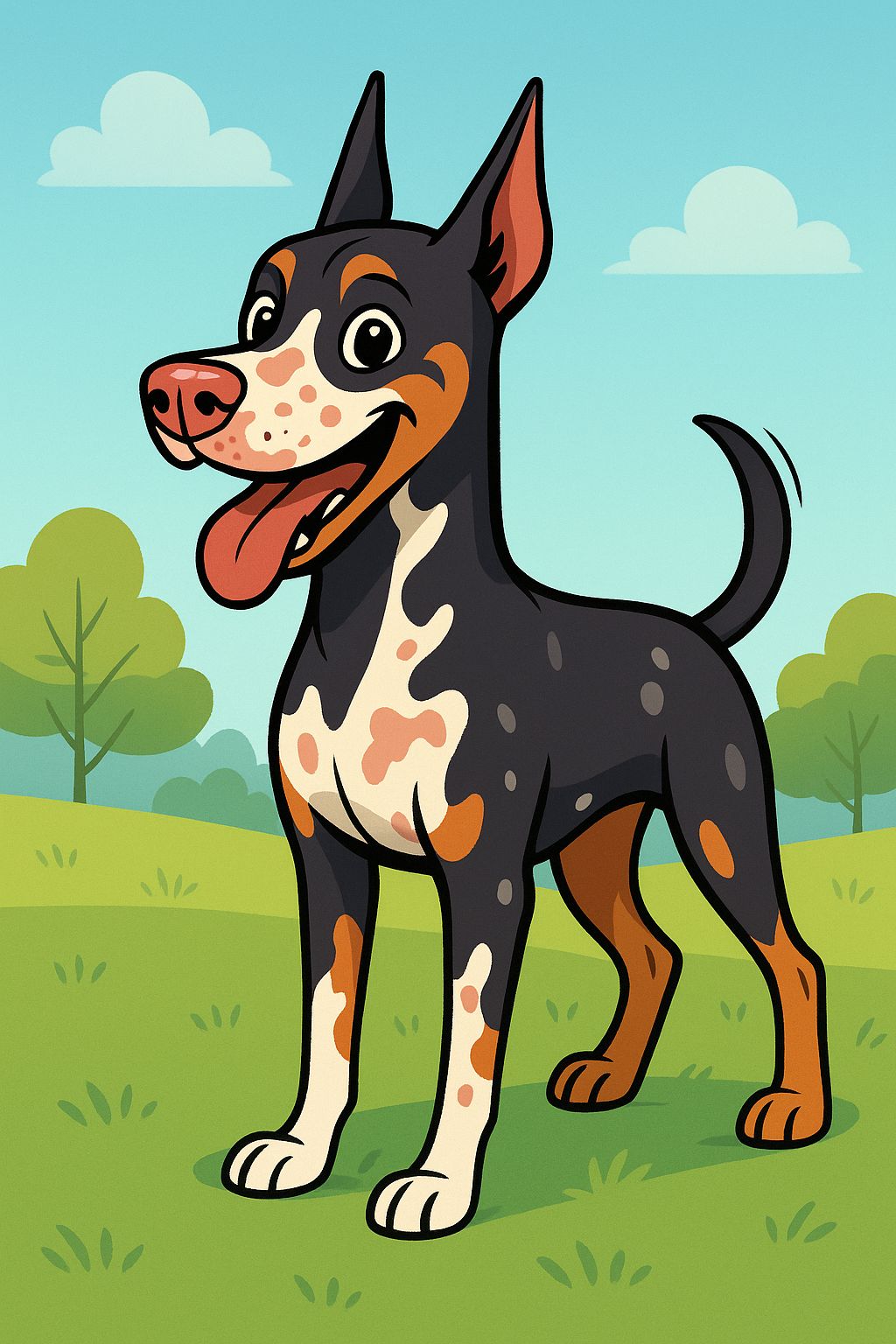
Vitiligo in Dogs: What It Is, What It Isn’t, and How to Care for It
Learn More: Vitiligo in Dogs: What It Is, What It Isn’t, and How to Care for It(Quick note: people often misspell it as “vertiligo.” The correct term is vitiligo.)
-
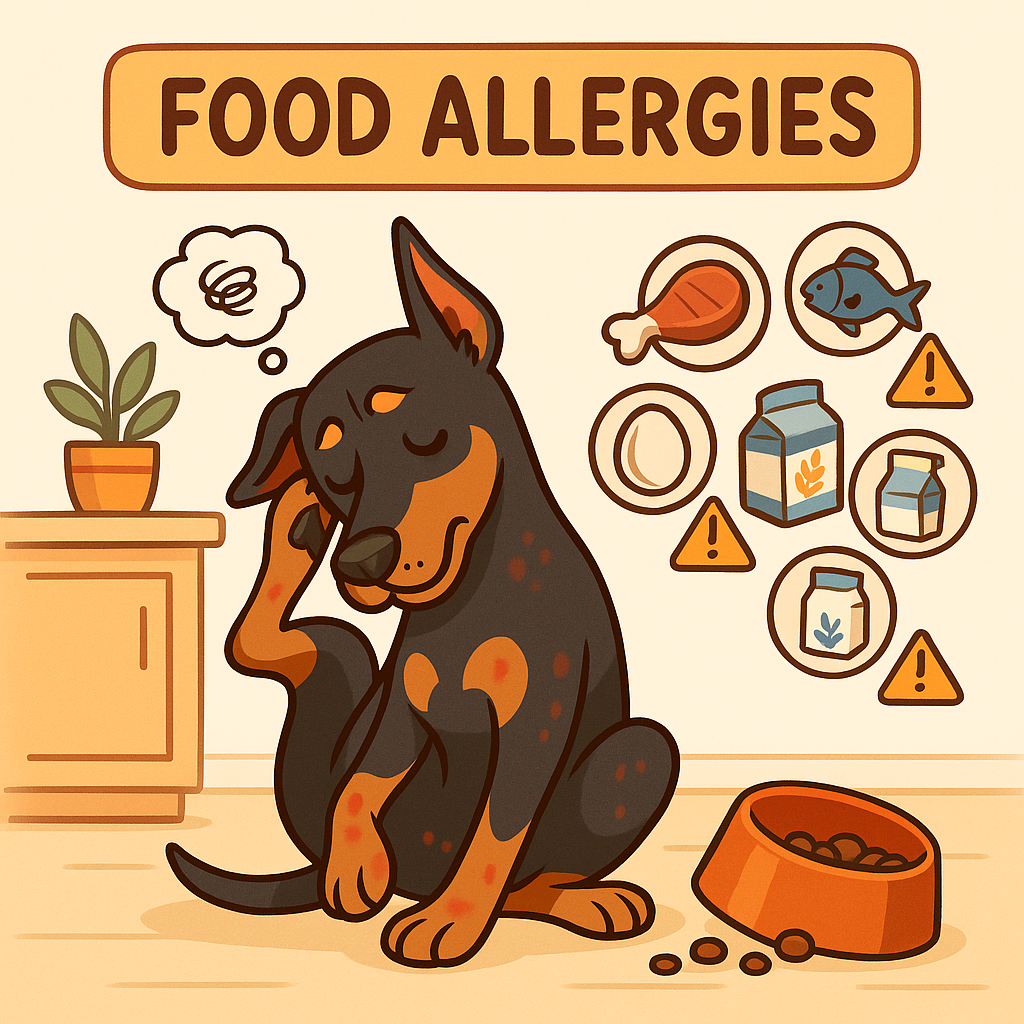
Food Allergies in Dogs vs. Food Intolerance: How to Tell the Difference, What to Do, and How to Help Your Dog Thrive
Learn More: Food Allergies in Dogs vs. Food Intolerance: How to Tell the Difference, What to Do, and How to Help Your Dog ThriveSeasonal allergies get lots of attention (we’ve already covered them in another post), but many itchy ears, chronic tummy troubles, and “mystery” skin flares come from food reactions and not all of those are true food allergies. In dogs, two big buckets explain most diet-related problems:
-
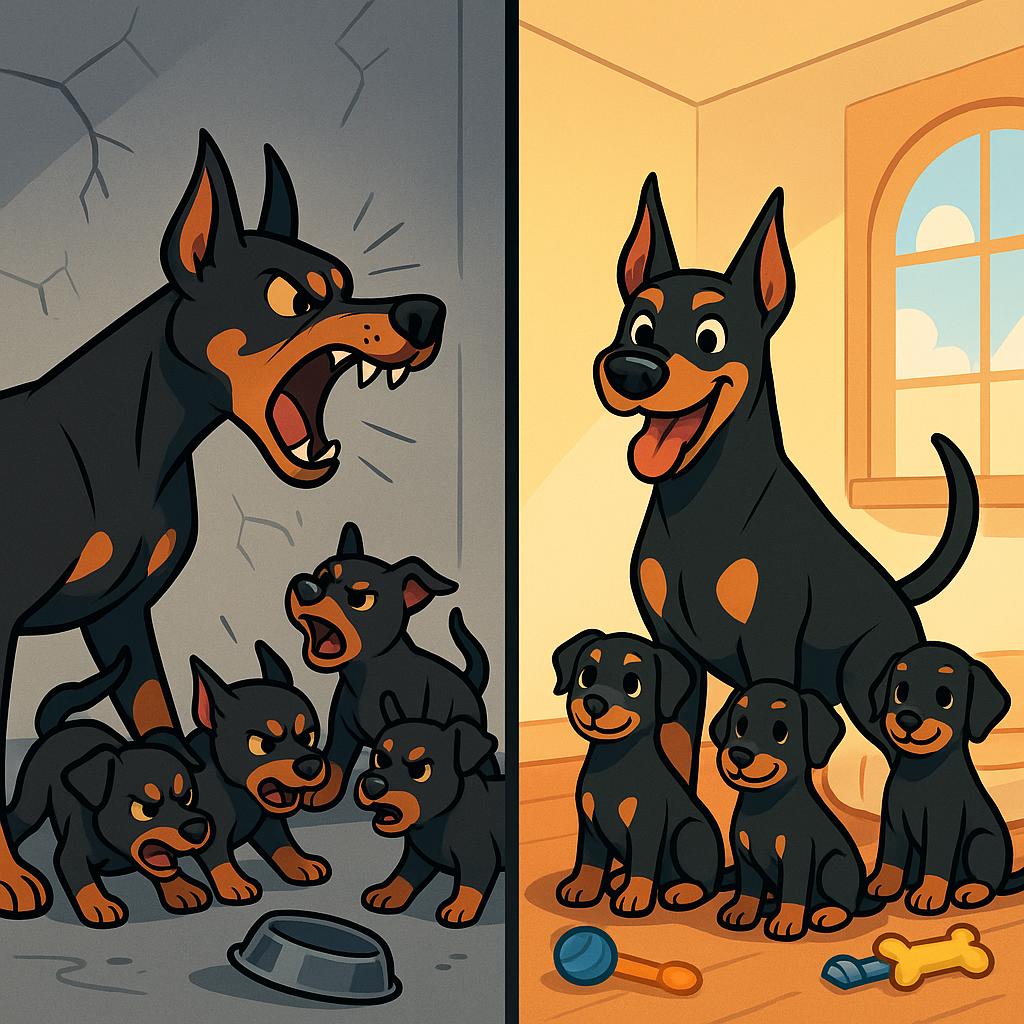
How Genetics Shape Temperament in Dogs (with Doberman-Savvy Insights)
Learn More: How Genetics Shape Temperament in Dogs (with Doberman-Savvy Insights)Ask ten dog people to define “temperament” and you’ll get twenty answers. For our purposes, temperament is the predictable, inherited baseline of how a dog perceives, processes, and responds to the world. It’s the dog’s default operating system: its emotional reactivity, recovery speed after stress, sociability, confidence, drive, resilience, and impulse control – before training and life experience layer on new behaviors.
-
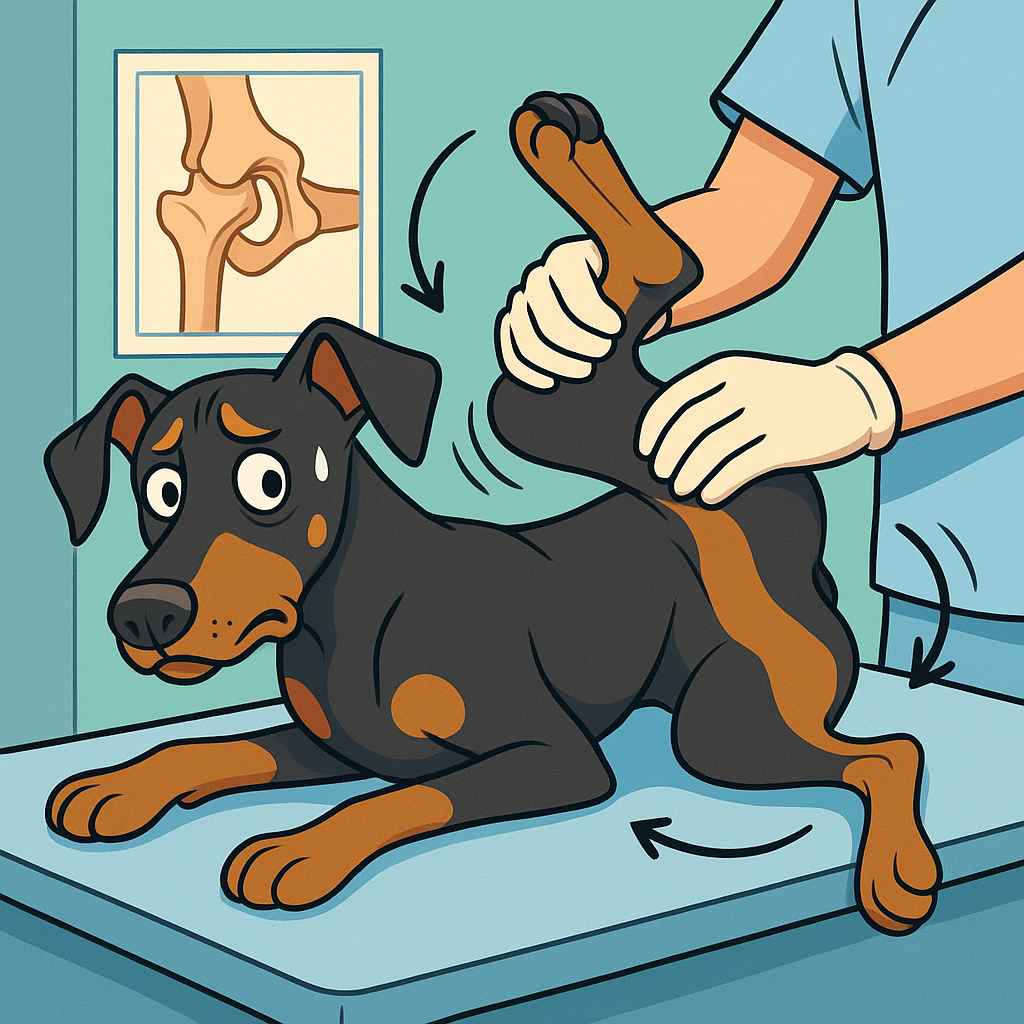
The Ortolani Test in Dogs: Why We Don’t Rely on It—and When It Can Do Harm
Learn More: The Ortolani Test in Dogs: Why We Don’t Rely on It—and When It Can Do HarmThe Ortolani test in dogs is a palpation technique to demonstrate hip laxity in a young dog. In practice, clinicians almost always perform it under heavy sedation or general anesthesia because muscle tone and pain can mask or mimic the sign. The examiner applies axial force to the femur (Barlow) to provoke subluxation, then slowly abducts the limb; an audible/palpable “clunk” as the femoral head reduces is considered a positive Ortolani sign.
-
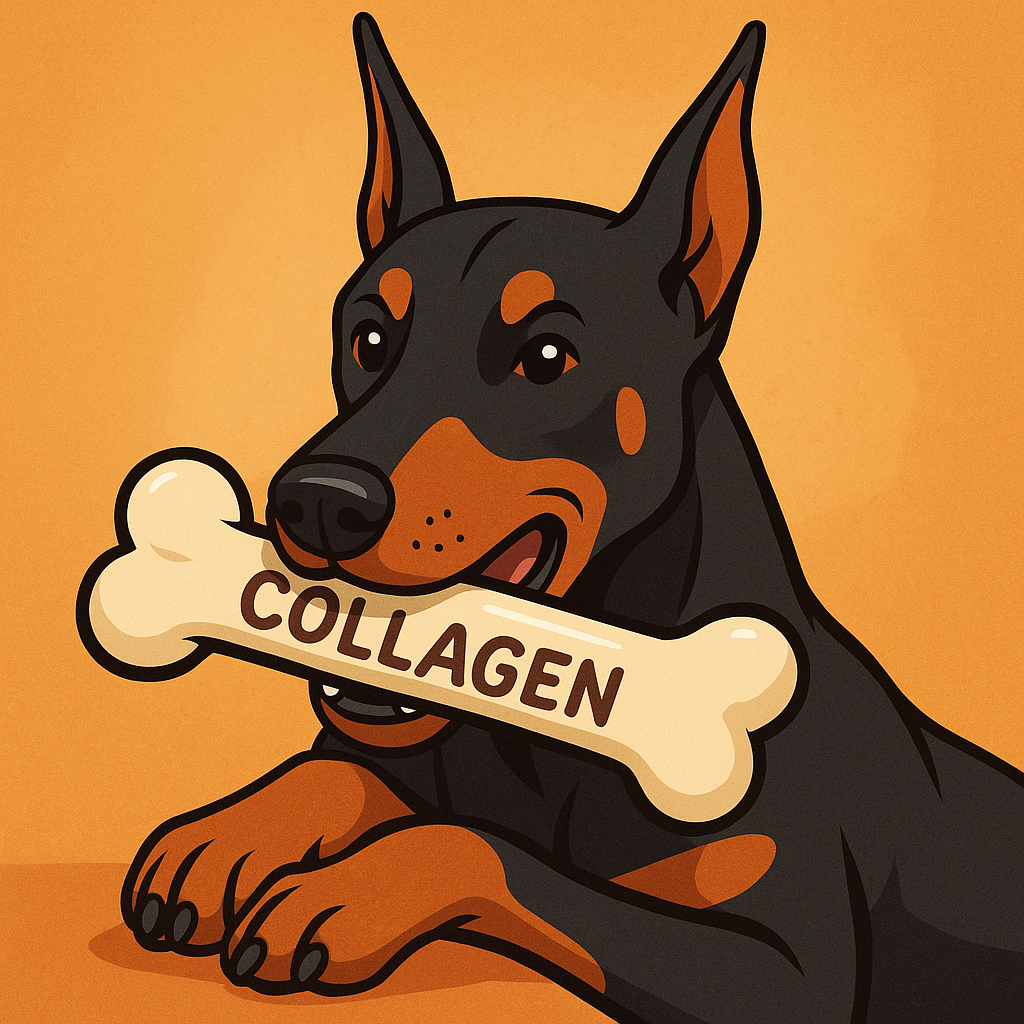
Collagen, Ear Structure, and Arthritis in Dogs: What Every Doberman Owner Should Know
Learn More: Collagen, Ear Structure, and Arthritis in Dogs: What Every Doberman Owner Should KnowWhen we think about collagen, most people immediately associate it with human skincare and anti-aging products. However, collagen for dogs plays an even more crucial role: it’s the foundation of healthy joints, cartilage, ligaments, skin, and even ear structure. For Doberman owners, understanding collagen is especially important because it impacts not only the look of your dog’s ears but also their long-term joint health.
-
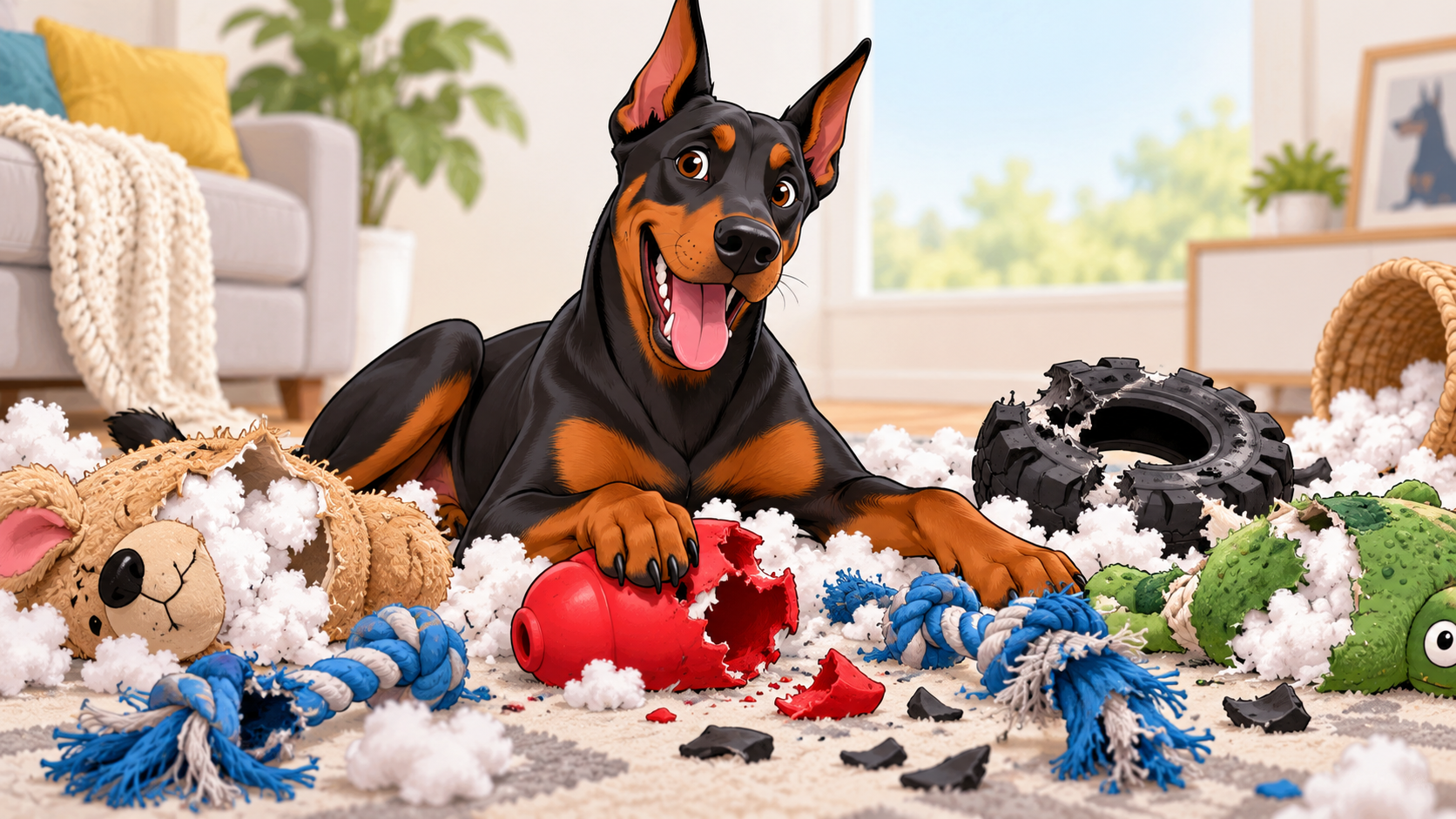
Indestructible Toys for Dobermans — Or Not
Learn More: Indestructible Toys for Dobermans — Or NotWhy “guaranteed indestructible” often doesn’t apply to your Doberman’s powerful jaws
-
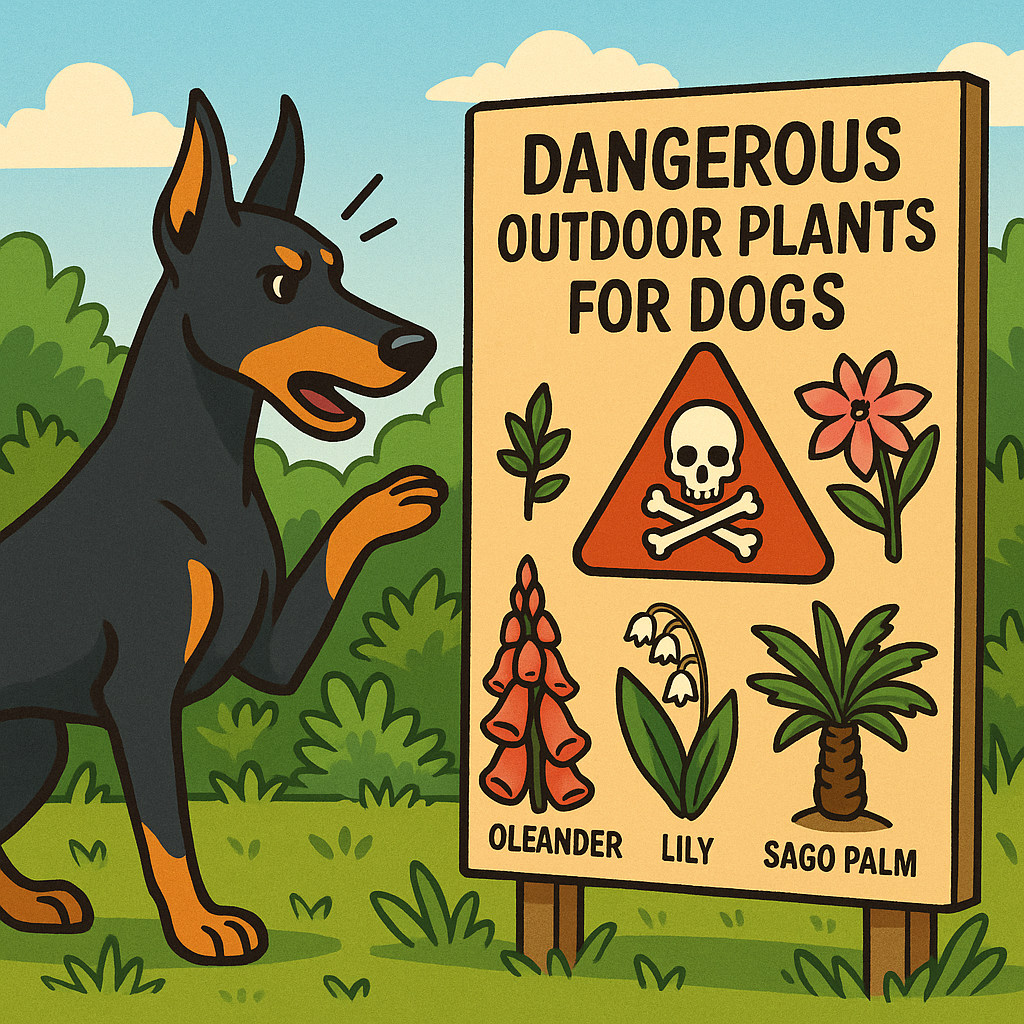
Dangerous Outdoor Plants for Dogs: What Every Owner Should Know
Learn More: Dangerous Outdoor Plants for Dogs: What Every Owner Should KnowAt Wonder Doberman, we believe in doing everything possible to keep our dogs safe, healthy, and thriving. While many dog owners are aware of indoor dangers, we often underestimate the hidden risks outside our homes.
From common landscaping plants to wildflowers, shrubs, decorative trees, and even seasonal holiday decorations, your yard could contain plants that are toxic or deadly to dogs.
-
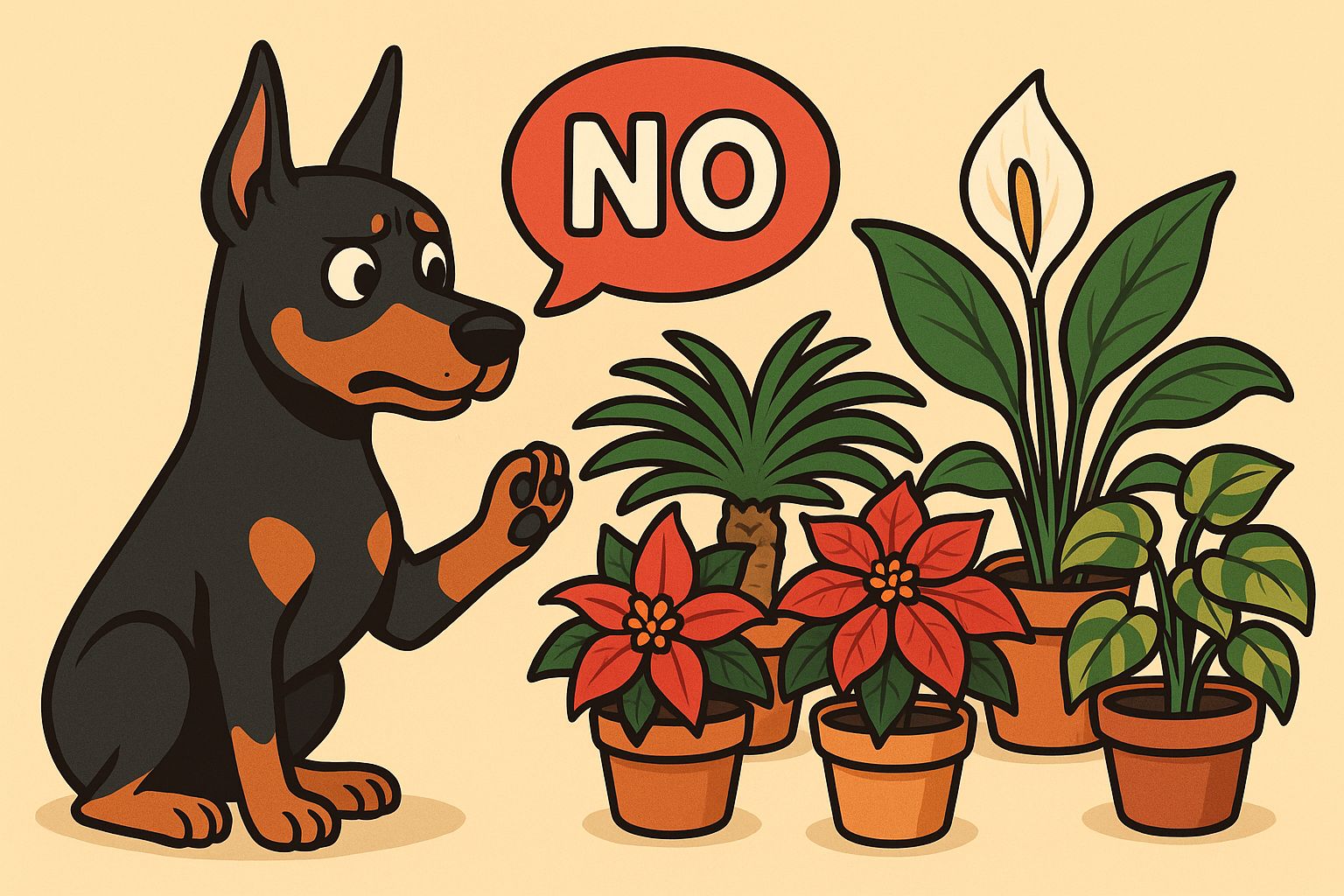
Houseplants Toxic to Dogs: What Every Dog Owner Should Know
Learn More: Houseplants Toxic to Dogs: What Every Dog Owner Should KnowBringing plants into your home brightens your space, improves air quality, and adds a touch of nature to everyday life. But if you share your home with a dog, those lush green decorations might not be as harmless as they look. Many common houseplants toxic to dogs, the effects ranging from mildly irritating to downright deadly.
-
Tricks to Welcome a Doberman Puppy Into Your Home: The Complete Guide
Learn More: Tricks to Welcome a Doberman Puppy Into Your Home: The Complete GuideBringing home a Doberman puppy is one of the most exciting and life-changing experiences you’ll ever have. These puppies are not only striking in appearance but also intelligent, loyal, and eager to bond with their families. But as with any working breed, especially one as sensitive and powerful as the Doberman, those first weeks at home matter more than most people realize.
-
Doberman Pinscher Alpha-Mannosidosis (AMAN): A Deep Dive Into This Rare Genetic Disorder
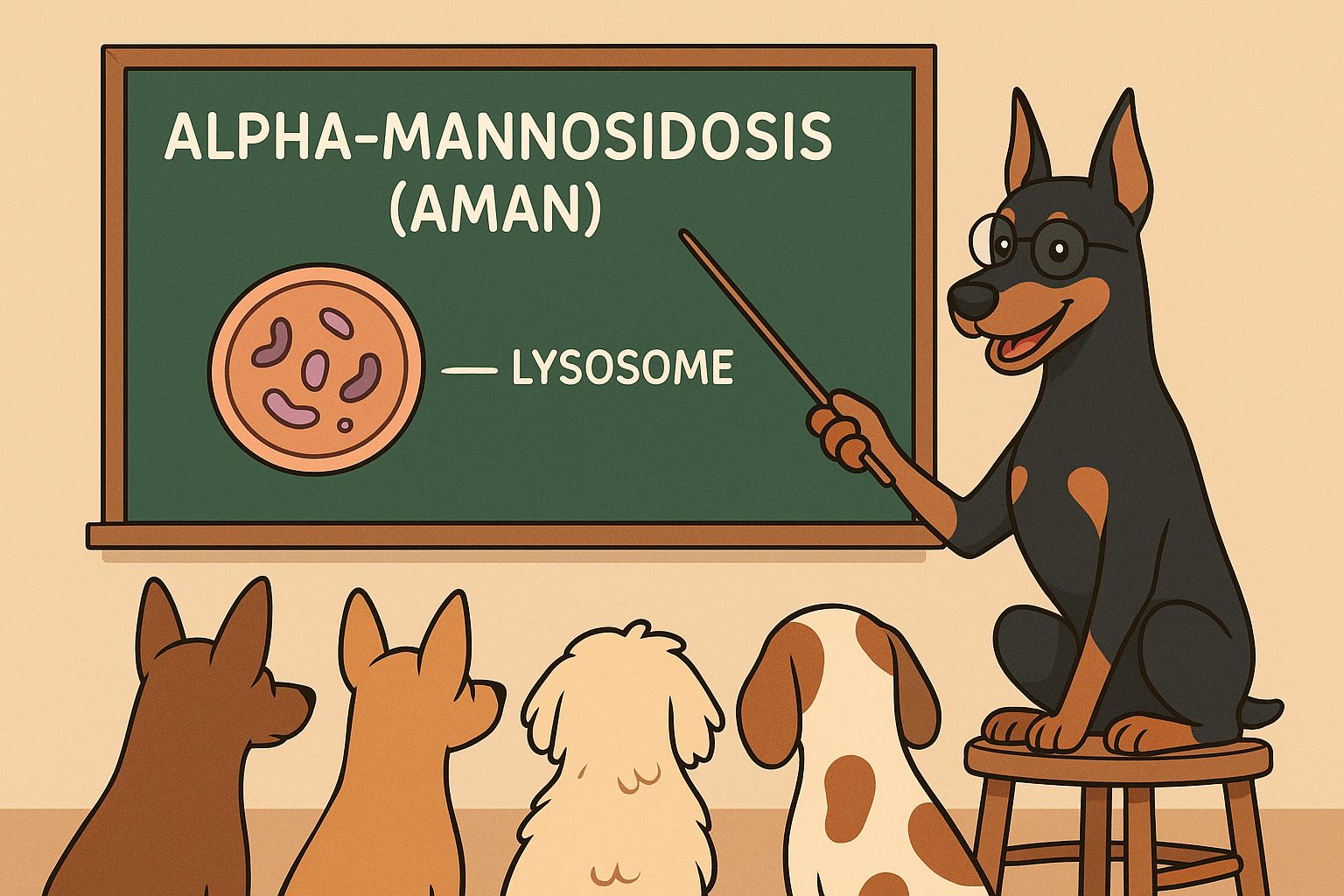
Learn More: Doberman Pinscher Alpha-Mannosidosis (AMAN): A Deep Dive Into This Rare Genetic DisorderDoberman Pinschers are renowned worldwide for their elegance, intelligence, and loyalty. They are guardians, athletes, and companions rolled into one. But like many purebred dogs, Dobermans carry genetic predispositions to certain health conditions. While most owners are familiar with common issues such as dilated cardiomyopathy (DCM) or von Willebrand’s disease (vWD), few are aware of a devastating condition that, although rare, is critically important to understand: Alpha-Mannosidosis (AMAN).