
Food Allergies in Dogs vs. Food Intolerance: How to Tell the Difference, What to Do, and How to Help Your Dog Thrive
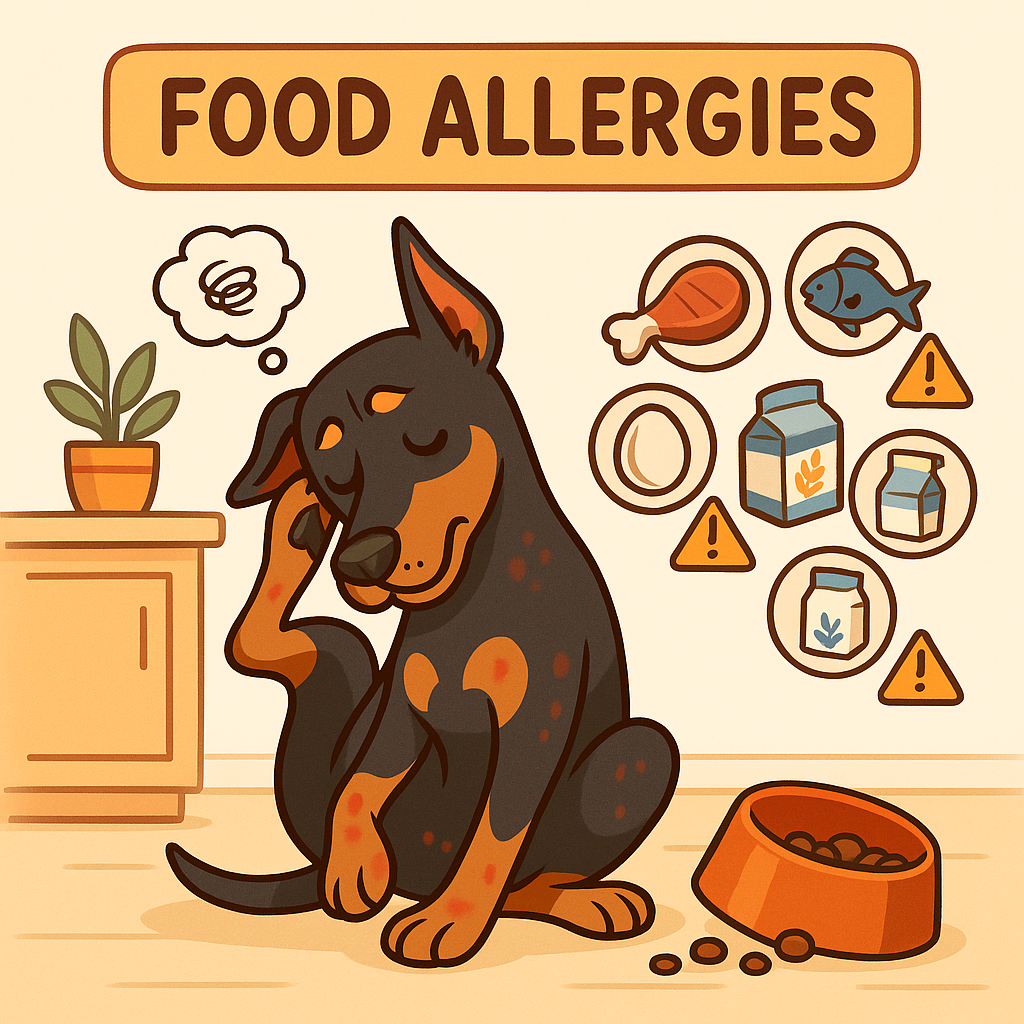
Seasonal allergies get lots of attention (we’ve already covered them in another post), but many itchy ears, chronic tummy troubles, and “mystery” skin flares come from food reactions and not all of those are true food allergies. In dogs, two big buckets explain most diet-related problems:
- Food allergy (immune-mediated)
- Food intolerance (non-immune)
Understanding which one you’re dealing with saves time, money, and frustration and most importantly, gets your dog comfortable again. Below is a deep dive written for dedicated owners and fellow dog people who want more than superficial tips. We’ll explain the science in plain language, map out a step-by-step plan you can actually follow, and highlight common traps that derail progress.
Table of Contents
Why It Matters
The better your diagnosis, the better your plan. If you assume “allergy” when your dog actually has an intolerance, you can end up bouncing from food to food and never fully solving the problem. Conversely, trying to “tough out” food allergies in dogs or treating them like a simple tummy upset can lead to ongoing skin infections, ear trouble, and a miserable dog.
What Food Allergies in Dogs Look Like
Common signs:
- Itch (pruritus) that is non-seasonal (year-round or whenever the trigger is present)
- Recurrent ear infections (head shaking, odor, waxy debris, redness)
- Recurrent skin infections (pustules, hot spots, hair loss, thickened skin)
- Face, feet, armpit, groin itching; scooting or licking around the rear
- GI signs in some dogs: soft stool, mucus, intermittent vomiting, increased frequency
Important nuance: Dogs can (and often do) have both environmental allergies and food allergy. If your dog itches more in spring but is never quite normal in winter, a food component may be sitting underneath those seasonal flares.
Age of onset: Food allergies in dogs can appear in puppies or adults. Many dogs develop them after months to years of eating the same protein; sensitization takes time.
What Food Intolerance Looks Like in Dogs
Common signs:
- Gastrointestinal upset (gas, bloating, loose stool, urgency, burping)
- Diarrhea after “rich” meals or fatty leftovers (fat intolerance or pancreatitis risk)
- Loose stool with certain treats (high in glycerin/sugars, artificial sweeteners, or certain fibers)
- Better on simple, consistent meals; worse with variety or “table food”
- Dose-response: small amounts tolerated, larger portions trigger symptoms
Less common but worth knowing:
- Lactose intolerance: many adult dogs produce limited lactase; dairy can cause gas/diarrhea.
- Histamine intolerance: poorly handled fish or very aged meats can contain higher histamine.
- Carbohydrate malabsorption/FODMAP-like issues: some dogs struggle with certain fermentable fibers (e.g., large amounts of legumes).
- Additive sensitivity: artificial colors/flavors/preservatives can irritate some dogs.
Allergy vs. Intolerance: How They Differ
Mechanism
- Allergy: misdirected immune response to a protein antigen (often IgE or cell-mediated).
- Intolerance: digestive/physiologic limitation—no immune attack involved.
Threshold
- Allergy: trace amounts can trigger reactions.
- Intolerance: usually dose-dependent; small portions may be ok.
Primary Body Systems Affected
- Allergy: skin and ears (plus possible GI).
- Intolerance: GI tract primarily.
Diagnosis
- Allergy: strict elimination diet and re-challenge (the gold standard).
- Intolerance: dietary trials adjusting fat, fiber, ingredients; identifying dose limits.
Treatment
- Allergy: lifelong avoidance of the culprit protein(s) + diligent label reading.
- Intolerance: diet structure, ingredient simplification, portion control; sometimes enzyme or probiotic support.
The Short List of Usual Culprits
Every dog is an individual, but commonly reported allergens in dogs include:
Beef, chicken, dairy, egg, wheat, soy, lamb, fish.
“Grain-free” is not automatically “hypoallergenic,” and “novel protein” (like kangaroo or venison) is only novel if your dog has truly never eaten it before (treats and flavored meds count).
On the intolerance side, watch for:
High fat meals, dairy, large amounts of legumes or certain fibers, glycerin-heavy treats, and strongly processed or very aged meats.
How Vets Actually Diagnose Food Allergies in Dogs
What works (gold standard)
- Strict elimination diet for 8–12 weeks
- Either a hydrolyzed prescription diet (proteins chopped into fragments too small to trigger immunity)
- Or a true novel-protein diet (single protein & carb your dog has never eaten)
- No other foods: no flavored meds, chews, toothpaste, table scraps, or sneaky treats.
- Re-challenge (provocation) test
- After the trial, feed the original diet for several days.
- If signs recur quickly, you’ve confirmed a food allergy component.
- Single-ingredient challenges
- Add back individual proteins/carbs one by one to identify the specific triggers.
- Build a personal “safe list” and “avoid list.”
What doesn’t reliably work
- Saliva, hair, or “mail-in” food sensitivity tests: sound convenient, but they do not correlate reliably with true clinical food allergy in dogs.
- Serum “food allergy” panels: blood IgE numbers for foods are not dependable for diagnosis.
- Guess-and-switch without a structured trial: feels productive, but often creates confusion.
Step-By-Step: Running a Successful Elimination Diet
This is the part that makes or breaks results. If you do only one thing from this post, make it this section and follow it to the letter.
1) Clean Slate Inventory
- List everything your dog has eaten in the last year: foods, treats, flavored meds/supplements, chews, toothpaste, table scraps.
- Circle the proteins that appear repeatedly (e.g., chicken, beef).
- Identify true “novel” options left (e.g., rabbit, venison, kangaroo, duck—only if truly uneaten before).
2) Pick Your Trial Diet
- Hydrolyzed veterinary diet: best for itchy, infection-prone dogs because it minimizes immune activation.
- Novel-protein veterinary diet: good if you have a trustworthy novel option.
- Home-cooked (temporarily and only for the trial) can work if the recipe is balanced by a board-certified veterinary nutritionist. Unbalanced DIY long-term diets can cause deficiencies.
3) Commit to the Rules (8–12 Weeks)
- Nothing else goes in the mouth, no flavored heartworm pills (ask for non-flavored alternatives), no pill pockets unless made from the trial food, no dental chews, no lick mats with peanut butter, no “just a crumb.”
- Replace treats with kibble from the trial diet, baked pieces of the canned version (if the same formula), or pre-approved single-ingredient treats that match the trial protein and contain no other meats or dairy.
- Medications/supplements must be checked for hidden proteins (gelatin capsules, flavor coatings, fish oils, organ powders).
4) Track Symptoms Weekly
Create a simple scorecard (0–10 scale) for itch, ear debris, redness, stool quality, frequency, and any vomiting. Progress is often gradual; numbers help you see the trend.
5) Re-challenge
At 8–12 weeks, if your dog has significantly improved, feed the old diet for 3–7 days. A quick flare confirms a food component. Return immediately to the trial diet.
6) Identify Specific Triggers
Test single ingredients one at a time for 3–5 days each (e.g., add a small amount of cooked chicken to the trial diet). If itching or GI signs return, you’ve found a culprit. Keep a written “Avoid List.”
Living with a Confirmed Food Allergies in Dogs
Read labels carefully. Look for hidden ingredients like “animal fat,” “meat by-product,” “natural flavor” (which can be meat-derived), egg, whey, casein, gelatin, or fish oil.
Minimize cross-contact: Use separate bowls/utensils if other pets eat different foods. Wash hands after handling other proteins.
Coordinate with your vet for non-flavored meds, safe preventives, and if necessary, compounded medications without problem proteins.
Choose a core diet your dog thrives on, then source matching treats (same brand/line if possible).
Have an “allergy card” on your phone listing your dog’s triggers to show groomers, pet sitters, daycare, family.
When It’s Not an Allergy: Solving Food Intolerance
If your elimination diet didn’t change much, or helped GI signs but not skin, intolerance or another GI condition may be the driver. Here’s how to approach it logically:
1) Simplify and Stabilize
- Feed a consistent, balanced diet with a moderate fat level.
- Avoid “risky” add-ins (greasy leftovers, dairy, deli meats, rich gravies, very processed treats).
- Use measured portions—overfeeding is a common trigger of soft stool.
2) Adjust Fat and Fiber
- Fat intolerance: pick diets labeled low-to-moderate fat; avoid fatty chews (pig ears, skin rolls).
- Fiber balance: some dogs firm up with soluble fiber (e.g., small amounts of psyllium) while others worsen. Make one change at a time and monitor the stool.
3) Support the Gut
- Probiotics: look for veterinary-grade products with clear CFU counts and strains studied in dogs.
- Digestive enzymes: may help some dogs with borderline enzyme output, but true EPI (Exocrine Pancreatic Insufficiency) requires prescription enzyme therapy.
- Gradual transitions: any diet change should take 7–10 days (or longer for sensitive dogs).
4) Consider Specific Intolerances
- Lactose: limit/avoid dairy (especially milk/ice cream). Small amounts of hard cheeses or plain yogurt may be tolerated, but test cautiously.
- Histamine-rich/poorly handled fish: buy from reputable sources, store cold, and feed fresh.
- Legume-heavy diets: if gas/soft stool worsens, try a formula with lower legume content and a more traditional carb base.
5) Rule Out Other GI Diseases
Work with your vet to consider parasites, IBD, EPI, pancreatitis, bile acid diarrhea, or dysbiosis if symptoms persist. A fecal exam, bloodwork, and targeted tests (like TLI for EPI) may be appropriate.
Practical Shopping & Kitchen Tips
Single-protein lines: Some reputable brands produce limited-ingredient diets with clear labeling. Stick to one protein line that matches your dog’s safe list.
Avoid “mystery mix” treats: Jerky sticks and chewy treats often include multiple meats or glycerin blends. Choose single-ingredient treats that match your dog’s safe protein (e.g., 100% duck breast if duck is safe).
Watch supplements: Omega-3s are helpful, but fish oils can be problematic if fish is the allergen. Algal oil is a non-fish alternative for EPA/DHA in some cases.
Pill-giving: Use the canned version of your approved diet as a pill pocket.
Two-dog households: Feed in separate areas, pick up bowls, and store foods separately to prevent mix-ups.
When to Call the Vet (and What to Ask)
Persistent vomiting, blood in stool, weight loss, lethargy, fever
No improvement after a strict 12-week trial
Severe ear/skin infections (painful ears warrant immediate attention)
Ask about:
- Whether your dog is a good candidate for a hydrolyzed or amino-acid–based diet trial
- Safe unflavored preventives and medication options
- Whether additional testing for parasites, EPI, pancreatitis, IBD, or dysbiosis is appropriate
- A referral to a dermatology or nutrition specialist if needed
Final Thoughts
Food allergies in dogs are frustrating until you get a clear framework. If the skin/ear story dominates and tiny exposures cause big setbacks, think allergy and run a textbook elimination trial with a proper re-challenge. If the GI story dominates and symptoms wax and wane with meal size, richness, or additives, think intolerance and engineer the diet: simpler, steadier, and easier to digest.
At Wonder Doberman, our goal is a comfortable, resilient dog with clear skin, clean ears, and solid stools, not temporary band-aids. That starts with smart, methodical feeding choices. Whether you’re raising a puppy or troubleshooting an adult, use the steps above, partner with your veterinarian, and build a personalized Safe List that lets your dog live fully without the constant itch-and-scratch soundtrack.
If you’d like help tailoring an elimination plan (including safe treats, pill-giving strategies, and label walkthroughs), we’re always happy to map it out with you: once you see the pattern, the path forward gets simple fast.