
Dilated Cardiomyopathy in Dogs: Understanding, Preventing, and Managing This Serious Heart Disease

Dilated Cardiomyopathy, often simply called DCM, is one of the most serious and heartbreaking conditions a dog can face. As a disease of the heart muscle itself, it gradually robs the heart of its ability to pump blood effectively. Left undiagnosed or untreated, DCM in dogs can lead to congestive heart failure, life-threatening arrhythmias, and sudden death.
If you’re a dog owner—especially if you share your life with a breed genetically predisposed to DCM—understanding this condition could literally save your dog’s life. This article will walk you through what DCM is, why it happens, how it’s diagnosed, the controversy over diet-related DCM, and what you can do to protect your dog’s heart.
Table of Contents
What is Dilated Cardiomyopathy?
At its core, Dilated Cardiomyopathy is a disease where the muscular walls of the heart, primarily the left ventricle, become weak and thin. As the disease progresses, the heart chambers dilate (enlarge) to compensate for the loss of pumping strength.1
Imagine a strong, healthy heart as a taut balloon that rhythmically squeezes and releases, efficiently moving blood. In DCM, that balloon starts to overstretch and thin out, losing its snap. Blood doesn’t circulate well, pressure backs up in the lungs and body, and fluid starts accumulating in places it shouldn’t (check this webinar here for more info and graphical representation).
Key features of DCM:
- Dilation of one or both ventricles
- Decreased contractility (weakened pumping force)
- Arrhythmias (abnormal heart rhythms)
- Heart failure in advanced stages
While it is most commonly diagnosed in middle-aged to older dogs, some dogs can develop DCM as early as 3 or 4 years old, especially in high-risk breeds.
Which Breeds are Most at Risk?
DCM in dogs has a strong genetic component. Certain breeds have much higher rates of the disease, with decades of veterinary cardiology research confirming clear breed predispositions.
Breeds most commonly affected:
- Doberman Pinscher – Tragically, up to 50% of Dobermans may eventually develop DCM, and sudden death from arrhythmia is common.
- Great Dane
- Boxer (in Boxers, a related disease called Arrhythmogenic Right Ventricular Cardiomyopathy often overlaps with DCM)
- Irish Wolfhound
- Scottish Deerhound
- Newfoundland
- Saint Bernard
- Cocker Spaniel (American)
- Portuguese Water Dog
While large and giant breeds are overrepresented, any dog can technically develop DCM, including mixed breeds.
Causes of Dilated Cardiomyopathy
DCM is multifactorial—meaning several different pathways can lead to the same end-stage heart failure. The main recognized causes include:
1. Genetic Predisposition
Inherited mutations are the most significant driver in high-risk breeds like Dobermans. These dogs may be born with perfectly normal hearts, but over time, genetic instructions cause their cardiac muscle cells to degenerate and weaken.
In Dobermans, mutations in the PDK4 gene and TTN gene are known to play roles. Genetic testing can identify carriers, but it doesn’t guarantee predicting exactly when or if the disease will appear.
2. Nutritional Deficiencies
DCM in dogs has historically been linked to diets low in taurine (an amino acid critical to cardiac function) or L-carnitine (important for energy metabolism). This was first discovered in cats in the 1980s when taurine-deficient diets led to widespread DCM cases, and correcting the deficiency reversed the disease.
Some dogs, especially Cocker Spaniels and Golden Retrievers, appear more sensitive to taurine deficiency than others.
3. Secondary or Toxic Causes
Certain toxins or infections can damage the heart muscle:
- Doxorubicin, a chemotherapy drug, can be cardiotoxic.
- Viral myocarditis in puppies.
- Chronic sustained rapid heart rhythms (tachycardia-induced cardiomyopathy).
4. Diet-Associated DCM (the Grain-Free Controversy)
In the past decade, veterinary cardiologists began noticing DCM cases in breeds not genetically predisposed—like Miniature Schnauzers and mixed breeds—often fed boutique, exotic, or grain-free diets heavy in legumes (peas, lentils) or potatoes.
While the exact mechanism remains under investigation, one hypothesis is these diets interfere with taurine metabolism or absorption. Some dogs improved with diet change and taurine supplementation, strongly implicating diet as a factor.
This has led the FDA to investigate diet-associated DCM, generating significant debate among veterinarians, pet food companies, and owners (see here)2.
Stages of DCM
DCM in dogs progresses in a predictable sequence:
- Occult (Hidden) Stage – No outward symptoms. This phase can last months or years. Subtle changes may be seen on echocardiogram or Holter monitoring (ambulatory ECG).
- Early Symptomatic Stage – Decreased exercise tolerance, mild cough, or increased resting respiratory rate.
- Heart Failure Stage – Marked symptoms due to fluid accumulation in the lungs (left-sided failure) or belly (right-sided failure).
- End Stage / Sudden Death – Arrhythmias, collapse, or sudden death can occur even without overt heart failure.
Recognizing the Symptoms
DCM often progresses silently. Many dogs appear normal until the heart’s pumping capacity falls below a critical threshold or a dangerous arrhythmia triggers collapse.
Common symptoms include:
- Coughing (especially at night)
- Labored breathing
- Exercise intolerance
- Weakness, fainting (syncope)
- Abdominal distension (fluid accumulation)
- Sudden collapse or death
Tip: Monitoring your dog’s resting respiratory rate (when asleep) is a proven way to detect early fluid buildup. Over 30 breaths per minute (consistently) warrants immediate veterinary evaluation.
How is DCM in dogs diagnosed?
A definitive diagnosis requires advanced cardiac testing:
- Physical Exam
- Muffled lung sounds (pulmonary edema)
- Irregular heartbeat (arrhythmia)
- Weak pulses
- Chest X-rays
- Enlarged cardiac silhouette
- Pulmonary edema
- Echocardiogram (Heart Ultrasound)
- Gold standard for assessing chamber size and contractility
- Measures fractional shortening and ejection fraction
- Identifies dilation of ventricles and thinning of walls
- Electrocardiogram (ECG)
- Detects arrhythmias like atrial fibrillation or ventricular tachycardia
- Holter monitors (24-hour ECG) are often used in Dobermans to detect intermittent arrhythmias
- Blood Tests
- NT-proBNP (a heart stress biomarker)
- Troponin I (cardiac injury marker)
- Taurine and L-carnitine levels in suspected nutritional cases
- Genetic Testing
- Available for Dobermans and Boxers
- Useful for breeders to screen potential breeding pairs
Recent advances in veterinary genetics have shed important light on the genetic markers associated with DCM, particularly in breeds like the Doberman Pinscher. So far, researchers have identified two main testable genetic variants in Dobermans: the PDK4 gene mutation and a mutation in the TTN gene, both of which are linked to increased risk of developing the disease. However, it’s estimated that dozens of additional genetic variants3 likely contribute to DCM susceptibility, progression, and severity, and these remain to be fully discovered4.
Because DCM is genetically complex, with multiple genes interacting alongside environmental factors such as diet, no single mutation can predict with certainty whether an individual dog will develop heart failure. Research teams worldwide—including veterinary cardiologists and geneticists—are actively working to identify these other variants by collecting DNA samples from affected dogs, sequencing large parts of the genome, and performing genome-wide association studies (GWAS). This work is critical, as pinpointing additional genetic markers could lead to more accurate screening tools, help breeders make informed decisions, and one day pave the way for targeted therapies or preventative strategies.
On DNA testing
One of the most challenging aspects of DCM is its unpredictable expression: a dog carrying known genetic markers for the disease might never show any clinical signs throughout its entire life, while another dog testing clear for the currently identified mutations could still develop DCM at a young age. This uncertainty reflects how much we still have to learn about the complex genetics and environmental influences behind the disease.
Unfortunately, some breeders misuse this ambiguity to justify keeping genetically affected dogs in their breeding programs, claiming that since the DNA markers are not perfectly reliable, there is no reason to exclude them. While it’s true that genetic tests are not absolute guarantees, responsible breeders recognize that knowingly breeding dogs with identified risk factors greatly increases the chance of passing DCM to future generations. A good breeder takes proactive steps to reduce genetic risk—including screening, transparency, and careful selection—even when that means making difficult decisions. This commitment to prioritizing the long-term health of the breed is what separates ethical breeders from those more concerned with producing litters than protecting the well-being of their puppies.
Another important reason DNA testing for DCM isn’t completely reliable is that many genetic variants contributing to the disease have simply not been discovered yet. Current tests screen for only a few known mutations, but researchers estimate there are numerous additional risk genes still unidentified. This means a dog could test negative for the recognized markers yet still carry other undiscovered variants that can cause DCM. As a result, while genetic testing is a valuable tool, it should always be used alongside regular heart screenings and not relied on as the sole guarantee of a dog’s cardiac health.
Why Annual Holter Monitoring is a Must
The early stages of DCM in dogs often show no outward signs, which is why proactive testing is essential. One of the best tools for early detection is a 24-hour Holter monitor, which tracks the heart’s electrical activity over a full day5.
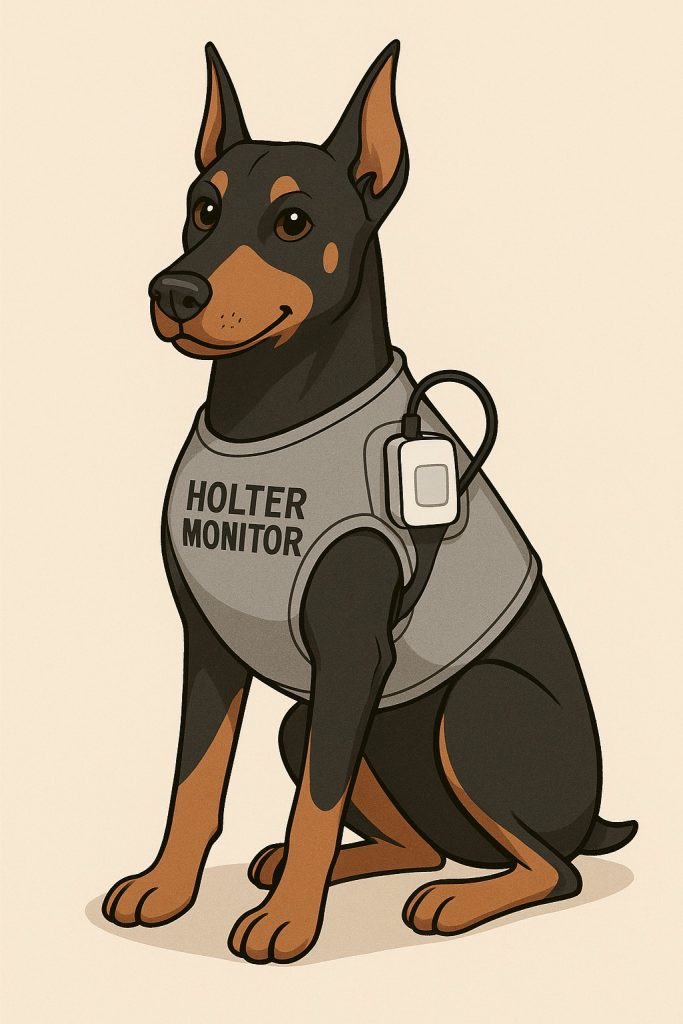
The device is a small, portable electrocardiogram (ECG) unit that records the heart’s electrical signals while the dog goes about its normal daily routine. It is typically worn in a soft, comfortable vest that holds the monitor and electrodes in place on the dog’s chest. The recorded data is then analyzed by a veterinary cardiologist to assess heart health and guide treatment or preventive care. The advantage of the Holter test is that it captures irregular heart rhythms (arrhythmias) or early signs of DCM that may not appear during a short veterinary exam or standard ECG.
- For All Dogs: We recommend annual Holter monitoring starting at 3 years of age.
- For Breeding Dogs: Monitoring should begin as early as 2 years old, as DCM can develop silently and may be passed genetically.
The Holter monitor test is completely non-invasive and gives us crucial information about your dog’s heart rhythm, helping us detect early arrhythmias even before any symptoms appear. Thus, giving us an opportunity to take action before it’s too late.
Treatment of DCM
While there is no cure, early intervention can significantly extend quality and length of life.
Medications
- Pimobendan (Vetmedin):
- Improves contractility and dilates blood vessels
- Has been shown to prolong survival in preclinical (occult) and symptomatic DCM
- ACE Inhibitors (Enalapril, Benazepril):
- Reduce workload on the heart
- Diuretics (Furosemide, Torsemide):
- Remove excess fluid from lungs
- Antiarrhythmics (Sotalol, Mexiletine):
- Control ventricular arrhythmias
- Spironolactone:
- Additional diuretic and antifibrotic effects
Note: In diet-associated cases, diet change and taurine supplementation can lead to remarkable improvement—even reversal of heart changes in some dogs.
Given the recent spike in non-hereditary DCM cases, diet deserves careful consideration.
The Role of Diet
FDA Investigation
In 2018, the FDA began collecting reports of DCM linked to grain-free diets rich in legumes and potatoes. Though not every case has been conclusively proven diet-related, the following are recommended precautions:
- Avoid exclusively grain-free foods unless medically indicated.
- Prefer brands with robust nutritional research and veterinary nutritionist formulation.
- For at-risk breeds, consider periodic taurine testing.
Taurine Supplementation
- Some breeds (especially Golden Retrievers and Cocker Spaniels) are prone to low taurine levels.
- Taurine supplementation (500–1,000 mg per day) may be prescribed by your veterinarian.
Prognosis: What to Expect
DCM’s prognosis depends on timing and response to therapy.
Dobermans:
- Occult stage: Median survival 2–3 years
- Symptomatic stage: Median survival weeks to months without treatment; 6–12 months with therapy
Other breeds:
- Great Danes and Irish Wolfhounds may survive 6–12 months after heart failure diagnosis.
Early diagnosis before symptoms can significantly prolong life and maintain quality.
How Can I Protect My Dog?
1. Choose Diet Wisely
- Use reputable brands backed by research
- Avoid fad diets unless medically necessary
- If in doubt, consult a board-certified veterinary nutritionist
2. Schedule Regular Exams
- Annual checkups for middle-aged dogs
- Echocardiogram screening in at-risk breeds (often starting around age 3–4)
3. Watch for Early Signs
- Resting respiratory rate
- Cough
- Exercise intolerance
4. Consider Genetic Testing
- Particularly in Dobermans and Boxers
5. Act Early
- Pimobendan has been shown to improve survival even before clinical signs appear
Living with a Dog Diagnosed with DCM
DCM is devastating, but it doesn’t have to mean immediate loss. Many dogs live happily for months or even years with proper management.
Daily Care Tips:
- Administer medications consistently
- Monitor breathing and appetite
- Limit strenuous activity
- Maintain a heart-healthy diet as directed
- Keep regular follow-up appointments
Emotional Support
It’s normal to feel overwhelmed. Joining support groups (online or in person) can help you connect with others who understand.
The Future of DCM Research
Ongoing studies are refining our understanding of:
- Taurine’s role in canine heart health
- Genetic mutations underlying DCM
- The true impact of diet
- Novel therapies to slow or reverse disease
Continued collaboration between cardiologists, nutritionists, and breeders holds promise for reducing DCM’s toll in coming decades.
Conclusion
Dilated Cardiomyopathy is a complex, multifaceted disease that requires vigilance, knowledge, and compassion. Whether your dog is a high-risk breed or simply a beloved companion, you play a critical role in early detection and care.
Regular veterinary checkups, careful dietary choices, and prompt intervention can profoundly impact your dog’s quality and length of life. While DCM in dogs can never be entirely prevented, it can often be managed with dedication and love.
When in doubt, don’t wait. If you ever notice coughing, labored breathing, or collapse, see your veterinarian immediately. Early action saves lives.
For more trusted, breed-specific health advice, be sure to read our other articles, like Doberman Health 101
References
- Cardiac Vet YouTube Video on DCM (highly recommended viewing for all dog owners) ↩︎
- FDA Investigation into Diet-Associated DCM (available here) ↩︎
- Shen L, Estrada AH, Meurs KM, Sleeper M, Vulpe C, Martyniuk CJ, Pacak CA. A review of the underlying genetics and emerging therapies for canine cardiomyopathies. J Vet Cardiol. 2022 Apr;40:2-14. doi: 10.1016/j.jvc.2021.05.003. Epub 2021 May 21. PMID: 34147413; PMCID: PMC8606013. ↩︎
- Gaar-Humphreys, Karen R et al. “Genetic Basis of Dilated Cardiomyopathy in Dogs and Its Potential as a Bidirectional Model.” Animals : an open access journal from MDPI vol. 12,13 1679. 29 Jun. 2022, doi:10.3390/ani12131679 ↩︎
- Petrie, Jean-Paul. “Practical application of holter monitoring in dogs and cats.” Clinical techniques in small animal practice vol. 20,3 (2005): 173-81. doi:10.1053/j.ctsap.2005.05.006 ↩︎