
A Complete Guide to the Best Dog Supplements
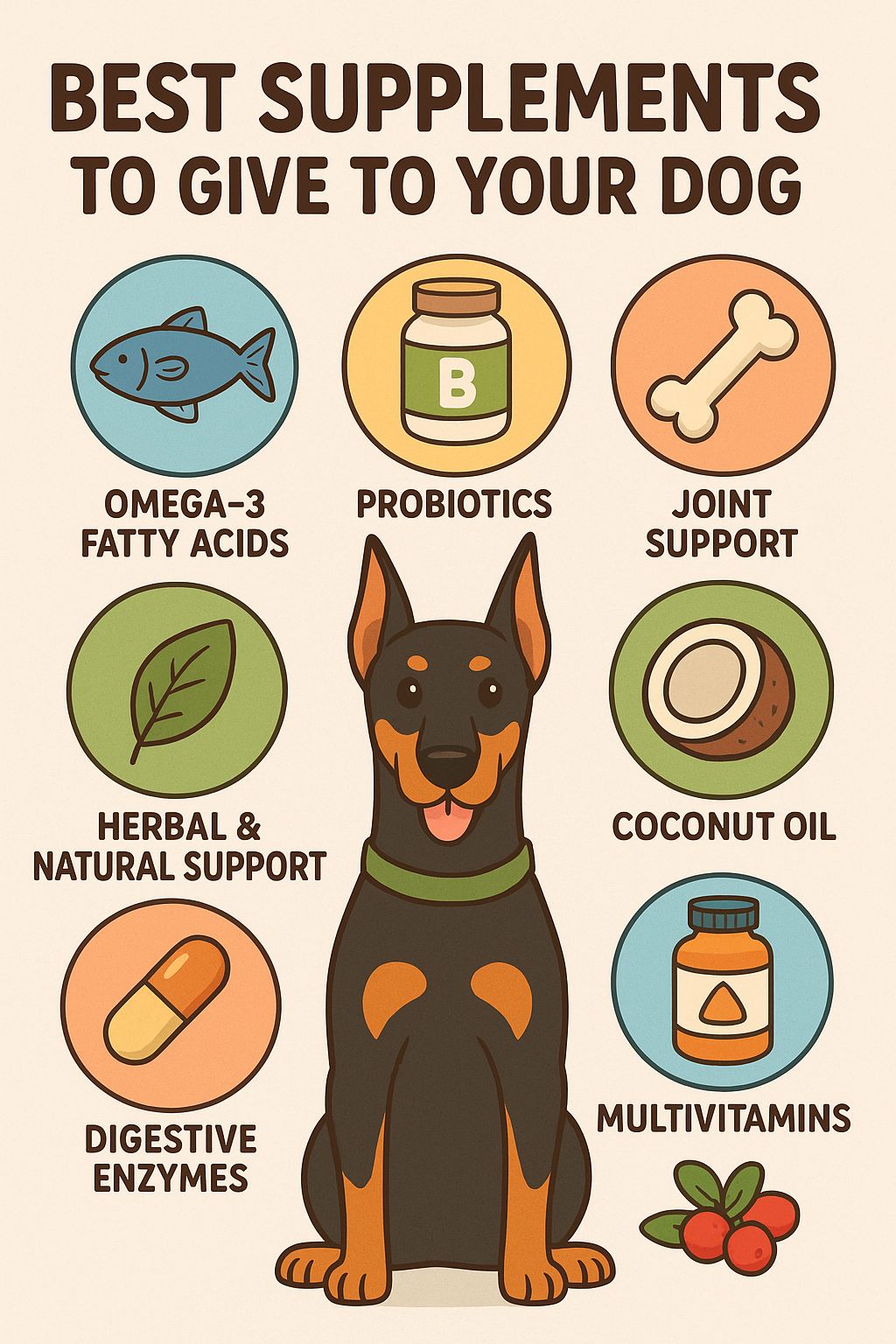
When it comes to canine health, good nutrition is the foundation. A balanced, high-quality diet will cover most of your dog’s needs — but there are times when the right supplements can make a huge difference. Whether it’s supporting joint health, boosting the immune system, enhancing coat condition, or aiding digestion, targeted supplementation can help keep your dog thriving.
This guide explores the most beneficial dog supplements, what they do, how they work, and when they’re truly needed — so you can make informed choices for your best friend.
Table of Contents
Omega-3 Fatty Acids (Fish Oil, Krill Oil, or Algal Oil)
Best for: Skin & coat health, joint support, brain function, heart health, immune balance.
Omega-3 fatty acids are essential nutrients your dog’s body cannot produce on its own. They must come from the diet — and in most commercial dog foods, the levels are far too low (or the oils have oxidized during processing). This is why supplementation can be so beneficial.
The two most important Omega-3s for dogs are:
- EPA (Eicosapentaenoic Acid) – Anti-inflammatory and excellent for joint, skin, and cardiovascular health.
- DHA (Docosahexaenoic Acid) – Vital for brain, eye, and nervous system function.
Key Benefits of Omega-3s for Dogs
- Skin & Coat Health
- Reduces dryness, flakiness, and itchiness caused by allergies or environmental factors.
- Promotes a glossy, healthy coat.
- Helps with seasonal shedding by supporting skin hydration and follicle health.
- Joint Support
- Reduces inflammation in arthritic joints.
- Improves mobility in aging dogs and supports recovery after exercise.
- Acts as a natural complement to glucosamine/chondroitin for joint care.
- Brain Function
- DHA is essential for puppy brain and eye development — critical during pregnancy and early growth.
- In senior dogs, DHA supports memory, learning ability, and alertness.
- Heart Health
- Supports healthy heart rhythm and reduces inflammation in heart tissues.
- For breeds predisposed to heart disease, like Dobermans, Omega-3s can be part of a heart-healthy regimen.
- Immune System Regulation
- Helps calm overactive immune responses (allergies, autoimmune flare-ups).
- Supports a balanced inflammatory response without suppressing immunity.
Doberman-Specific Note
Dobermans are athletic, sensitive-skinned, and prone to dilated cardiomyopathy (DCM) — a potentially fatal heart condition.
Omega-3 fatty acids can help:
- Keep skin calm and less prone to dryness or rash.
- Support healthy heart muscle function.
- Reduce inflammation from intense activity or training.
For Dobermans involved in sports or working roles, Omega-3s also aid in joint recovery and help maintain a sleek, shiny coat that shows off their beautiful lines.
Best Sources
- Fish Oil – Common and effective, but must be fresh and properly stored to avoid rancidity.
- Krill Oil – More bioavailable than fish oil and naturally contains astaxanthin (a strong antioxidant).
- Algal Oil – Plant-based, sustainable, and great for dogs with fish allergies or for owners who prefer a non-marine source.
Dosage Tips
- A typical starting dose is 100 mg of combined EPA+DHA per 10 lbs of body weight, but always check the label and your vet’s advice.
- Choose a canine-formulated supplement to ensure proper ratios and purity.
- Store in a cool, dark place to prevent oxidation (refrigeration is ideal).
- Avoid cod liver oil for routine supplementation — it’s high in vitamin A, which can be toxic in excess.
Quality Checklist
When buying Omega-3 supplements for your dog:
- Look for third-party testing (to ensure no heavy metals, PCBs, or toxins).
- Avoid artificial flavors, colors, and unnecessary fillers.
- Check the EPA/DHA content — some oils are diluted or have mostly less-useful Omega-3 forms like ALA.
- Buy from brands that publish their sourcing and sustainability practices.
Probiotics
Best for: Digestive health, immune system support, nutrient absorption, stress resilience.
Probiotics are live, beneficial microorganisms that help maintain a healthy balance of bacteria in your dog’s digestive tract. While your dog naturally has good bacteria living in their gut, factors such as stress, illness, diet changes, medications (especially antibiotics), and even environmental toxins can disrupt this balance.
A healthy gut microbiome does more than just aid digestion — it plays a central role in immune defense, nutrient absorption, mood regulation, and overall vitality.
Key Benefits of Probiotics for Dogs
- Improved Digestion & Stool Quality
- Reduces loose stools and diarrhea (especially from diet changes or stress).
- Helps break down food more efficiently for better nutrient absorption.
- Can reduce gas and bloating in sensitive dogs.
- Stronger Immune System
- Around 70% of a dog’s immune system resides in the gut, meaning a healthy microbiome directly supports overall immunity.
- Probiotics help strengthen immune response without overstimulating it — useful for dogs prone to allergies or infections.
- Recovery After Antibiotics or Illness
- Antibiotics wipe out both bad and good bacteria. Probiotics help restore beneficial bacteria faster, reducing the risk of secondary infections or digestive issues.
- Stress and Travel Support
- Dogs under stress (boarding, moving, competition, vet visits) often experience digestive upset. Probiotics help stabilize gut health during these periods.
- Allergy Relief
- By improving gut barrier integrity, probiotics may reduce the severity of skin and food allergies over time.
Doberman-Specific Note
Dobermans are often high-energy, high-drive dogs — which means they can be more prone to stress-related digestive disturbances, especially during intense training or competition. A consistent probiotic regimen can help:
- Keep stool firm and regular, even with travel or dietary adjustments.
- Reduce inflammation linked to certain skin and food allergies.
- Support a strong immune system in active, working dogs.
Best Sources of Probiotics for Dogs
- Canine-Specific Probiotic Supplements – Formulated with strains proven to survive a dog’s gut environment.
- Fermented Foods (in moderation) – Unsweetened kefir or plain yogurt (lactose-free options are ideal for sensitive dogs).
- Probiotic-Infused Dog Treats or Powders – A convenient option for picky eaters.
Key Strains to Look For
- Enterococcus faecium – Improves stool quality and gut health.
- Lactobacillus acidophilus – Supports immune function and digestion.
- Bifidobacterium animalis – Helps reduce diarrhea and promotes balanced gut flora.
These strains are more likely to survive stomach acid and reach the intestines alive, where they can be effective.
Dosage & Use Tips
- Follow the dosage instructions on your product — over-supplementing won’t necessarily increase benefits.
- Consistency matters — probiotics work best when given daily.
- If giving after antibiotics, start as soon as possible (but at least 2 hours after each antibiotic dose to avoid killing the probiotic bacteria).
Quality Checklist
- Choose supplements that guarantee live cultures through expiration, not just at manufacturing.
- Look for products that list CFUs (colony-forming units) — aim for at least 1–3 billion CFUs for general use, higher for therapeutic needs.
- Avoid added sugars, artificial sweeteners (like xylitol — toxic to dogs), or unnecessary fillers.
Joint Support Dog Supplements (Glucosamine, Chondroitin, MSM, Green-Lipped Mussel)
Best for: Joint health, mobility, arthritis prevention, recovery after injury.
Joint health is a major concern for many dog owners, especially for large, athletic breeds and dogs involved in high-impact activities. Over time, cartilage — the cushioning material inside joints — can wear down due to aging, repetitive stress, or injury. Once damaged, cartilage heals slowly, if at all.
Joint supplements help slow the degeneration process, reduce inflammation, and support repair so your dog can stay mobile and pain-free for as long as possible.
Key Ingredients and Their Benefits
- Glucosamine
- A naturally occurring compound found in healthy cartilage.
- Helps repair and rebuild cartilage, slowing the progression of joint damage.
- Works best when given before major issues develop.
- Chondroitin Sulfate
- Helps cartilage retain water for better shock absorption.
- Inhibits enzymes that break down cartilage.
- Often combined with glucosamine for synergistic effects.
- MSM (Methylsulfonylmethane)
- A natural sulfur compound that supports connective tissue health.
- Reduces inflammation and pain associated with arthritis.
- May also support skin, coat, and nail health.
- Green-Lipped Mussel (GLM)
- A natural source of omega-3 fatty acids, amino acids, and minerals.
- Contains glycosaminoglycans, which aid cartilage repair.
- Anti-inflammatory effects can help reduce stiffness and improve mobility.
Key Benefits of Joint Dog Supplements
- Arthritis Prevention – Protects joint structures before major damage occurs.
- Improved Mobility – Helps stiff dogs move more freely and comfortably.
- Pain Reduction – Anti-inflammatory properties relieve discomfort without the side effects of long-term NSAID use.
- Faster Recovery – Supports healing after surgery or injury.
Doberman-Specific Note
Dobermans are athletic, powerful, and agile — but their high-drive lifestyle means their joints endure significant wear, especially in sports like:
- Obedience (jumping, quick pivots)
- Agility (high-impact landings)
- Protection work (sudden directional changes)
In addition to long-term joint wear, Dobermans are also prone to panosteitis — a painful, inflammatory condition affecting the long bones, most common in young, fast-growing dogs. While panosteitis usually resolves as the dog matures, it can cause intermittent lameness and discomfort during key developmental stages. Providing joint support supplements early may help reduce inflammation, support connective tissue health, and promote more comfortable mobility during growth.
Starting joint support dog supplements early in adulthood — and in some cases during late puppyhood for breeds prone to rapid growth — can:
- Delay the onset of arthritis.
- Reduce post-training stiffness.
- Support recovery from conditions like panosteitis.
- Maintain peak performance for more years.
This is especially important for breeding dogs, where sound structure and mobility directly influence working ability and quality of life.
When to Start Joint Supplements
- Preventative Use: Large-breed dogs can start as early as 12–18 months.
- Early Signs of Stiffness: After long rest periods or following intense exercise.
- Post-Injury or Surgery: To aid repair and reduce inflammation.
- Senior Dogs: To help maintain comfort and independence.
Dosage & Use Tips
- Follow manufacturer guidelines — higher initial “loading doses” are sometimes recommended for the first 4–6 weeks, then reduced to a maintenance dose.
- Choose canine-specific formulations — human supplements may contain unsafe additives.
- For picky eaters, choose chewable treats or flavored powders.
Quality Checklist
- Look for clinical-grade ingredients — cheaper products often contain ineffective amounts.
- Avoid fillers, artificial sweeteners, and unnecessary colors.
- For GLM, ensure cold-processing to preserve omega-3s and active compounds.
- Seek out brands that list exact glucosamine and chondroitin amounts per serving.
Coconut Oil
Best for: Skin health, coat shine, digestive health, brain function, immune defense, natural anti-parasitic support.
Coconut oil has gained popularity as a natural, multi-purpose supplement for dogs — and for good reason. It contains medium-chain triglycerides (MCTs), a type of healthy fat that is quickly metabolized into energy, rather than being stored as fat. These MCTs, particularly lauric acid, have antimicrobial, anti-inflammatory, and energy-boosting benefits.
Key Benefits of Coconut Oil for Dogs
- Skin & Coat Health
- Moisturizes dry, flaky skin from the inside out.
- Reduces itching from seasonal allergies or environmental irritants.
- Promotes a soft, glossy coat.
- Can be applied topically to small hot spots, dry noses, or rough paw pads.
- Digestive Support
- Improves nutrient absorption in the gut.
- May help balance gut bacteria due to natural antimicrobial properties.
- Can assist in firming up loose stools (when used in moderation).
- Brain Function
- MCTs are an easily available energy source for brain cells.
- Can support cognitive function in senior dogs or those with age-related decline.
- Immune System Support
- Lauric acid in coconut oil has antibacterial, antiviral, and antifungal properties.
- May help the body fight off low-grade infections and yeast overgrowth.
- Natural Anti-Parasitic Effects
- While not a replacement for parasite prevention, coconut oil can make the skin less hospitable to fleas and certain mites.
- When applied topically, it can suffocate some external parasites and soothe skin irritation.
Doberman-Specific Note
Dobermans often have sensitive skin and may experience seasonal dryness or itchiness, especially in dry climates or during winter months. Coconut oil — both as a supplement and occasional topical treatment — can help maintain coat quality, reduce flakiness, and provide extra brain and immune support for active or aging Dobermans.
How to Use Coconut Oil for Dogs
- Internal use: Start with ¼ teaspoon per 10 lbs of body weight per day, gradually increasing to avoid digestive upset.
- Topical use: Apply a small amount directly to the skin for dry patches, rough paws, or minor irritations.
- As a treat mix-in: Blend into food or freeze into small “oil bites” for easy serving.
Dosage & Caution
- Introduce slowly — too much too soon can cause loose stools.
- Coconut oil is calorie-dense; adjust feeding portions to prevent weight gain.
- Dogs with pancreatitis or fat metabolism disorders should avoid high-fat supplements unless approved by a veterinarian.
Quality Checklist
- Choose organic, cold-pressed, unrefined (virgin) coconut oil for maximum nutrient retention.
- Store in a cool, dark place to maintain freshness.
- Avoid hydrogenated or processed oils.
Multivitamins (When Needed)
Best for: Dogs with restricted diets, home-cooked meals, or special needs.
If your dog is on a complete, balanced commercial diet, a multivitamin may not be necessary — but for dogs on home-prepared diets, or those with absorption issues, a well-formulated canine multivitamin can fill nutritional gaps.
Antioxidants (Vitamin E, Vitamin C, Coenzyme Q10, Astaxanthin)
Best for: Cellular health, immune support, heart and brain function, inflammation control, aging support.
Antioxidants are compounds that protect your dog’s cells from damage caused by oxidative stress — an imbalance between free radicals (unstable molecules) and the body’s ability to neutralize them. Oxidative stress contributes to aging, chronic inflammation, immune decline, and many diseases including cancer and heart conditions.
Supplementing antioxidants supports overall health by neutralizing free radicals, reducing cellular damage, and supporting repair mechanisms.
Key Antioxidants and Their Benefits for Dogs
- Vitamin E (Tocopherol)
- A fat-soluble antioxidant essential for maintaining healthy skin, coat, and muscle tissue.
- Protects cell membranes from oxidative damage.
- Supports immune function, especially important during illness or recovery.
- Helps maintain cardiovascular health by preventing oxidation of cholesterol.
- Vitamin C (Ascorbic Acid)
- Dogs produce some vitamin C naturally, but during stress, illness, or inflammation, their needs increase.
- Acts as a potent antioxidant supporting immune defenses and reducing inflammation.
- Supports collagen synthesis, aiding wound healing and connective tissue health.
- Can help reduce severity and duration of illness or stress-related episodes.
- Coenzyme Q10 (CoQ10)
- A vital component in cellular energy production, especially in heart muscle cells.
- Supports healthy heart function and muscle strength.
- Important for breeds prone to dilated cardiomyopathy (DCM), like Dobermans, by improving energy metabolism and reducing oxidative damage to heart tissue.
- May also support cognitive function in aging dogs.
- Astaxanthin
- A naturally occurring carotenoid antioxidant derived from microalgae.
- Over 500 times stronger than vitamin E in neutralizing free radicals.
- Supports skin health, immune function, cardiovascular health, and brain function.
- Anti-inflammatory properties can help with joint discomfort and general aging processes.
Doberman-Specific Note
Dobermans have a genetic predisposition to dilated cardiomyopathy, a serious heart condition linked to oxidative damage in cardiac cells. Including antioxidants like CoQ10 and Vitamin E in their diet can help protect heart health and potentially slow disease progression.
Furthermore, Dobermans involved in high-energy activities benefit from antioxidant support to counteract increased oxidative stress caused by intense exercise.
Dosage & Use Tips
- Choose antioxidants formulated specifically for dogs, with doses based on size and health status.
- Avoid mega-doses without veterinary guidance, as excessive antioxidant supplementation can interfere with normal cell signaling.
- CoQ10 supplements often come with added vitamin E and selenium for synergistic effects.
- Astaxanthin is usually given in small doses (micrograms to milligrams) due to its potency.
Quality Checklist
- Look for natural-source antioxidants rather than synthetic versions.
- Verify third-party testing for purity and potency.
- Check for canine-specific formulations and avoid human supplements unless vet-approved.
Antioxidants play a subtle but critical role in your dog’s health by protecting cells at a microscopic level. Combined with a balanced diet and appropriate exercise, they help your Doberman age gracefully, stay active, and maintain a strong immune system.
Digestive Enzymes
Best for: Dogs with poor nutrient absorption, seniors, or those with pancreatic issues.
Digestive enzymes help break down food so nutrients can be absorbed more efficiently — beneficial for dogs with chronic digestive issues or those eating cooked/home diets lacking natural enzymes.
When Dog Supplements Are Truly Needed
Not all dogs need every supplement. Factors to consider:
- Age (puppy, adult, senior).
- Breed predispositions (e.g., Doberman heart health).
- Activity level.
- Diet type (commercial vs. home-prepared).
- Existing health conditions.
Over-supplementing can cause harm — always match the supplement to the dog’s needs.
Choosing Quality Dog Supplements
Look for third-party testing and transparent ingredient sourcing.
Choose species-specific formulas (human supplements are not always safe for dogs).
Avoid fillers, artificial flavors, and unnecessary additives.
Follow dosage guidelines — more is not always better.
Final Thoughts
Supplements can be game-changers for your dog’s health when used wisely. Think of them as targeted support — not replacements for good nutrition, exercise, and regular check-ups.
At Wonder Doberman, we focus on prevention and optimal health, especially for breeds like the Doberman where certain conditions can be life-threatening if ignored. Supplements like omega-3 fatty acids, joint protectants, probiotics, and heart-supporting antioxidants have earned a permanent place in our care routine.
The right combination for your dog will depend on their age, lifestyle, and unique health profile — and when chosen well, supplements can help your dog not just live longer, but live better.
Disclaimer:
The information provided in this article is for educational purposes only and is not intended as a substitute for professional veterinary advice, diagnosis, or treatment. Every dog is unique, and supplement needs can vary based on age, breed, health status, and activity level. Always consult with a qualified veterinarian before introducing any new supplement to your dog’s diet, especially if your dog is pregnant, nursing, taking medication, or has a chronic health condition.