
Fetch and Frisbee With Doberman: More Than Just a Game
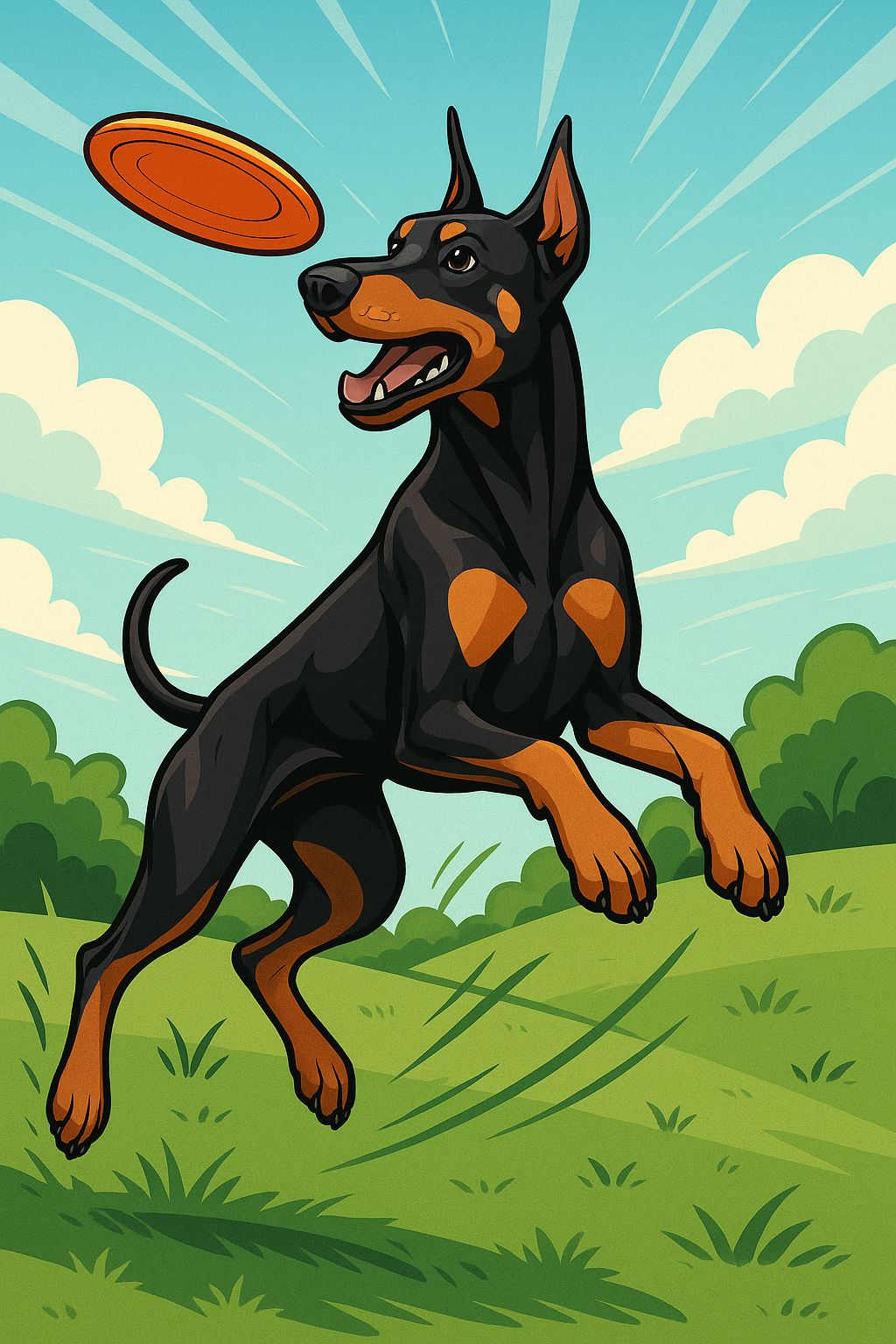
When most people think about playing fetch or frisbee with Doberman, they imagine a casual game in the backyard: a dog happily sprinting after a ball or flying disc. But what many don’t realize is that these activities can be much more than playtime. In fact, they can become high-energy, competitive sports that require training, fitness conditioning, and proper equipment to keep your dog safe and performing at their best.
Whether you’re looking to elevate your dog’s play sessions or considering entering the exciting world of disc dog competitions, this guide will walk you through everything you need to know. We’ll cover the basics of fetch and frisbee, explore competition formats and rules, offer fitness and safety tips, and discuss protective gear, like the orthopedic support straps from OrthoAnimo, that can help prevent injuries in these intense canine sports.
Table of Contents
Why Fetch and Frisbee Matter
Fetch and frisbee are two of the most accessible and rewarding games you can play with your dog. They tap into natural instincts: prey drive, sprinting, leaping, retrieving and provide incredible physical and mental stimulation. For high-drive breeds like the Doberman, these games are more than fun, they’re a necessity for channeling energy in a productive way.
Benefits of Fetch and Frisbee:
- Cardiovascular exercise for your dog (and sometimes for you!)
- Reinforces obedience and recall in exciting environments
- Improves coordination and body awareness
- Enhances bond between dog and handler
- Builds drive and confidence through reward-based play
- Prepares dogs for sports and competition like agility or disc dog
What is Disc Dog (Frisbee) Sport?
“Disc Dog” is the formal name for competitive frisbee games played with dogs. It’s an international sport with growing popularity in North America, Europe, and Asia. There are multiple divisions and styles, but all are centered around throwing flying discs and having your dog catch them mid-air or return them within a time limit.
Check The Canadian Disc Dog Association website here.
Common Disc Dog Events
- Toss and Fetch (Distance/Accuracy)
Teams are given a field marked with scoring zones (usually 10-yard increments). The goal is to make as many successful throws and returns within 60 seconds. The farther the catch, the more points you get. - Freestyle (Choreographed Routines)
This is where athleticism and creativity shine. You and your dog perform a choreographed routine to music with flips, vaults, catches, and tricks. Judging includes difficulty, execution, and creativity. - Time Trial or “Frizgility”
A combination of frisbee and agility obstacles. The dog must complete a short agility course and make a frisbee catch in the fastest time possible.
Rules and Scoring Basics
While rules can vary slightly by organization (e.g., UpDog Challenge, USDDN, Skyhoundz), here are some general guidelines:
- Dog must release the disc completely to count as a catch.
- Each catch must be made within bounds.
- Handlers must stay behind the throwing line (usually 40 yards from end).
- In Freestyle, flips and vaults must be safe and controlled.
- In Toss & Fetch, you can throw as many discs as you want, but only one may be in use at a time.
Always check the rulebook for the organization or event you’re interested in before starting training.
Safety First: Preventing Injury in Fetch and Frisbee
High-speed sprinting, sudden stopping, pivoting, leaping, and landing can put a lot of stress on a dog’s joints, especially the wrists, shoulders, and lower back. For powerful breeds like the Doberman, this stress is even greater.
Most Common Injuries in Frisbee Dogs:
- Wrist hyperextension
- Torn ligaments (ACL)
- Shoulder strain (biceps tendonitis, supraspinatus injuries)
- Back muscle strain
- Toe injuries and pad tears
Tips for Injury Prevention:
- Warm-Up and Cool Down
Like athletes, dogs need time to prepare their muscles. Warm up with a brisk walk, trotting, and light play. Afterward, spend time walking and stretching. - Keep Sessions Short
Limit to 10–15 minutes at a time. Fatigue increases the risk of injury. - Train Jump Technique
Dogs should learn to launch from their rear legs, not just leap wildly. Good jumping technique reduces strain. - Flat, Even Surface
Avoid hard, slippery, or uneven ground. Grass is usually safest. - Use Appropriate Discs
Not all frisbees are safe for dogs. Human plastic discs can crack and cut their mouths. Use flexible, dog-safe options like those from brands Hyperflite, Hero, or K9 Frisbee Toss & Fetch.
Fitness Preparation: Building a Canine Athlete
Before leaping into the air to snatch a disc, your dog should be physically conditioned. The best disc dogs are strong, agile, and balanced.
Canine Conditioning Exercises: Build a Strong, Resilient Dog
Just like human athletes, dogs need a solid fitness foundation to safely participate in high-impact activities like fetch and frisbee. Conditioning improves not only their performance but also their injury resilience and overall longevity in sport.
For Dobermans, who are naturally muscular, powerful, and agile, focused conditioning is especially important. Their deep chests and long limbs are great for sprinting and jumping, but they can also be prone to joint and soft tissue injuries if not properly supported.
Let’s dive deeper into each component of canine conditioning:
Core Work: The Foundation of Movement
A strong core is essential for stability, balance, and injury prevention. It’s what helps your dog land cleanly from a jump, pivot during a catch, or stop on a dime without toppling or straining their back.
Core Exercises:
- Balance Discs or Peanut Balls
Have your dog stand, sit, or do small movements while maintaining balance on an unstable surface. This activates abdominal and spinal muscles. - Wobble Boards
Encourage your dog to place front paws or all four paws on a gently moving platform. This builds both core engagement and body awareness. - Sit-to-Stand Transitions
Ask your dog to sit and then stand repeatedly on a flat or slightly unstable surface. For added benefit, do it slowly and with control.
Tip: Always spot your dog during core exercises to prevent falls and encourage correct posture.
Strength Training: Power and Stability
Muscular strength gives your dog the ability to jump high, brake hard, and turn sharply—key for fetch and frisbee. It also helps protect joints by absorbing shock during impact.
Strength Exercises:
- Hill Walking
Walk your dog up and down gentle hills. Going uphill builds rear-end strength; downhill engages the core and stabilizers. - Resistance Harness Walks
Use a resistance harness or add light drag (like a weighted sled or parachute) during walks to build strength and endurance safely. - Rear Leg Lifts or “Step-Ups”
Teach your dog to step onto a low platform or lift one rear leg at a time while standing to target hamstrings, glutes, and hip stabilizers.
Note: Keep reps low and controlled. Focus on form over volume.
Flexibility: Freedom of Movement
Flexible muscles and tendons allow for longer strides, higher jumps, and smoother catches—all while reducing the risk of muscle pulls or strains.
Flexibility Exercises:
- Stretching with Guided Touch Targets
Use treats or your hand to guide your dog into gentle stretches—such as reaching nose to shoulder, nose between front legs, or side-to-side. - Bowing and Play Stretch Holds
Encourage your dog to hold a bow (front down, rear up) position for several seconds. It stretches the shoulders, spine, and hips. - Paw Lifts and Shoulder Extensions
Gently lift one paw at a time and stretch it forward or backward. Always support the limb and never force the range of motion.
Caution: Stretching should be done when your dog is already warm (after activity or a light walk).
Endurance: Sustain the Effort
Fetch and frisbee with Dobermans involve repeated sprints, fast returns, and constant attention. To maintain focus and form over longer sessions or competitions, your dog needs cardiovascular endurance.
Endurance Exercises:
- Interval Trotting
Alternate periods of walking and jogging on leash. Great for heart health and general stamina. - Swimming
Low-impact, full-body workout that builds endurance and strength without joint strain. Especially good for dogs recovering from minor injuries or conditioning in warm weather. - Long-Line Recall Games
Practice repeated recalls on a 30-50 ft leash. Call your dog back and forth at increasing distances to simulate chase-recovery effort.
Bonus: Use these as a warm-up before fetch or frisbee sessions for double benefit.
How to Structure Fitness Training
You don’t need to be a canine gym coach to get your dog in top shape. Just 2–3 short fitness sessions per week, each 10 to 20 minutes long, can make a huge difference in strength, safety, and performance.
Weekly Example Plan:
| Day | Focus |
|---|---|
| Monday | Core + Flexibility |
| Wednesday | Strength + Endurance |
| Friday | Light Recovery Walk + Balance |
| Sat/Sun | Play (Fetch, Frisbee) + Warm-Up & Cool-Down |
If your dog is just starting out or recovering from injury, consult with a canine physiotherapist, rehab vet, or certified conditioning coach to create a customized program. Professionals can also help fit gear like OrthoAnimo straps, ensuring they support the correct joints for your dog’s structure and sport.
Protective Gear: OrthoAnimo Support Straps and More
To help protect joints and provide proprioceptive feedback during sports, OrthoAnimo offers high-quality support straps and braces for dogs. These products are used by performance and working dogs to:
- Support weak or recovering joints
- Prevent overextension during sports
- Improve limb awareness and alignment
- Reduce strain in repetitive activities like fetch and frisbee
Recommended Gear for Frisbee with Dobermans:
- Wrist Wraps – Protects the carpal joint from overextension, common in fast braking or landing.
- Hock Supports – Helps stabilize the rear leg, especially for dogs with past injuries.
- Back Braces – Useful for dogs with spinal or core weakness.
- Compression Suits – Encourages blood flow and muscle awareness, often used in training or post-workout recovery.
Always consult with your vet or canine physio before adding gear to make sure it’s appropriate and fitted correctly.
Choosing the Right Disc
Not all discs are created equal. Here’s what to look for:
| Brand | Type | Key Features |
|---|---|---|
| Hyperflite Jawz | Tough | Bite-resistant, fast |
| Hero Xtra 235 | Soft | Softer catch, good for beginners |
| Flippy Flopper | Cloth | Very soft, no injuries, floats |
| K9 Disc | Training | Lightweight, safe, stable flight |
Start with a soft disc for beginners, especially for younger dogs still learning catch technique.
Teaching Your Dog to Play Frisbee
You can start frisbee with Dobermans at any age, but be cautious about jumping before they are skeletally mature (usually 12–18 months for Dobermans). Here’s how to start:
Basic Training Progression
- Drive Building
- Use rollers (frisbee rolled on the ground) to build excitement
- Reward the chase and retrieve
- Short Toss
- Toss soft discs low and close
- Reinforce return to hand
- Tracking and Catching
- Throw gentle floats, encourage eye contact on disc
- Use verbal cue like “Catch!” consistently
- Vaults and Tricks (Freestyle)
- Only with a strong foundation and adult skeletal development
- Teach safe targeting and body control
Competitions: How to Get Involved
Look for local disc dog clubs or events through:
- UpDog Challenge
- Skyhoundz
- DiscDogathon
- Canine Disc Canada
Many clubs welcome beginners and offer training days, “Try It” events, and novice classes.
You don’t have to be a pro to compete! Most clubs value fun, safety, and the joy of the game above perfection.
Disc Dog or Frisbee with Dobermans?
Yes! While Dobermans aren’t the first breed people think of for disc sports (like Border Collies or Malinois), they can absolutely thrive in this game—especially if they love chasing and retrieving.
Strengths:
- Explosive speed
- Natural prey drive
- Athletic body type
- Loyal to handler
Challenges:
- Need to be conditioned to land softly
- Sensitive to rough terrain
- Can be intense—require calm, consistent training
At Wonder Doberman, we’ve seen Dobermans excel in obedience, scentwork, rally, and yes even in fetch and frisbee when properly trained.
Final Thoughts: Play Smart, Train Safe, and Have Fun
Fetch and frisbee with Dobermans aren’t just fun and games, they can be competitive, structured sports that offer immense enrichment and bonding for you and your dog. With the right preparation, safety measures, and mindset, you can turn a backyard hobby into a rewarding journey.
Whether you aim to compete at the national level or simply want to elevate your dog’s playtime, remember: the goal is engagement, health, and joy. Keep your dog fit, safe, and supported (thanks to products like OrthoAnimo’s orthopedic gear), and you’ll both have years of exciting throws ahead.
Need help choosing the right protective gear for your Doberman? Or have questions about building disc drive safely? Reach out to us at Wonder Doberman. We’re here to help you unleash your dog’s full athletic potential one toss at a time.