
Houseplants Toxic to Dogs: What Every Dog Owner Should Know
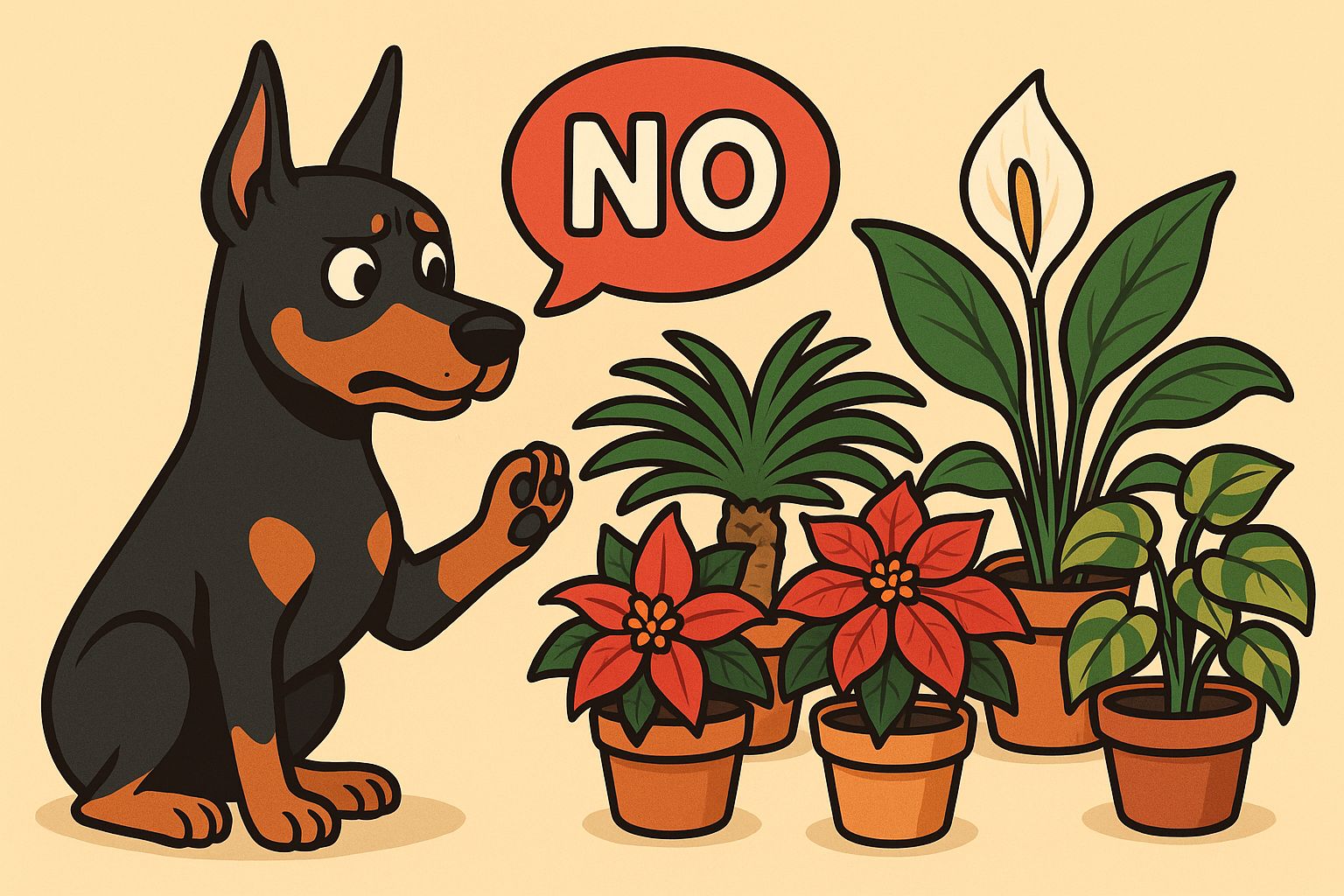
Bringing plants into your home brightens your space, improves air quality, and adds a touch of nature to everyday life. But if you share your home with a dog, those lush green decorations might not be as harmless as they look. Many common houseplants toxic to dogs, the effects ranging from mildly irritating to downright deadly.
As responsible dog owners, we must be aware of what plants we bring inside. Even if you don’t think your Doberman, or any dog, would chew on leaves, stems, or flowers, accidents happen. Puppies are curious, bored dogs nibble, and sometimes even the most well-trained dog will decide to sample something new.
This post will give you an in-depth look at the most common toxic houseplants, explain what makes them dangerous, and break down the severity of toxicity so you’ll know whether a plant is mildly irritating or a life-threatening hazard. We’ll also talk about symptoms to watch for, first aid steps, and safer alternatives you can bring into your home.
At Wonder Doberman, we take health and safety seriously. Knowledge is one of the best tools to keep our dogs safe.
Table of Contents
Why Dogs Eat Plants in the First Place
Before diving into the plant list, it’s worth understanding why dogs eat plants at all.
- Curiosity – Puppies especially explore with their mouths.
- Boredom – Dogs left without enough enrichment may chew on whatever is available.
- Instinct – Some dogs naturally graze on grass or leaves to help digestion.
- Taste or texture – Believe it or not, some plants simply appeal to dogs.
Because you can’t guarantee your dog won’t touch a houseplant, the safest option is prevention: don’t keep dangerous ones indoors.
Levels of Toxicity
Not all poisonous plants have the same impact. Here’s how we’ll categorize them:
- Mild toxicity: Causes drooling, mild vomiting, or stomach upset. Not life-threatening, but uncomfortable and should be taken seriously.
- Moderate toxicity: Can cause significant illness—severe vomiting, diarrhea, weakness, or difficulty breathing. Veterinary care required.
- Severe / deadly toxicity: Even small amounts can cause organ failure, seizures, or death. These should never be anywhere near your home if you have dogs.
Common Toxic Houseplants for Dogs
Below is a detailed list of popular houseplants, their toxicity level, and how they affect dogs.
1. Sago Palm (Cycas revoluta)
- Toxicity Level: Deadly
- Toxin: Cycasin
- Effects: Causes vomiting, diarrhea, lethargy, seizures, liver failure, and can be fatal even in small doses.
- Why It’s Dangerous: All parts of the plant are toxic, but the seeds (nuts) are the most poisonous.
- Verdict: Never keep this plant in a dog household.
2. Aloe Vera
- Toxicity Level: Moderate
- Toxin: Saponins and anthraquinones
- Effects: Vomiting, diarrhea, lethargy, tremors.
- Why It’s Dangerous: Although aloe gel is safe for topical use, the plant itself is toxic if ingested.
- Verdict: Not worth the risk.
3. Philodendron
- Toxicity Level: Moderate
- Toxin: Insoluble calcium oxalates
- Effects: Oral irritation, drooling, difficulty swallowing, vomiting.
- Why It’s Dangerous: Very popular houseplant, but dogs who chew it can suffer painful irritation.
- Verdict: Keep out of reach or avoid.
4. Dieffenbachia (Dumb Cane)
- Toxicity Level: Moderate to Severe
- Toxin: Insoluble calcium oxalates and proteolytic enzymes
- Effects: Burning and swelling of mouth, excessive drooling, difficulty breathing, vomiting. Severe swelling can block airways.
- Verdict: Too risky for a dog household.
5. ZZ Plant (Zamioculcas zamiifolia)
- Toxicity Level: Moderate
- Toxin: Calcium oxalates
- Effects: Oral irritation, drooling, stomach upset.
- Why It’s Dangerous: Very trendy plant, but not safe if dogs like to chew.
- Verdict: Skip this one.
6. Pothos (Devil’s Ivy, Epipremnum aureum)
- Toxicity Level: Moderate
- Toxin: Calcium oxalates
- Effects: Mouth irritation, drooling, vomiting, difficulty swallowing.
- Verdict: Attractive but not dog-friendly.
7. Snake Plant (Sansevieria trifasciata / Mother-in-law’s Tongue)
- Toxicity Level: Mild to Moderate
- Toxin: Saponins
- Effects: Nausea, vomiting, diarrhea.
- Verdict: Not deadly, but causes significant stomach upset.
8. Peace Lily (Spathiphyllum)
- Toxicity Level: Moderate
- Toxin: Calcium oxalates
- Effects: Burning mouth, drooling, vomiting, trouble swallowing.
- Verdict: Avoid—it’s unsafe for dogs.
9. Castor Bean Plant (Ricinus communis)
- Toxicity Level: Deadly
- Toxin: Ricin
- Effects: Severe abdominal pain, drooling, vomiting, diarrhea, tremors, seizures, organ failure, death.
- Why It’s Dangerous: One of the most toxic plants to dogs (and humans).
- Verdict: Never keep this in or near your home.
10. Cyclamen
- Toxicity Level: Moderate to Severe
- Toxin: Triterpenoid saponins
- Effects: Drooling, vomiting, diarrhea. Large ingestions can cause seizures and death.
- Verdict: Too risky.
11. Jade Plant (Crassula ovata)
- Toxicity Level: Mild to Moderate
- Toxin: Unknown irritants
- Effects: Vomiting, lethargy, incoordination, depression.
- Verdict: Avoid.
12. Oleander
- Toxicity Level: Deadly
- Toxin: Cardiac glycosides
- Effects: Severe vomiting, decreased heart rate, abnormal heart rhythms, death.
- Verdict: Extremely dangerous—should never be in a home with dogs.
13. English Ivy (Hedera helix)
- Toxicity Level: Moderate
- Toxin: Triterpenoid saponins
- Effects: Vomiting, diarrhea, drooling, abdominal pain.
- Verdict: Not worth keeping.
14. Kalanchoe
- Toxicity Level: Moderate to Severe
- Toxin: Bufadienolides (cardiac glycosides)
- Effects: Vomiting, diarrhea, abnormal heart rhythms, seizures.
- Verdict: Very unsafe.
15. Amaryllis
- Toxicity Level: Moderate
- Toxin: Lycorine
- Effects: Drooling, vomiting, diarrhea, tremors.
- Verdict: Dangerous seasonal plant.
16. Tulips & Hyacinths (bulbs especially)
- Toxicity Level: Moderate
- Toxin: Tulipalin A and B
- Effects: Intense irritation of mouth, drooling, vomiting, diarrhea. Large ingestions can cause heart problems.
- Verdict: Keep bulbs out of reach.
17. Chrysanthemums (Mums)
- Toxicity Level: Mild to Moderate
- Toxin: Pyrethrins
- Effects: Drooling, vomiting, diarrhea, skin irritation.
- Verdict: Mild, but still not safe.
18. Azaleas & Rhododendrons
- Toxicity Level: Severe
- Toxin: Grayanotoxins
- Effects: Vomiting, diarrhea, weakness, abnormal heart rhythms, seizures, coma, death.
- Verdict: Very dangerous.
19. Dracaena (Dragon Tree, Corn Plant)
- Toxicity Level: Moderate
- Toxin: Saponins
- Effects: Vomiting (sometimes with blood), drooling, loss of appetite, weakness.
- Verdict: Unsafe.
20. Lilies
- Toxicity Level: Deadly (especially to cats, but risky to dogs too)
- Toxin: Unknown, causes kidney damage in cats, stomach upset in dogs
- Effects in dogs: Vomiting, diarrhea, lethargy. While not as fatal as in cats, still dangerous.
- Verdict: Better safe than sorry, skip lilies entirely.
Poinsettia (Euphorbia pulcherrima)
Toxicity level: Usually mild — but treat as potentially hazardous
Toxic principle: Irritant sap (milky latex in stems and leaves)
Typical effects: If chewed or ingested, most dogs show mild, self-limiting oral and gastrointestinal irritation — drooling, mild vomiting, sometimes diarrhea. Skin or eye contact with the sap can cause local irritation. Most authoritative sources describe poinsettia reactions as mild and rarely life-threatening.
Why we’re adding it: Despite being commonly listed as “mildly toxic,” poinsettias are extremely common in homes at Christmas and even brief exposure can be alarming. One of our customer had a heartbreaking case (dog sniffed a poinsettia briefly and later developed severe lung infection) is an important reminder: in rare circumstances, exposure to plant material (or inhalation/aspiration of plant debris or sap) can be followed by serious respiratory complications such as aspiration pneumonitis/aspiration pneumonia. Veterinary literature documents that inhaled plant or foreign material can lead to severe, even life-threatening, pulmonary infections in dogs.
Practical advice: Because poinsettias are so common and because severe complications while rare can happen (especially in puppies, older dogs, or dogs with preexisting illness), the safest option is not to bring poinsettias into homes with dogs at all. If you do have one, keep it completely out of reach, never allow dogs to sniff or mouth it, and remove it immediately if any contact is suspected. If a dog shows any vomiting, drooling, eye/skin irritation, coughing, breathing changes, or lethargy after exposure — contact your vet or a poison control service immediately.
Important Note: This list does not include every single toxic plant. There are hundreds of species that can harm dogs to varying degrees. Before bringing any new plant into your home, always research its safety for pets or consult with your veterinarian to make sure it won’t pose a risk.
What To Do if Your Dog Eats a Toxic Plant
If you suspect your dog ingested a toxic plant:
- Identify the plant – Take a photo or save the label.
- Call your vet immediately – Don’t wait for symptoms to worsen.
- Do NOT induce vomiting without advice – Some toxins can cause more damage on the way up.
- Provide supportive care – Fresh water, monitor breathing and behavior, and keep your dog calm until help is reached.
Safe Alternatives for Dog-Friendly Homes
If you love greenery but want to keep your dog safe, here are some dog-friendly houseplants:
- Areca Palm
- Calathea
- Spider Plant
- Bamboo Palm
- Boston Fern
These give you that lush, natural feeling without the risks.
Final Thoughts
Houseplants bring life and color into our homes, but they’re not all harmless roommates for dogs. Some plants, like sago palm, oleander, and castor bean, are clearly and repeatedly linked with severe, sometimes fatal poisoning. Others, such as poinsettias, occupy a different but still important place in our advice: while poinsettias are generally considered to cause only mild irritation in most cases, they are extremely common in homes during the holidays and even brief exposure has been associated (in rare cases) with severe outcomes — particularly when plant material is inhaled or a dog is otherwise vulnerable. The veterinary literature shows that aspiration of plant material or secondary infection can produce serious pneumonia in dogs, so we must treat even “mild” plants with respect. ASPCA Pet Poison Helpline
Because we can’t predict which dogs will have a bad reaction, the simplest and safest approach is prevention: avoid keeping clearly dangerous plants in homes with dogs, and treat seasonal or “mildly toxic” plants like poinsettia as potentially hazardous — don’t bring them into the house, and certainly don’t let dogs sniff them. If exposure does occur, document the plant (photo or label), call your veterinarian or an animal poison control line, and seek veterinary care if there are any symptoms — especially breathing changes, persistent vomiting, collapse, or neurological signs. In Canada you can also reach your regional poison centre for immediate guidance. Canadian Poison Center Hotline
At Wonder Doberman we take every precaution for the health and safety of our dogs and the families who adopt them. Our customer’s tragic experience is a painful but powerful reminder: even a short moment of exposure can have devastating consequences, so when in doubt, don’t risk it — remove the plant and choose a fully pet-safe alternative.