
Xylitol Poisoning in Dogs: What Every Owner Must Know
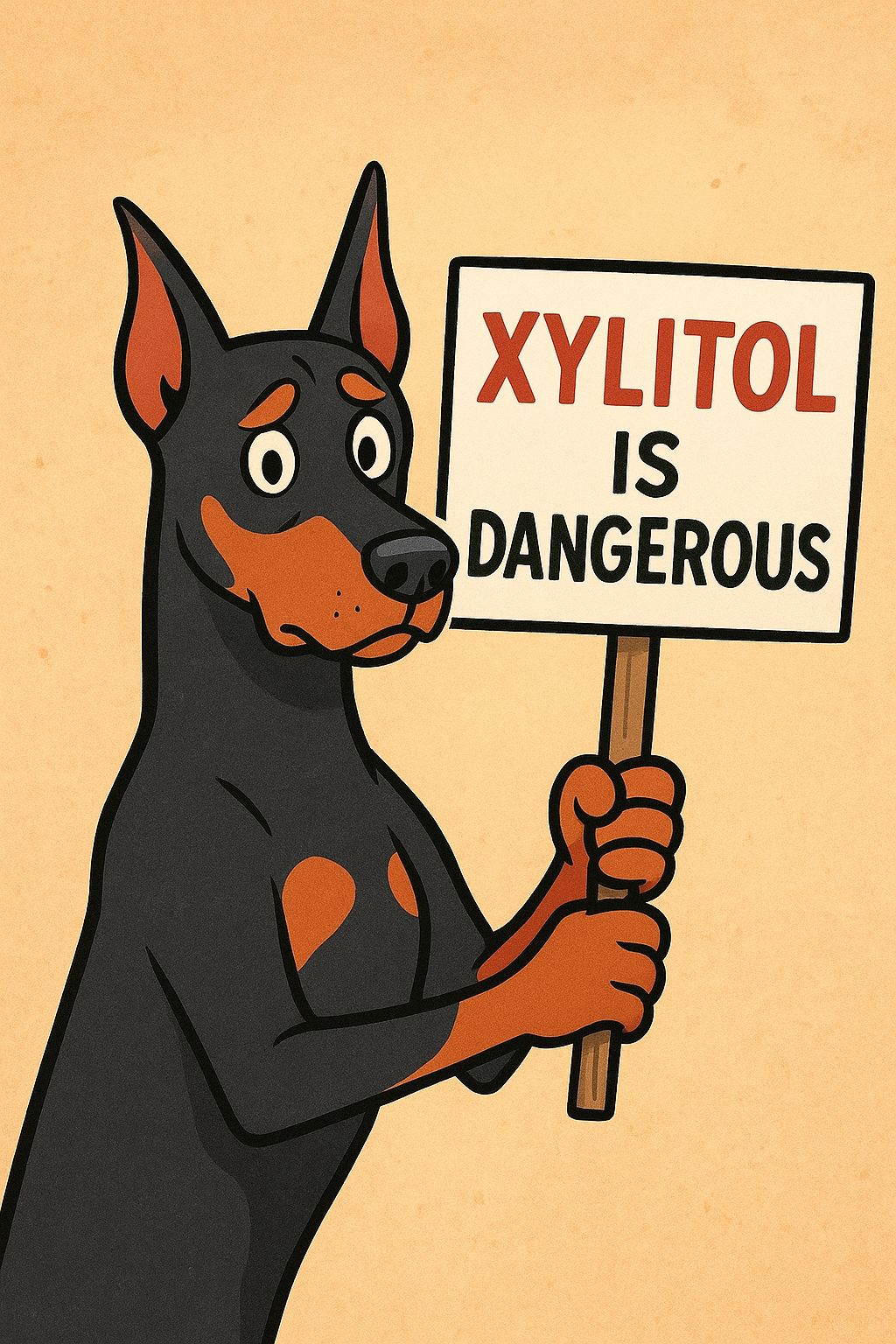
When it comes to keeping our dogs safe, most of us think about avoiding obvious hazards: chocolate, grapes, raisins, onions, macadamia nuts. These foods have been on “the toxic list” for years. But one danger still slips under the radar for many dog owners — xylitol.
Xylitol is an artificial sweetener commonly found in sugar-free products, and while it may be harmless (or even beneficial) for humans, it is highly toxic for dogs. In fact, xylitol poisoning in dogs can kill in a matter of hours. It’s silent, fast, and often completely unexpected because owners don’t realize just how many products contain it.
Table of Contents
What Is Xylitol?
Xylitol is a sugar alcohol, a naturally occurring substance found in small amounts in fruits and vegetables. In the food industry, however, it’s not extracted from oranges or strawberries — it’s typically manufactured from corn fiber or birch wood.
It became popular as a sugar substitute because:
- It has about the same sweetness as sugar but fewer calories.
- It doesn’t spike blood sugar in humans.
- It doesn’t feed oral bacteria, making it a common ingredient in sugar-free gum and dental products.
In humans, xylitol is considered safe. In fact, some dentists even recommend it for cavity prevention. But in dogs, the story is tragically different.
Why Dogs React Differently Than Humans
The danger comes down to how insulin regulation differs between species.
- In humans, xylitol does not stimulate insulin release. That’s why it’s marketed as “safe for diabetics.”
- In dogs, the pancreas misinterprets xylitol as actual sugar (glucose).
The result? A sudden, massive surge of insulin is released into the bloodstream.
Insulin’s job is to lower blood sugar by driving glucose into cells. But since there’s no actual sugar (only xylitol, which dogs cannot metabolize the same way humans do), this insulin surge causes a rapid and dangerous drop in blood glucose levels (hypoglycemia).
This can happen in as little as 10 to 30 minutes after ingestion — though in some cases, symptoms may be delayed for up to 12–18 hours, depending on what the dog ate with the xylitol.
And if that wasn’t bad enough, larger doses of xylitol can also cause acute liver failure in dogs, sometimes even if hypoglycemia doesn’t occur. The exact mechanism isn’t fully understood, but studies suggest that xylitol damages liver cells directly and triggers clotting disorders.
The Physiological Domino Effect of Xylitol Poisoning in Dogs
1. Ingestion: The First Contact
When your dog swallows a product containing xylitol, it’s often disguised within something attractive — gum, peanut butter, cookies, or even toothpaste. Dogs rarely notice anything unusual in the taste. In fact, xylitol has a sweetness similar to sugar, so there’s no natural aversion to it.
Unlike chocolate, which has a bitter undertone, xylitol-containing treats often smell and taste delicious, making them even more tempting. This is one reason poisonings are common: the dog not only consumes it willingly, but often in large amounts if given the chance.
2. Rapid Absorption into the Bloodstream
Xylitol doesn’t linger in the stomach for long. In dogs, it’s absorbed extremely efficiently through the gastrointestinal tract. Within 30 minutes, blood levels can spike sharply.
This is important because:
- There is almost no “buffer period” — the toxic process begins very quickly.
- Even a small dose is distributed through the bloodstream almost immediately.
- If combined with fatty foods (like peanut butter or baked goods), absorption can be slightly delayed, but the end effect is the same — just postponed.
3. Pancreatic Response: The Fatal Mistake
Here’s where dogs differ from humans.
- In humans, xylitol does not stimulate insulin release. It’s considered safe because our pancreas “ignores” xylitol.
- In dogs, however, the pancreas misinterprets xylitol as real sugar (glucose).
This triggers a massive insulin release into the bloodstream. Imagine the body’s insulin “switch” being flipped to maximum power for no reason.
Insulin is a powerful hormone with one main job:
To lower blood sugar by moving glucose from the bloodstream into the body’s cells.
But here’s the catch — there isn’t extra glucose floating around. The dog only ingested xylitol, not sugar. The result? A disaster waiting to unfold.
4. Plummeting Blood Sugar (Hypoglycemia)
Within minutes to an hour of insulin release, glucose is aggressively swept out of the bloodstream. Since the dog hasn’t actually eaten sugar, blood glucose levels fall dangerously low (hypoglycemia).
Glucose is the brain’s primary energy source. Unlike muscles, which can sometimes burn fat or ketones, the brain is almost entirely dependent on glucose. When levels fall too quickly:
- Brain dysfunction begins: confusion, weakness, trembling.
- Nervous system misfires: the dog may stumble, collapse, or have seizures.
- Loss of consciousness: without intervention, coma and death can occur.
Hypoglycemia is the first wave of danger in xylitol poisoning. Even if a dog survives this phase with emergency care, a second wave may strike: liver failure.
5. Secondary Effects: Liver Damage and Failure
With small amounts of xylitol, hypoglycemia is the primary risk. But with larger ingestions, a much more devastating process begins — acute hepatic necrosis (sudden liver cell death).
Scientists are still studying exactly why xylitol is so destructive to the liver, but here’s what we know:
- Direct Toxic Effect on Hepatocytes (Liver Cells):
- Xylitol appears to damage liver cells directly, possibly by overwhelming cellular metabolic pathways.
- Once hepatocytes start to die, the liver’s detoxification power drops sharply.
- Loss of Glucose Storage:
- The liver is the body’s “glucose warehouse,” storing sugar as glycogen.
- When liver cells die, glycogen stores are lost, worsening hypoglycemia.
- Clotting Disorder (Coagulopathy):
- The liver also produces proteins that help blood clot.
- With sudden liver failure, clotting factors disappear.
- Dogs can bleed internally, develop bruising, or vomit/defecate blood.
- Systemic Organ Failure:
- As toxins accumulate (because the liver can’t filter them), the kidneys and brain suffer.
- Multi-organ failure develops — often fatal.
Putting It All Together: A Timeline of Poisoning
- 0–30 minutes after ingestion:
- Xylitol rapidly enters bloodstream.
- Pancreas releases massive amounts of insulin.
- 30 minutes–2 hours:
- Hypoglycemia develops.
- Vomiting, lethargy, weakness, tremors, staggering.
- Seizures or collapse possible.
- 2–12 hours (sometimes delayed up to 18 hours):
- Continued hypoglycemia if untreated.
- Brain damage possible from prolonged low blood sugar.
- 12–24 hours (with large doses):
- Liver begins to fail.
- Jaundice, vomiting, bloody stools, bruising.
- Internal bleeding, clotting disorders.
- 24–72 hours:
- Acute liver failure progresses.
- Death can occur from bleeding, multi-organ failure, or prolonged coma.
So in summary:
- Small doses = rapid hypoglycemia, life-threatening seizures/coma.
- Large doses = hypoglycemia plus catastrophic liver failure.
Both are deadly if not treated immediately.
Clinical Signs of Xylitol Poisoning in Dogs
The signs can progress rapidly. Common symptoms include:
- Within 10–30 minutes:
- Vomiting
- Weakness
- Loss of coordination (ataxia)
- Lethargy
- Tremors
- If untreated (as hypoglycemia worsens):
- Seizures
- Collapse
- Coma
- With larger doses (or delayed cases):
- Jaundice (yellowing of gums, eyes, skin)
- Black, tarry stools (indicating internal bleeding)
- Bruising or bleeding under the skin
- Sudden liver failure
- Death
Even small amounts can be fatal. For reference:
- As little as 50 mg per pound (100 mg/kg) of xylitol can cause hypoglycemia.
- Higher doses can cause liver failure.
Considering a single piece of sugar-free gum can contain anywhere from 300 to 1000 mg of xylitol, it’s easy to see how just a couple of pieces could be deadly for a medium-sized dog.
Long-Term Consequences (If a Dog Survives)
Not all dogs die from xylitol poisoning, but even survivors may face:
- Permanent liver damage: reduced ability to filter toxins, requiring long-term medication.
- Increased clotting risk: bleeding tendencies may persist.
- Neurological deficits: prolonged hypoglycemia can damage the brain, leading to lasting tremors, seizures, or behavioral changes.
This is why immediate veterinary treatment is essential.
Hidden Sources of Xylitol
Here’s the part most owners underestimate. Xylitol is not just in gum. It hides in many products, often in places you wouldn’t expect.
1. Sugar-Free Gum & Mints
- Orbit, Trident, Ice Breakers, Extra, and many more contain xylitol.
- Even “natural” gums often use it.
2. Peanut Butter and Nut Butters
This is a huge danger because dog owners love to give peanut butter as a treat or to hide pills. Brands like Go Nuts, Krush Nutrition, and some “health-focused” nut butters include xylitol.
3. Sugar-Free Baked Goods
Cookies, muffins, cakes, and protein bars marketed as “low sugar” often use xylitol.
Check our guide for safe home-made dog treats here
4. Dental Products
Xylitol is common in toothpaste and mouthwash. Dogs should never have access to human dental products.
You want to use an enzymatic toothpaste specifically formulated for dogs (for example CET or Buco+)
5. Medications and Supplements
Some chewable vitamins, nasal sprays, and even over-the-counter medications may include xylitol. Always check the label.
6. Other Surprising Sources
- Ice cream
- Protein powders
- Sauces and condiments (BBQ sauce, ketchup, salad dressings)
- Sugar-free syrup
- Cough drops and throat lozenges
What To Do In case Of Xylitol Poisoning in Dogs
- Act immediately. Time is critical. Do not wait for symptoms.
- Call your veterinarian or an emergency clinic. If unavailable, call a pet poison hotline.
- Do not induce vomiting unless instructed. With some poisons, vomiting is safe, but with xylitol it can worsen complications if not timed correctly.
- Get to the vet. Your dog will likely need:
- IV fluids
- Dextrose (to restore blood sugar)
- Monitoring for at least 12–24 hours
- Liver protectants and supportive care
The earlier treatment begins, the higher the chance of survival.
Prevention: Protecting Your Dog at Home
Check every label. Especially on peanut butter, gum, baked goods, and medications.
Keep human food out of reach. Dogs are opportunists — assume they will find what you forget on the counter.
Educate family and friends. Many xylitol poisoning in dogs happen when a well-meaning person shares a “sugar-free treat” with a dog.
Choose safe alternatives. Stick to natural peanut butters without sweeteners, and keep a list of safe human foods for dogs.
Final Thoughts
Xylitol is one of the most dangerous and under-recognized toxins for dogs. Unlike chocolate or grapes, which most owners know about, xylitol often hides under the radar — tucked away in “sugar-free” or “healthy” products that people assume are safe.
But the science is clear: for dogs, xylitol is not just toxic — it’s deadly. The speed at which it causes life-threatening hypoglycemia and potential liver failure means that even a small lapse in awareness can have devastating consequences.
At Wonder Doberman, we believe that education saves lives. By understanding not just that xylitol is dangerous, but why it is, you are better prepared to protect your dog. Always read labels, always be cautious, and spread the word. You never know whose dog’s life you might save.