
All type of Canine Cancer: Types, Prognosis, Treatment, and Prevention
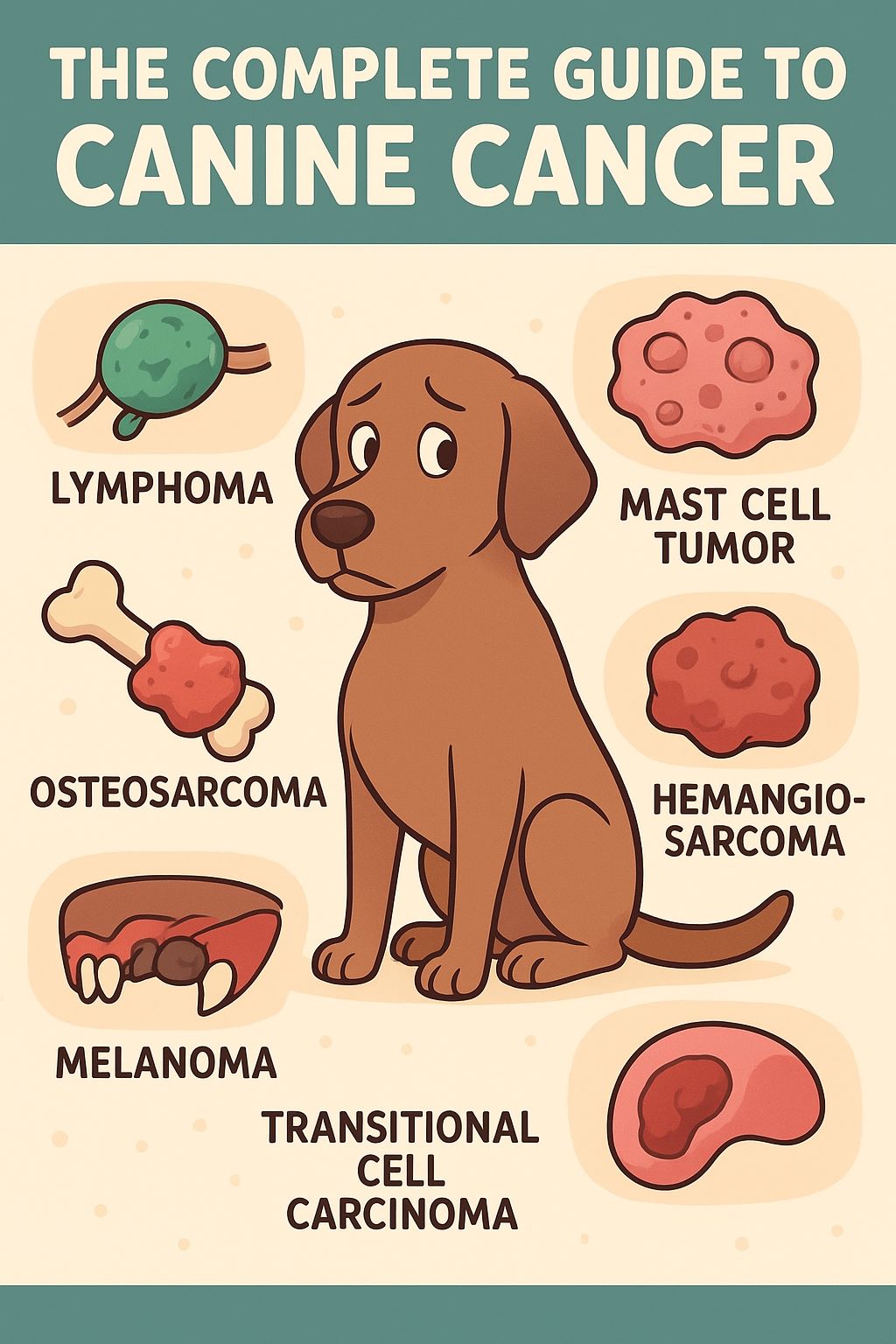
Canine cancer is one of the leading causes of death in dogs, particularly as veterinary medicine has improved and our pets live longer. While the word itself can strike fear into any owner’s heart, understanding what types of cancer exist, how they behave, how they’re treated, and what the outlook is can empower you to act quickly and make informed decisions for your dog.
This guide covers all major types of canine cancer in dogs, including definitions, prognoses, treatment options, and prevention strategies — plus a Doberman-specific section on breed-related cancer risks. In our previous post on canine cancer we focused more on possible causes and treatments / support. This post is more dedicated to the taxonomy of existing types of canine cancer.
Table of Contents
Understanding Canine Cancer
Cancer occurs when the body’s cells grow and divide uncontrollably, forming masses or spreading to other tissues. Not all tumors are cancerous (malignant) — some are benign and do not spread — but malignant cancers can invade nearby tissues and metastasize (spread) to distant organs.
Key Terms to Know
- Tumor: An abnormal growth of tissue.
- Benign: Non-cancerous, slow-growing, does not spread.
- Malignant: Cancerous, invasive, can metastasize.
- Metastasis: Spread of cancer cells from the original site to other parts of the body.
- Prognosis: Expected outcome or survival time after diagnosis.
Types of Canine Cancer
Below are the most common — and some rare but important — cancers found in dogs.
1. Lymphoma
Definition:
Lymphoma is a cancer of the lymphatic system, affecting lymph nodes and organs like the spleen, liver, and bone marrow. It accounts for 15–20% of all canine cancers. There are several forms, including multicentric (most common), alimentary (gastrointestinal), mediastinal (chest), and extranodal (skin, eyes, kidneys, etc.).
Prognosis:
- Untreated: Survival is typically 4–8 weeks.
- With chemotherapy (CHOP protocol): 12–18 months remission on average. Some dogs live 2+ years.
- Cure is rare but long-term remission is possible.
Treatment Options:
- Chemotherapy is the gold standard.
- Supportive care: steroids (prednisone) can temporarily reduce symptoms.
- Radiation for localized forms.
Prevention & Early Detection:
- No proven prevention; regular physical exams to detect enlarged lymph nodes early.
- Early diagnosis dramatically improves treatment success.
2. Mast Cell Tumors (MCTs)
Definition:
A cancer of mast cells, a type of immune cell found in the skin and other tissues. MCTs are the most common skin cancer in dogs but can also occur internally. They are unpredictable — some are slow-growing and easily cured, others aggressive and rapidly spreading.
Prognosis:
- Depends heavily on grade (I to III) and stage.
- Low-grade, surgically removed tumors: Often cured.
- High-grade: Median survival is 4–12 months, even with treatment.
Treatment Options:
- Surgery with wide margins is critical.
- Radiation for incomplete removal.
- Chemotherapy (vinblastine, prednisone) for high-grade or metastatic cases.
- Targeted therapies like toceranib phosphate (Palladia).
Prevention & Early Detection:
- Regularly check skin lumps — any lump should be aspirated for cytology.
- Early removal greatly improves prognosis.
3. Osteosarcoma
Definition:
A highly aggressive bone cancer, most common in large and giant breeds, affecting limbs (appendicular) or other bones (axial). It often metastasizes to the lungs early.
Prognosis:
- Without treatment: 1–3 months.
- Amputation + chemotherapy: Median survival 10–12 months.
- Less than 20% survive beyond 2 years.
Treatment Options:
- Amputation followed by chemotherapy is standard.
- Limb-sparing surgery in select cases.
- Pain management is essential for quality of life.
Prevention & Early Detection:
- No proven prevention.
- Watch for unexplained lameness or swelling in limbs.
4. Hemangiosarcoma
Definition:
A malignant cancer of blood vessel lining cells, often affecting the spleen, heart, or skin. Known for sudden rupture and internal bleeding.
Prognosis:
- Without surgery: Days to weeks.
- Surgery + chemotherapy: Median survival 4–6 months.
- Almost always fatal within 1 year.
Treatment Options:
- Emergency surgery for internal bleeds.
- Chemotherapy (doxorubicin).
- Supportive care for heart-based tumors.
Prevention & Early Detection:
- Regular ultrasounds in high-risk breeds.
- Early detection is rare due to silent growth until rupture.
5. Melanoma
Definition:
Cancer of pigment-producing cells (melanocytes). In dogs, oral melanomas are aggressive, skin melanomas are often benign, and toe (subungual) melanomas are malignant.
Prognosis:
- Oral/toe melanomas: Median survival 6–12 months with treatment.
- Skin melanomas: Often cured with surgery.
Treatment Options:
- Surgery with wide margins.
- Radiation for oral tumors.
- Melanoma vaccine (Oncept) can extend survival in oral melanoma cases.
Prevention & Early Detection:
- Regular oral exams.
- Check for pigment changes in skin or nails.
6. Transitional Cell Carcinoma (TCC)
Definition:
A malignant cancer of the urinary bladder lining, often affecting the trigone area (where ureters and urethra meet).
Prognosis:
- Median survival with treatment: 6–12 months.
- Without treatment: 3–4 months.
Treatment Options:
- Surgery rarely possible due to location.
- Chemotherapy (mitoxantrone, piroxicam).
- Radiation in some cases.
Prevention & Early Detection:
- Avoid lawn chemicals, as they’ve been linked to increased TCC risk.
- Watch for urinary straining or blood in urine.
Definition:
A group of cancers arising from connective tissues (fibrosarcoma, hemangiopericytoma, nerve sheath tumors). Usually slow to spread but locally invasive.
7. Soft Tissue Sarcomas
Prognosis:
- Low to intermediate grade: Good if completely excised.
- High grade: Risk of metastasis to lungs.
Treatment Options:
- Wide surgical removal.
- Radiation for incomplete excision.
- Chemo for high-grade cases.
Prevention & Early Detection:
- Regularly check for lumps under the skin.
8. Mammary Gland Tumors
Definition:
Tumors of the mammary glands; about 50% are malignant. Very common in unspayed females.
Prognosis:
- Small, early-stage: Good with surgery.
- Large, aggressive: Poor prognosis.
Treatment Options:
- Surgical removal (lumpectomy or mastectomy).
- Spaying at time of removal if not already spayed.
- Chemo rarely used.
Prevention & Early Detection:
- Spaying before first heat reduces risk to near zero.
- Regular mammary exams.
9. Brain Tumors
Definition:
Primary (meningiomas, gliomas) or secondary tumors that affect brain function.
Prognosis:
- Depends on type, size, and treatment availability.
- Meningiomas: Surgery/radiation can yield 1–2+ years survival.
- Gliomas: More aggressive, shorter survival.
Treatment Options:
- Surgery in accessible locations.
- Radiation therapy.
- Palliative meds (steroids, seizure control).
Prevention & Early Detection:
- No prevention; watch for seizures, behavior changes, vision loss.
10. Anal Sac Adenocarcinoma (Apocrine Gland Anal Sac Adenocarcinoma, AGASACA)
Definition:
A malignant tumor arising from the apocrine glands of the anal sac. Often produces paraneoplastic hypercalcemia (high calcium in the blood), which can cause kidney damage.
Prognosis:
- With surgery + radiation + chemo: Median survival 1–2 years.
- Without treatment: 6–12 months.
- Metastasis to lymph nodes and lungs is common.
Treatment Options:
- Surgical removal of tumor and affected lymph nodes.
- Radiation for local control.
- Chemo for metastasis or non-resectable tumors.
Prevention & Early Detection:
- Regular rectal exams in senior dogs.
- Early detection before lymph node spread improves outcome.
11. Thyroid Carcinoma
Definition:
A malignant tumor of the thyroid gland in the neck. Most are non-functional (don’t affect thyroid hormone levels), but some secrete excess hormones.
Prognosis:
- If small and surgically removable: 2+ years possible.
- Large, invasive tumors: 6–12 months with treatment.
Treatment Options:
- Surgery for localized tumors.
- Radiation or iodine-131 for invasive disease.
- Chemo if metastasized.
Prevention & Early Detection:
- Regular neck palpation during exams.
- Watch for swelling, coughing, or voice changes.
12. Squamous Cell Carcinoma (SCC)
Definition:
A malignant tumor of squamous epithelial cells, often in skin, mouth, or nails. Oral SCC is locally invasive; skin SCC is slower growing.
Prognosis:
- Skin SCC: Good with complete removal.
- Oral SCC: Median survival 6–12 months with surgery/radiation.
Treatment Options:
- Surgical excision with wide margins.
- Radiation for oral tumors.
- Pain management for bone involvement.
Prevention & Early Detection:
- Limit sun exposure in light-skinned dogs.
- Examine mouth regularly.
13. Fibrosarcoma
Definition:
A malignant connective tissue tumor, often in the skin or oral cavity. Locally aggressive, less likely to metastasize.
Prognosis:
- Skin: Good with complete removal.
- Oral: Recurrence common; survival often under 1 year.
Treatment Options:
- Surgery with aggressive margins.
- Radiation post-surgery for incomplete excision.
Prevention & Early Detection:
- Routine lump checks.
14. Chondrosarcoma
Definition:
A malignant cartilage tumor, usually affecting nasal cavity, ribs, or pelvis.
Prognosis:
- Nasal form: 1–2 years with surgery/radiation.
- Bone form: Better than osteosarcoma but still guarded.
Treatment Options:
- Surgery + radiation for nasal tumors.
- Amputation for limb involvement.
Prevention & Early Detection:
- No prevention; monitor nasal discharge or facial deformity.
15. Histiocytic Sarcoma / Malignant Histiocytosis
Definition:
A rare but aggressive cancer of histiocytes (immune cells). Localized form can occur in skin or joints; disseminated form affects multiple organs. Bernese Mountain Dogs and Rottweilers are high-risk, but it occurs in other breeds too.
Prognosis:
- Disseminated: Weeks to months.
- Localized: Up to 1–2 years with surgery/chemo.
Treatment Options:
- Surgery for localized disease.
- Chemo (lomustine) for systemic disease.
Prevention & Early Detection:
- No known prevention; rapid progression makes early detection difficult.
16. Plasma Cell Tumors / Multiple Myeloma
Definition:
Plasma cell tumors can occur in the skin (benign) or as multiple myeloma (malignant, bone marrow-based cancer). Multiple myeloma affects bones, kidneys, and immune system.
Prognosis:
- Multiple myeloma: 12–18 months with chemo.
- Cutaneous plasma cell tumors: Usually cured with surgery.
Treatment Options:
- Chemo (melphalan + prednisone) for myeloma.
- Surgery for skin tumors.
Prevention & Early Detection:
- Bloodwork showing high protein can be an early clue.
17. Testicular Tumors
Definition:
Common in intact male dogs, especially with retained (undescended) testicles. Types include Sertoli cell tumors, seminomas, and interstitial cell tumors.
Prognosis:
- Usually good if surgically removed early.
- Some can secrete hormones causing feminization syndrome.
Treatment Options:
- Neutering is curative in most cases.
Prevention & Early Detection:
- Early neutering or monitoring intact males.
18. Leukemia
Definition:
Cancer of blood-forming tissues (bone marrow, spleen). Acute lymphoblastic leukemia (ALL) is aggressive; chronic lymphocytic leukemia (CLL) is slower.
Prognosis:
- ALL: Weeks to months even with treatment.
- CLL: Months to years with chemo.
Treatment Options:
- Chemo protocols tailored to type.
- Supportive care for anemia and infections.
Prevention & Early Detection:
- Regular bloodwork in senior dogs.
19. Nasal Tumors
Definition:
Includes carcinomas and sarcomas in nasal cavity. Common signs: nasal discharge, sneezing, facial swelling.
Prognosis:
- 8–18 months with radiation; poor without treatment.
Treatment Options:
- Radiation therapy is standard.
- Surgery rarely curative due to anatomy.
Prevention & Early Detection:
- Avoid second-hand smoke and pollutants.
20. Gastrointestinal (GI) Adenocarcinoma & Leiomyosarcoma
Definition:
Malignant tumors of the stomach or intestines (adenocarcinoma from glandular tissue; leiomyosarcoma from smooth muscle).
Prognosis:
- Adenocarcinoma: 6–12 months with surgery.
- Leiomyosarcoma: Better prognosis if fully removed.
Treatment Options:
- Surgical excision.
- Chemo in some cases.
Prevention & Early Detection:
- Early detection is difficult; monitor for weight loss, vomiting, diarrhea.
Doberman-Specific Cancer Risks
While canine cancer can affect any breed, Dobermans are notably predisposed to certain types, including:
- Osteosarcoma (especially in large males)
- Hemangiosarcoma
- Mammary tumors (in unspayed females)
- Melanoma (oral form)
- Lymphoma (average breed risk, but often aggressive when it occurs)
Doberman owners should be especially proactive with:
- Annual or semi-annual vet checkups.
- Baseline chest X-rays in seniors.
- Abdominal ultrasounds for early hemangiosarcoma screening.
- Oral exams at every grooming session.
Final Thoughts
Canine cancer is complex and frightening, but knowledge and vigilance are the owner’s best weapons. Early detection often means less aggressive treatment, better quality of life, and longer survival. While not all cancers are preventable, healthy lifestyle choices, regular vet exams, and prompt investigation of any abnormal signs can make all the difference.