
Doberman Whining: What It Means, Why It Happens, and How to Handle It
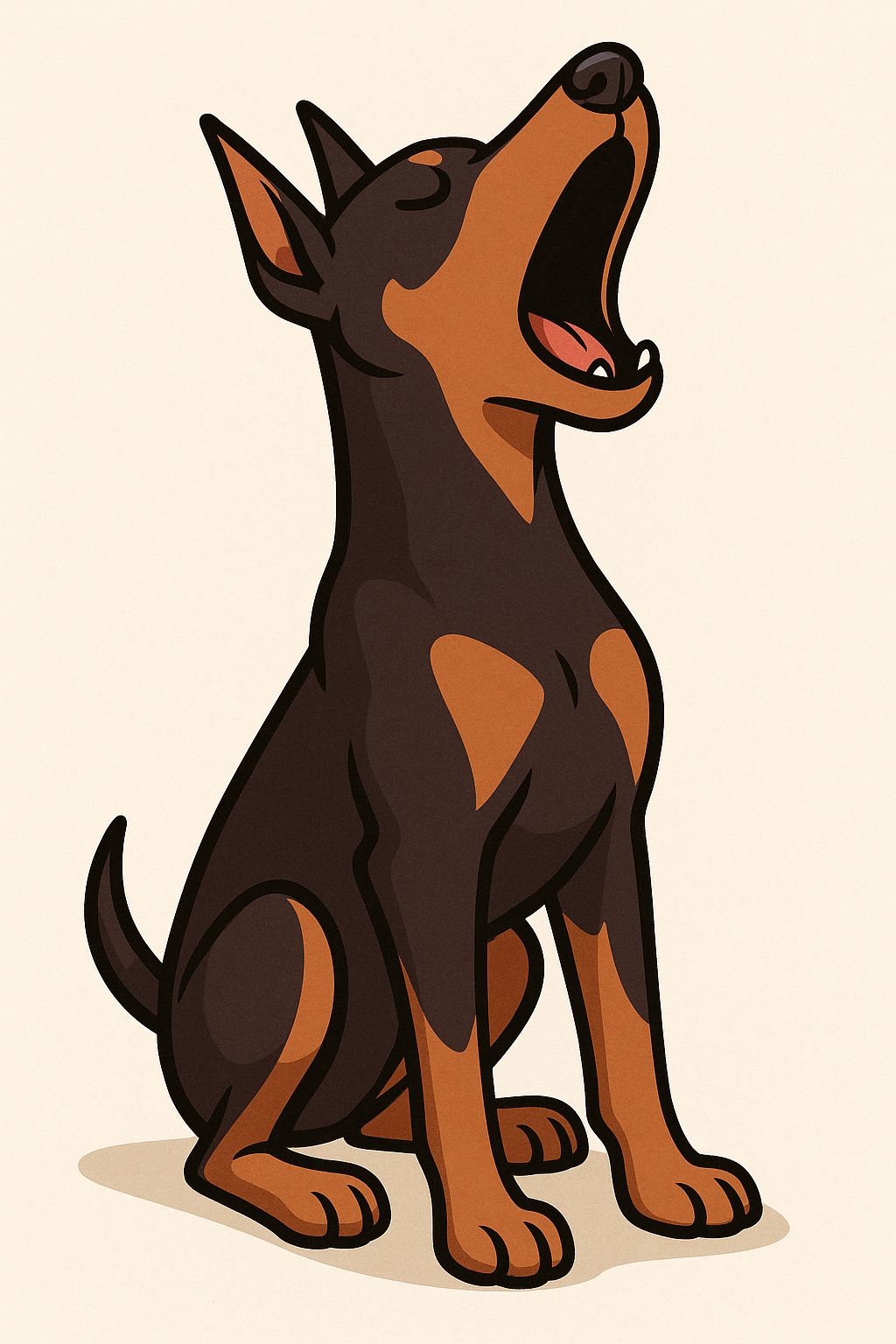
At Wonder Doberman, we often hear the same complaint from new Doberman owners:
“Why does my Doberman whine so much?”
They’re not barking excessively. They’re not growling or howling. They’re… talking. Constantly. Through whines, groans, chirps, squeaks, and dramatic sighs.
Dobermans are famously not a “barky” breed. When a Doberman barks, it’s usually for a reason and often with startling power. But whining? Oh, they’re experts at it. Doberman whining is a key part of their emotional expression, problem-solving attempts, and yes, sometimes manipulation.
Let’s explore why Dobermans whine, what they’re trying to say, and how to manage it without encouraging annoying or pushy behavior.
Table of Contents
Not Barkers, But Very Vocal
It surprises many people that Dobermans are not typically excessive barkers. In fact, well-bred and properly trained Dobermans are known for their quiet confidence. They don’t yap at leaves or bark obsessively at the mailman.
But that doesn’t mean they’re silent.
Dobermans are one of the most emotionally expressive breeds out there. They communicate through their eyes, their posture, and their voices, especially when whining. And the sounds they produce are incredibly diverse. You might hear:
- Whining
- Moaning
- Squealing
- Groaning
- Huffing
- Chirping
- Gulping air dramatically
- Gurgly “talking” with their mouths
These sounds aren’t always negative. In fact, they’re often your dog’s way of “chatting” with you, trying to be heard and understood. The whining may indicate excitement, desire, anxiety, frustration or even just habit.
Why Is My Doberman Whining?
Let’s break down some of the most common reasons Dobermans whine:
1. Excitement or Anticipation
Dobermans are high-drive dogs. When they know something fun is coming: a walk, dinner, training time, they often can’t contain their enthusiasm. A whine may escape as they try to hold it together.
Signs it’s excitement whining:
- Tail is wagging
- Body is wiggly or pacing
- Eyes are bright
- Happens in predictable moments (right before meals, when grabbing the leash, etc.)
How to manage it:
You don’t need to punish excited whining, but you also don’t need to reward it. Wait for a moment of silence before putting the leash on, serving dinner, or opening the door. Over time, your Doberman will learn that calm behavior makes things happen faster.
2. Frustration
Dobermans are incredibly smart. That’s one of their greatest gifts and also their greatest challenge. When they want something and can’t get it, they often whine in frustration.
Common triggers include:
- Not being able to reach a toy
- Wanting to go outside
- Seeing another dog and wanting to interact
- Being asked to wait or stay
What’s happening:
Your dog is expressing impatience or emotional overload. This is especially common in puppies and adolescents.
What to do:
- Teach impulse control exercises (like “place,” “stay,” and “leave it”).
- Don’t give in to whining. Reward calm, quiet behavior instead.
- If your dog is whining at a window, redirect them away calmly. Don’t yell, it increases arousal.
3. Anxiety or Stress
Whining can also signal discomfort, fear, or nervousness. Separation anxiety, noise sensitivity, or confusion can all manifest as whining.
Signs it’s anxiety-related:
- Tail is tucked or stiff
- Ears are pinned
- Body is tense or trembling
- Panting
- Pacing
What to do:
- Identify and address the root cause of the anxiety
- Work on desensitization and counter-conditioning
- Use structured routines and predictable environments
- Provide a safe place (crate, mat, quiet room)
- Consider speaking with a professional trainer or vet for severe cases
4. Pain or Physical Discomfort
Sometimes, whining is your dog’s way of saying, “Something hurts.” Dobermans have a high pain tolerance, but some will still vocalize if they are truly uncomfortable.
Clues:
- Whining while lying down or getting up
- Sudden change in behavior
- Limping or stiffness
- Whining without apparent cause
What to do:
Don’t ignore unexplained whining, especially if it’s new. Get a vet check to rule out injury, arthritis, dental pain, or internal issues. It’s always better to be safe than sorry.
5. Manipulation and Habit
Here’s the uncomfortable truth:
Dobermans are manipulative.
Not in a devious or malicious way, but in a very clever, observant, calculated way. They watch your every move. They learn your routines. And they experiment to see what works.
A Doberman who whines to go outside, gets let out, and then immediately turns around to ask for a treat? That’s not need – that’s strategy.
How do you know if you’re being manipulated?
- The whining only happens when you’re watching
- Your dog “tries different voices” to get what they want
- Whining increases if you hesitate or say no
- The behavior worked in the past—and they remember
How to avoid being played:
- Stick to your rules. If you don’t want your dog begging or whining for food, never feed them from the table, even once.
- Ignore manipulation whining completely. Don’t scold, just don’t engage.
- Be proactive: if your Doberman whines every evening, schedule structured play or training time before that. Give them a job.
- Give affection on your terms, not theirs.
Understanding the Doberman Mind
Whining in Dobermans is deeply connected to how smart, emotionally intense, and human-focused they are. They don’t just want things. They feel things deeply. And they often struggle to self-soothe if they haven’t been taught how.
At Wonder Doberman, we believe in respecting the Doberman brain, but also shaping it responsibly.
The Doberman’s “Mental Scream”
Some Dobermans don’t handle internal pressure well. When something exciting, stressful, or uncertain builds up, it has to come out and whining is the “release valve.”
It’s important to note that this isn’t bad behavior. It’s emotional overflow.
But it can become bad behavior if the dog learns that whining always works.
Balanced Solutions: How to Reduce Unwanted Doberman Whining
Here’s how we coach our clients to address whining fairly but effectively:
1. Set Clear Expectations
Structure reduces stress. If your Doberman knows:
- When meals happen
- When walks happen
- When training or play happens
…they’ll be less likely to whine randomly or anxiously. Predictability builds emotional stability.
2. Ignore the Noise, Reward the Quiet
Dogs repeat what works.
If whining gets your attention, your Doberman will do it more. If quiet earns affection, a treat, or your next command – they’ll learn to use that instead.
Start catching moments of calm and rewarding them. Say “yes” or “good” and offer a bit of kibble or play. Reinforce what you do want.
3. Teach a “Quiet” Cue
Once your Doberman knows basic training, you can introduce a cue like “enough” or “quiet.” Start by marking the moment they go quiet and rewarding it.
Don’t yell “quiet!” while they’re whining. It means nothing and often adds to the excitement.
Instead:
- Wait for 1–2 seconds of silence
- Say “quiet,” then mark and reward
- Build the skill slowly, starting in low-distraction environments
4. Teach an Incompatible Behavior
A dog who is lying calmly in “place” cannot also be pacing and whining.
A dog holding a sit or focusing on a trick is mentally engaged and less likely to emotionally melt down.
Use structure to replace whining with something productive.
Examples:
- Ask for a “down” while waiting for dinner
- Teach “go to mat” for greeting guests
- Use “watch me” during stressful events (like storms or travel)
5. Give Them a Job
Dobermans are working dogs. Bored Dobermans become vocal Dobermans.
Whining is sometimes just the symptom of unmet mental and physical needs. Be sure your dog has:
- Daily obedience training
- Structured walks
- Problem-solving games (like puzzle feeders or scent work)
- Play sessions that satisfy their drive
Remember: a tired dog isn’t always a calm dog. A fulfilled dog is a calm dog.
6. Don’t Let Empathy Become Weakness
Dobermans are experts at looking pitiful.
They can make the saddest face, the most dramatic moan, the longest sigh—just because they want something. And it works on kind-hearted people.
But giving in to this tactic teaches them to whine more.
Empathy is good. But consistency is better.
Puppy Doberman Whining vs. Adult Doberman Whining
Whining is developmentally normal in young Dobermans. Puppies whine for:
- Attention
- Potty
- Warmth
- Company
- Confusion
You should always investigate puppy whining. But as your pup matures, you’ll want to:
- Gradually encourage more independence
- Ignore harmless whining
- Avoid over-soothing
- Teach boundaries and emotional self-regulation
An adult Doberman who never learned how to wait, settle, or soothe themselves will become a nuisance—and possibly even an anxious mess.
When to Be Concerned
Most whining is harmless and manageable. But contact a professional if:
- The whining escalates to panic
- It’s constant and unrelated to visible events
- It’s accompanied by destructive behavior
- It’s suddenly new in an older dog
- It interrupts sleep or basic daily functioning
- The whining becomes howling
Some issues—like separation anxiety or medical discomfort—require targeted help. Don’t ignore them.
What to Do If the Whining Becomes Howling or Barking
If your Doberman whining escalates into howling or persistent barking, it’s a clear sign that their emotional arousal has reached a higher level. This often means they’re overwhelmed, overly frustrated, or experiencing a deeper issue like anxiety or boredom. First, stay calm—reacting emotionally will often make things worse.
Then assess the situation: Is your dog under-stimulated, left alone too long, or trying to alert you to something?
Increase their mental and physical enrichment, reinforce calm behaviors, and reintroduce structure through obedience work. Avoid accidentally rewarding the outburst (such as rushing to them every time they howl), and instead reward quiet moments. If the behavior persists or worsens, consult with a professional trainer or behaviorist to identify the root cause and create a tailored plan.
Final Thoughts: Channel the Whine, Don’t Crush It
At Wonder Doberman, we love our dogs’ emotional depth. Their vocalizations are part of what makes them so unique, sensitive, and connected to us.
We don’t want to silence our dogs completely. But we do want to guide their expression in a healthy direction.
A whining Doberman isn’t bad.
But a demanding, anxious, manipulative Doberman can become exhausting.
Use fair structure, balanced training, and consistency to teach your dog that whining isn’t the only—or the best—way to be heard.
Teach them to speak with their actions, not their whines.
And you’ll love living with your Doberman even more.