
Dogs Humping: Myth vs. Reality
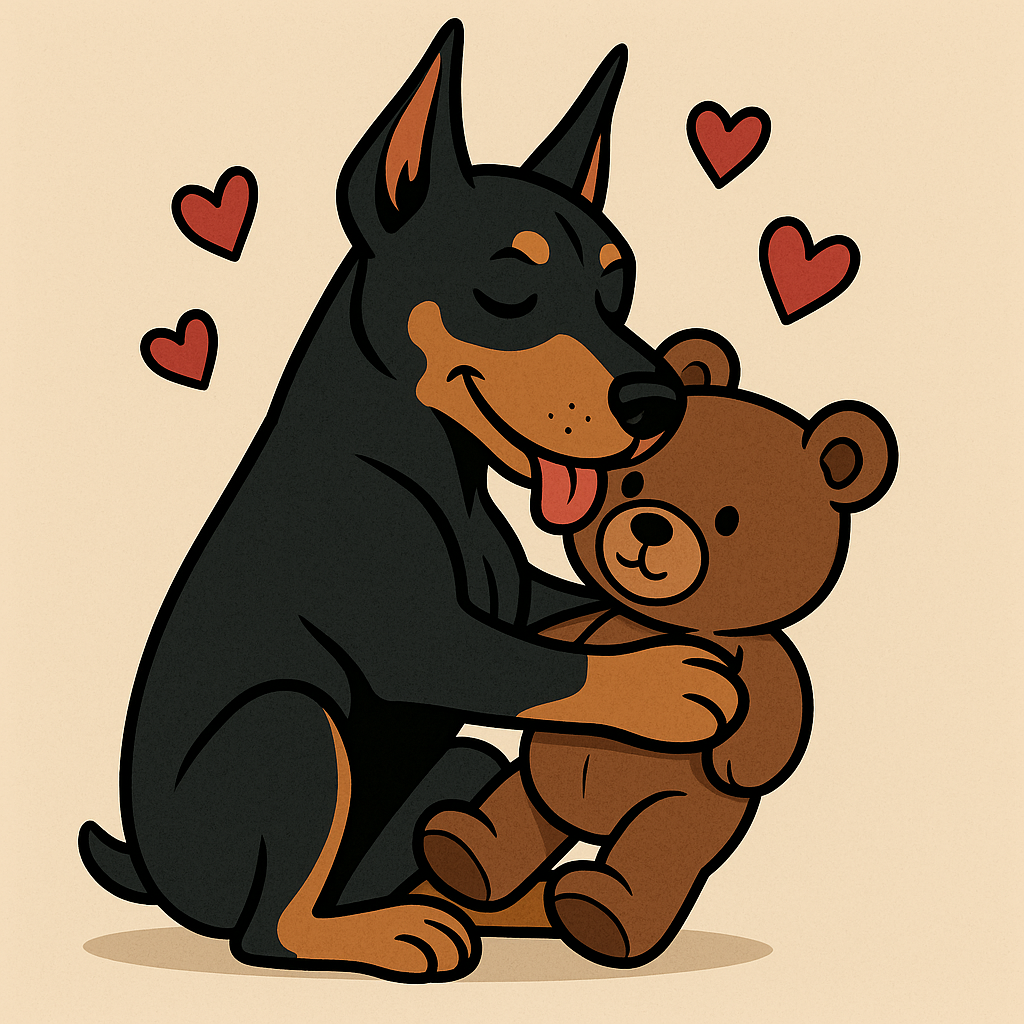
Humping. Mounting. Thrusting. Whatever you call it, it’s one of the most misunderstood behaviors in the canine world. Whether your dog is enthusiastically mounting a pillow, another dog, or even your unsuspecting houseguest’s leg, chances are you’ve heard someone exclaim: “He’s trying to be dominant!” or “She must be in heat!” But here’s the truth — more often than not, those reactions are completely off the mark.
At Wonder Doberman, we’re committed to demystifying dog behavior, especially when popular culture and old-school training advice fail our dogs. And when it comes to humping, there’s a whole world of truth buried under layers of myth. So let’s unpack the reality of this behavior and why understanding it matters.
Table of Contents
Dogs Humping Misconceptions
If you’ve ever had a dog jump up and start humping a guest, you know the embarrassment that follows. Cue the nervous laughter, awkward apologies, and someone usually blurting out: “He’s just showing who’s boss!”
But this reaction is based on a massive misunderstanding of canine behavior. Humping is one of the most overgeneralized and misinterpreted actions in dogs. While it can be sexual or part of a dominance display, that’s the exception, not the rule.
It’s time to retire the one-size-fits-all explanation and look deeper.
The Emotional Roots of Humping
Dogs don’t mount things just to make us uncomfortable — although it can feel that way! In truth, humping is often a stress-relief behavior.
Dogs use it as a form of displacement behavior — an action that seems out of context but serves to release inner tension. This is similar to how humans might bite their nails, pace, or fidget with their hair when anxious or overwhelmed.
Common Emotional Triggers for Humping (Detailed Breakdown):
Many people are surprised to learn that humping is not always a sign of dominance or sexual behavior. In fact, it’s often a dog’s way of coping with overwhelming emotions or sensory input. Below are the most common emotional triggers behind humping, each with an in-depth explanation to help you decode your dog’s behavior more accurately.
1. Overstimulation (Play Getting Too Intense)
Play is a natural and healthy part of a dog’s life, but it can sometimes spiral out of control — especially in high-drive breeds like Dobermans. Tug, chase, roughhousing with other dogs, or even an intense game of fetch can push a dog into sensory overload.
When this happens, a dog may mount the nearest dog, toy, or even a human leg to release the pent-up arousal. It’s not about dominance; it’s about finding an outlet for that overflow of energy.
Signs of overstimulation before humping:
- Hyper-focus or “glassy” eyes
- Ignoring cues or commands
- Increased panting
- Repetitive or frantic behavior
- Barking or nipping during play
In this context, humping acts like a release valve, much like how a pressure cooker lets out steam.
2. Frustration
Dogs experience frustration just like people do — when they want something they can’t have, or when they’re restrained from doing something exciting or stressful.
For example, a dog that:
- Can’t get to another dog behind a fence
- Is told to stay when visitors arrive
- Is prevented from greeting another dog on leash
…may hump out of frustration. This is a redirected behavior, where the dog channels the tension somewhere else — often onto a toy, blanket, or person.
Think of it like a toddler throwing a tantrum when told “no.” Humping, in this case, is an emotional explosion, not a calculated act.
3. Anxiety or Nervousness
One of the most overlooked causes of dogs humping is anxiety. Dogs that feel unsure or worried may mount as a form of self-soothing, especially in new or unpredictable situations.
It’s common to see this when:
- A new guest enters the home
- The environment changes suddenly (like moving furniture)
- A dog visits a new place (vet clinic, daycare, friend’s house)
- Their usual routine is disrupted
This type of dog humping is a coping mechanism. The repetitive, rhythmic nature of the behavior helps the dog feel in control — similar to how a child might rock back and forth when overwhelmed.
Dogs prone to this:
- Dogs with separation anxiety
- Sensitive, insecure dogs
- Dogs lacking clear boundaries or structure
4. Excitement That Becomes Unmanageable
Not all dogs know how to regulate high excitement levels. When they get too revved up — such as when the leash comes out, a favorite person returns home, or it’s time for dinner — some dogs express that high emotional state by humping.
This isn’t about control or intention. It’s often a lack of impulse control combined with too much energy and emotion flooding the system at once.
You might see:
- Zoomies followed by mounting a pillow
- Barking or spinning, then jumping up and humping
- Humping after a fun or intense training session
It’s the equivalent of your dog saying, “I’m so happy I don’t know what to do with myself!”
5. Social Conflict or Tension with Other Dogs or People
Sometimes humping occurs in moments of uncertainty during social interactions. This is especially true when the dog is unsure how to behave around a particular dog or human.
You may notice that your dog only humps:
- One specific visitor
- A new dog at the park
- The youngest or most excitable child in the room
- A dog that seems too pushy or unpredictable
In these cases, humping isn’t about asserting dominance — it’s about trying to regulate an awkward or uncomfortable social situation. The behavior is often paired with other calming signals or stress indicators like lip licking, yawning, or turning the head.
It’s a bit like someone laughing nervously in a tense conversation — it doesn’t fix the situation, but it helps the individual cope.
6. New Environments
Dogs rely on structure and familiarity to feel safe. When they’re placed in a new setting — such as a new home, a hotel, a friend’s backyard, or even a different training facility — it can be emotionally destabilizing.
Some dogs respond with alert barking or pacing. Others shut down. And some hump as a way to adapt to the unfamiliar sensory input and stress.
New environments can include:
- New smells, surfaces, or layouts
- Unfamiliar animals or people
- Novel sounds (fans, machinery, multiple voices)
- Changes in routine (vacations, guests, moving homes)
Mounting something in this context is often an attempt to self-regulate in a space they don’t yet understand.
7. Uncertainty or Lack of Control
This is perhaps the most important emotional driver behind humping.
Dogs are creatures of habit. When they don’t understand what’s happening or what’s expected of them — or when they lack direction in a moment of excitement or pressure — they often revert to displacement behaviors like humping.
This might happen when:
- Rules are inconsistent at home (sometimes allowed on the couch, sometimes not)
- A dog is left to make their own choices too often without guidance
- The owner becomes anxious or reactive, transferring that energy to the dog
- The dog is caught in the middle of a conflict (e.g., loud argument, kids fighting)
These are moments when dogs feel emotionally untethered. Humping, then, is not defiance — it’s an attempt to create predictability or find something familiar they can control.
In Summary
While humping looks physical, it’s often a window into your dog’s emotional world. Recognizing what’s driving the behavior is essential — not just to manage it, but to support your dog in building better coping strategies.
By identifying the emotional cause — be it overstimulation, stress, frustration, or insecurity — you can shift from reacting with embarrassment or scolding to responding with compassion and structure.
A humping dog is rarely being rude. More often, they’re saying:
“This moment is too much. I don’t know what else to do.”
And when we respond with understanding, we help our dogs navigate those moments more successfully in the future.
Is It Really Dominance?
The idea that dogs are always trying to climb some kind of “dominance ladder” is largely outdated. True dominance in dogs is about access to valued resources and maintaining social stability — not chaos.
When a dog mounts another, it’s usually not about dominance, but about emotional overload, uncertainty, or even just a lack of impulse control.
In fact, many dogs who mount are the least confident individuals in the group. They may do it not because they feel powerful, but because they feel insecure or nervous and need an outlet.
So if your dog humps another at the dog park, don’t jump to conclusions about pack hierarchy. Look at the context.
Sexual Behavior vs. Humping
Let’s be honest: sometimes dogs humping is sexual. Yes, intact male dogs especially may mount due to hormonal drives — but even this is more complex than we think.
Sexual mounting is typically directed toward females in heat, is accompanied by sniffing, licking, and courting behaviors, and often occurs during adolescence or mating season. It tends to be consistent and goal-oriented.
But a neutered male mounting a stuffed unicorn? Not likely sexual.
Neutered dogs, female dogs, and puppies all mount — which tells us this behavior is not strictly linked to sex.
Humping and Stress: An Emotional Pressure Valve
Let’s take a look at a real-life example:
You bring your Doberman to a friend’s house. He meets a new dog, plays intensely for 10 minutes, and then starts humping the other dog repeatedly.
Is he:
A. Trying to assert dominance?
B. Flirting?
C. Overstimulated and releasing pressure?
Answer: C.
Dogs don’t always have great emotional regulation. When excitement builds too high, humping helps them offload excess tension. Think of it as steam escaping a pressure cooker.
Other signs of overstimulation might include:
- Zoomies
- Barking
- Mouthing
- Nipping
- Panting heavily despite low exertion
Humping can be just one behavior in a chain of coping mechanisms.
Targeted Humping: Why Just That One Dog or Person?
Many owners report their dog humps just one person, or only one dog in the household. This often raises suspicions: “Does he want to mate with Aunt Janet?” (Cringe.)
In reality, this selective mounting tells us a lot.
Your dog might feel social conflict with that individual. Not aggression, but discomfort. Maybe the person moves unpredictably, talks loudly, or gives unclear signals. Maybe that other dog plays rough or crowds your Doberman’s space.
Mounting that specific individual may help the dog cope with that emotional friction.
It’s also possible that particular person unintentionally reinforces the behavior — laughing, petting, or reacting in a way that draws attention to it.
Dogs Humping Objects: Pillows, Blankets, and Beds
When your dog humps their bed or a stuffed toy, it’s probably not because they’re “in love” with it. These kinds of behaviors are often self-soothing.
Just like a child might hug a teddy bear or suck their thumb, some dogs mount plush items or beds when they’re trying to calm themselves down.
You’ll often see this after:
- A stressful event (strangers coming over, a vet visit)
- Boring days (lack of enrichment)
- Lonely periods (long crate time or separation)
It’s not something to punish. It’s a message — your dog needs emotional support or more structured stimulation.
Humping in Puppies
Puppies hump too. And no, it doesn’t mean they’re “starting early.”
In puppies, humping is most often:
- Play-based (like biting or wrestling)
- A way to experiment with their bodies
- Triggered by excitement or confusion
- Attention-seeking behavior
Puppy humping should be gently redirected — not punished or exaggerated with dramatic reactions. Treat it like jumping up or play biting — a stage, not a scandal.
Hormonal Influence: The Role of Spay/Neuter
A common myth: neutering will stop humping.
Not necessarily.
While early neutering may reduce hormonally-driven sexual behavior, it does not erase emotionally-driven humping. In fact, many neutered dogs continue to mount just as much — sometimes more — because they never learned impulse control.
What does help?
- Confidence building
- Impulse control training
- Balanced exercise
- Mental enrichment
These address the root of the behavior, not just the symptom.
When Humping Becomes a Problem
Humping becomes a real concern when:
- It causes fights between dogs
- The dog is obsessed and won’t stop
- It happens compulsively in all environments
- It leads to skin irritation or injury
- It disturbs human relationships or household dynamics
In these cases, you need to address not only the behavior but the emotional cause.
How to Address Inappropriate Humping
A healthy approach includes:
- Interrupt Gently
Use a calm voice: “That’s enough.” Redirect to a different behavior like a sit, down, or fetch. - Avoid Shaming or Yelling
You’re not correcting a “bad” dog. You’re helping a dog manage emotion. - Give an Outlet
Dogs with big feelings need big outlets. Play tug. Go for a structured walk. Try enrichment toys. - Observe the Trigger
What sets it off? Is it after guests arrive? During high-energy play? Track it. - Practice Calm Behaviors
Reward moments of calmness and disengagement. A settled Dog is a confident Dog.
When to See a Vet or Behaviorist
If humping is:
- Obsessive
- Sudden and intense
- Accompanied by aggression
- Creating injury (to self or others)
It may be time for a professional evaluation.
Medical causes like urinary infections, allergies, or hormonal imbalances can play a role. Behavioral professionals can help decode complex emotional triggers and build a plan.
Balanced Training and Respectful Redirection
At Wonder Doberman, we believe in balanced training:
- Rewarding the right behavior
- Redirecting or correcting gently when needed
- Teaching the dog how to cope, not just suppressing symptoms
We don’t punish emotional outbursts — we help the dog find better ways to cope. A humping dog isn’t being bad — they’re waving a flag that says: “I need help managing this situation.”
What NOT to Do
Avoid:
- Laughing and encouraging (even unintentionally)
- Shaming or harsh correction
- Letting it continue without boundaries
- Overreacting in front of guests
Instead, practice calm redirection and always aim to understand why the behavior is happening.
Final Thoughts: Dignity, Understanding, and Compassion
Dogs are complex emotional beings. When they hump, they’re not trying to embarrass us or assert power. Most of the time, they’re trying to soothe themselves, get our attention, or release a burst of overwhelmed emotion.
Your dog doesn’t need punishment, they need understanding, structure, and sometimes guidance through difficult moments.
At Wonder Doberman, we raise emotionally aware dogs by meeting them where they are. That means we don’t shame natural behavior – we support healthy boundaries, create structure, and teach our dogs how to handle their feelings.
Next time you see a dog humping, pause before you laugh or scold. Instead, ask:
“What is this dog trying to tell me?”
The answer might surprise you and teach you more than you ever expected about emotional regulation, compassion, and canine communication.