
The Wonder Doberman Early Puppy Socialization Program: A Day-by-Day Guide from Birth to 10 Weeks
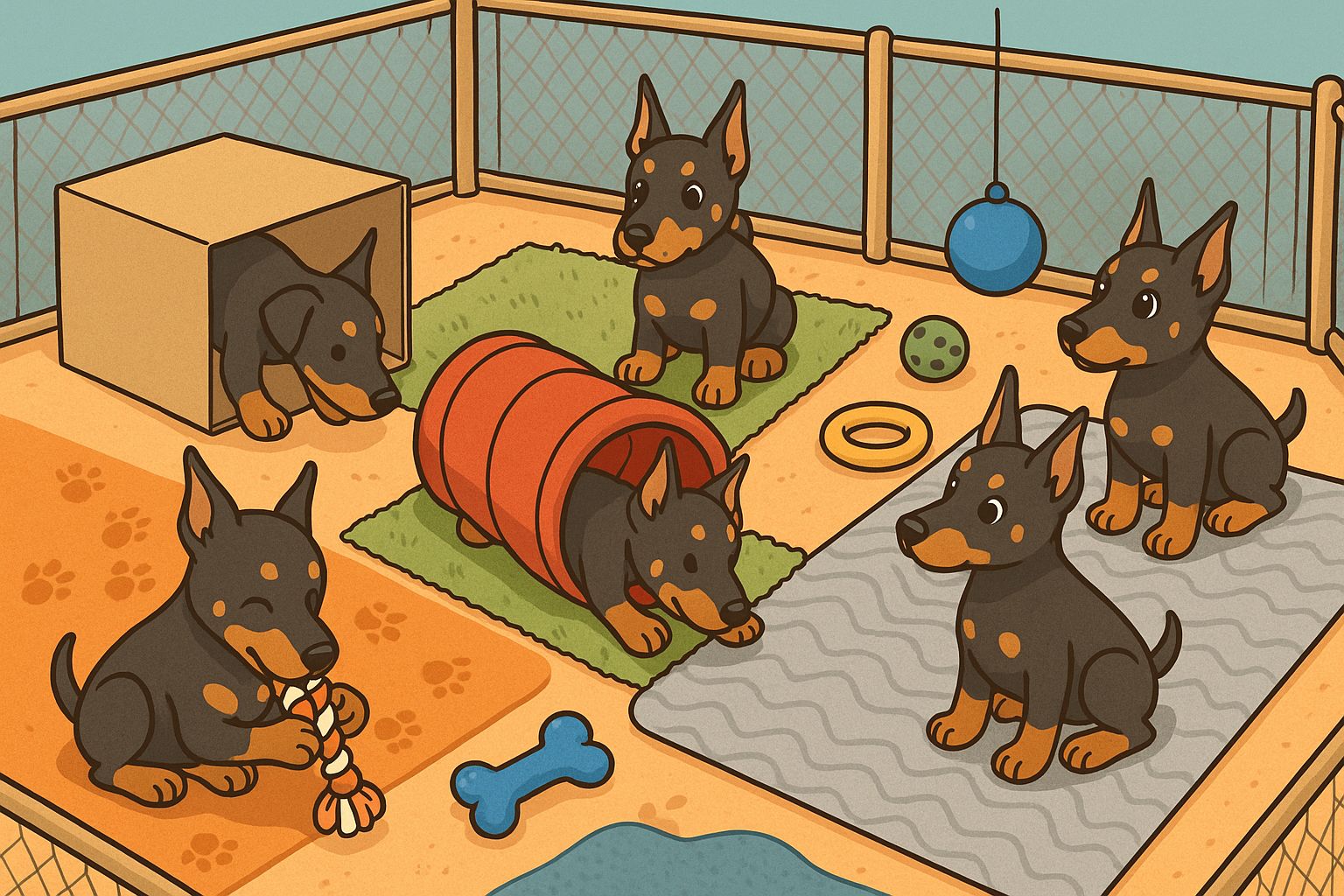
At Wonder Doberman, we believe the most critical window of a puppy’s development occurs during the first 10 weeks of life. This is a time of rapid neurological, physical, and emotional growth that shapes who the dog will become for the rest of their life. That’s why we’ve developed a comprehensive early puppy socialization program that begins at birth and continues every single day until the puppy leaves our care.
Our program isn’t just about cuddles, cozy blankets, and cute photos – although there are plenty of those too! It’s about giving each puppy the absolute best chance at becoming a confident, well-socialized, adaptable, and emotionally balanced adult who can thrive in any environment, whether as a beloved family pet, a service dog, or a canine athlete.
Let’s walk you through our early puppy socialization program in detail, starting from day one.
Table of Contents
Phase 1: Neonatal Period (0–16 Days Old)
Biosensor Program Recap
In a separate blog post, we covered our use of the Biosensor Program, also known as the Super Dog Program, which was developed by the U.S. military to improve the performance of future working dogs. We begin this at Day 3 and continue through Day 16.
Each day, we perform five brief but powerful exercises:
- Tactile Stimulation – A cotton swab between the toes.
- Head Held Erect – Held vertically for 3–5 seconds.
- Head Pointed Down – Gentle inversion for 3–5 seconds.
- Supine Position – Puppy on its back in our hands.
- Thermal Stimulation – A cool, damp cloth for a few seconds.
These exercises provide early neurological stimulation, and studies have shown they help develop:
- Better cardiovascular health
- Stronger heartbeats
- More resilience to stress
- Greater problem-solving skills
- Enhanced learning and working ability
But Biosensor is just the beginning. What happens after Day 16 is just as important—and this post will cover it in full detail.
Daily Care and Cleanliness Standards
Before diving into the timeline, it’s important to mention what we do every single day, without exception.
Cleanliness is Critical
At Wonder Doberman, the puppy enclosure is cleaned multiple times a day. We vacuum, sanitize, and wash all surfaces to ensure the puppies grow up in a clean, safe, and healthy environment. Blankets are changed daily. Toys are sanitized regularly.
This cleanliness helps prevent the spread of germs and parasites – but it also sets the tone for puppies to understand and respect hygiene and boundaries. Puppies naturally seek out clean spots to sleep and eliminate elsewhere- if given a clean, well-managed space.
The Day-by-Day Early Puppy Socialization Program
Below is our detailed week-by-week breakdown, including what we do every day to build strong, confident dogs.
Week 1 (Days 1–7): The World of Smell and Touch
- Focus: Bonding with mother, supervised handling by humans
- Primary Senses Engaged: Touch, smell
Although their eyes and ears are still closed, puppies already begin learning. During this week, we:
- Begin gentle handling daily
- Let puppies smell clean, safe objects with different scents: lavender, eucalyptus, vanilla, chamomile
- Start the Biosensor program on Day 3
- Weigh and track growth daily
- Keep the environment quiet, warm, and stress-free
Week 2 (Days 8–14): Slightly Awake
- Focus: Continued neurological stimulation, maternal care
- New Development: Eyes begin to open around Day 10–14
This week, puppies are still mostly blind and deaf but begin to explore the whelping box. We continue:
- Biosensor program
- Gentle daily handling, increasing duration and pressure
- Early scent introduction (herbs, fruits, animal fur, etc.)
- Short periods of gentle brushing or touch with different materials like fleece, faux fur, and soft rubber
We also allow them to briefly explore areas with different floor textures while we hold them.
Week 3 (Days 15–21): The Transitional Period
- Focus: First experiences with movement, sound, and more touch
- New Development: Hearing begins; puppies start to respond to the environment
Now things get exciting!
- Eyes and ears are open
- Puppies begin walking
- We end the Biosensor program and start sound desensitization
- Sounds introduced at low volume: clapping, music, television, vacuum, thunderstorm recordings
- Begin basic grooming exposure: nail trimming, gentle brushing, tooth-touching
- Begin early potty training using a shallow litter box
This week we introduce:
- Hanging toys that move with wind or puppy touch
- Floor surfaces: vinyl, carpet, linoleum, crinkly pads
Week 4 (Days 22–28): First Real Adventures
- Focus: Confidence-building
- Major Change: We open the pen and let them explore a larger area
This week is critical.
We now begin structured socialization exercises daily. Every day features something different. Examples include:
- Cardboard box tunnels
- Walking on crinkly materials
- Smelling different objects (feathers, wool, leather)
- Listening to dog sounds, doorbells, kitchen sounds
Each puppy is briefly separated from the litter daily for solo confidence training.
We continue litter box training, but they’re now showing improved understanding.
Week 5 (Days 29–35): Routines and Rituals
- Focus: Social skills and noise resilience
- Milestone: First group meals
Now the puppies are mobile, curious, and active. This week, we:
- Rotate daily environmental challenges
- Wobble boards
- Step stools
- Mirror panels
- Flapping flags
- Introduce interactive toys like treat balls, squeakers, ropes
- Continue sound desensitization with louder versions of fireworks, sirens, trucks, dog parks
- Have visitors handle the puppies: kids, men, women, people in hats or sunglasses
- Increase time away from littermates, helping prepare for separation
Puppies are now moved to larger areas during the day and continue to use litter boxes reliably.
Week 6 (Days 36–42): Testing the World
- Focus: Temperament testing, outdoor exposure (weather permitting)
This week is packed!
Key Milestones:
- First vet visit and vaccines
- First outdoor potty training sessions
- Puppy Aptitude Testing (PAT) or Volhard temperament test
- Introduction to leash and collar
Because the puppies now have some immunity, we can begin safe outside exploration, such as:
- Visiting quiet parks
- Car rides
- Walking on leash with supervision
We also begin crate exposure—placing treats and toys in open crates to form a positive association.
Week 7 (Days 43–49): Personality Blossoms
- Focus: Crate training and confidence building
This is a huge development leap.
Each day, we now:
- Do solo crate time (just a few minutes)
- Feed puppies in crates
- Do confidence-building exercises:
- Walking across a teeter board
- Climbing a low ramp
- Going through noisy curtains
- Expose them to smells from other animals (fur samples, scent trails)
We now play recordings of crying babies, barking dogs, crowds, traffic at medium volume.
They meet people with walkers, umbrellas, strollers, hooded jackets, and more.
Week 8 (Days 50–56): Bonding and Problem-Solving
- Focus: Engagement with humans and enrichment
Puppies now:
- Go on mini field trips (weather and immunity permitting)
- Wear harnesses and collars for longer sessions
- Solve basic problem-solving tasks:
- Hidden treat puzzles
- Find-the-toy games
- Escape-the-box challenges
We give each puppy focused training time individually every day – building that early connection with humans.
They’re now regularly sleeping in crates and eating most meals there.
Week 9 (Days 57–63): Fine-Tuning for Real Life
- Focus: Preparing for the home transition
We spend this week ensuring each puppy is:
- Comfortable in a car
- Used to routine changes
- Exposed to short baths, blow-drying, nail grinding
- Engaged with structured play: tug, fetch, engagement games
We match puppies to homes based on temperament, energy level, and personality to ensure a strong fit.
Week 10 (Days 64–70): Saying Goodbye
During their final week:
- We give new owners a transition guide
- Puppies continue crate time, leash walking, and exposure to different surfaces and sounds
Before going home, they’ve:
- Slept in a crate
- Gone on a car ride
- Been handled by at least 20 people
- Experienced over 50 different objects, textures, or stimuli
- Walked on grass, gravel, sand, pavement
- Seen umbrellas, strollers, men in beards, people in glasses, and more
The Long-Term Impact
What’s the result of all this?
Dogs raised through this kind of program show:
- Reduced fear-based behavior
- Higher adaptability to new environments
- Improved social skills with people and animals
- Faster house training
- Greater trainability
- Stronger bonding with humans
- Lower likelihood of rehoming
By the time our puppies go home at 10 weeks, they’ve already had a dozen experiences that most dogs don’t get until much later. This gives them an extraordinary head start in life.
Conclusion
Raising a well-balanced Doberman starts long before the first leash is clipped on or the first obedience command is taught. At Wonder Doberman, we dedicate ourselves to the daily, deliberate shaping of each puppy’s body, mind, and spirit. Every moment—from birth through ten weeks—is guided by purpose, structure, and an unwavering commitment to excellence. We raise each puppy as though they are destined to become a therapy dog, a service companion, a top competitor in sport, or a loyal family protector—because we believe every Doberman deserves that same elite start, no matter their future path.
When you choose a puppy from Wonder Doberman, you’re not just choosing a breed or a pedigree. You’re choosing a carefully nurtured soul—raised with science, enriched with experience, and deeply loved from the very first breath. Our puppies grow up surrounded by thoughtful socialization, rigorous early handling, and individualized attention to temperament and development.
We invite you to follow our journey, witness our puppy milestones, and see for yourself how we lay the groundwork for greatness. At Wonder Doberman, excellence isn’t an accident—it’s our standard. And it all begins on day one.