
Uterine Problems in Dogs – What Every Dog Owner and Breeder Should Know
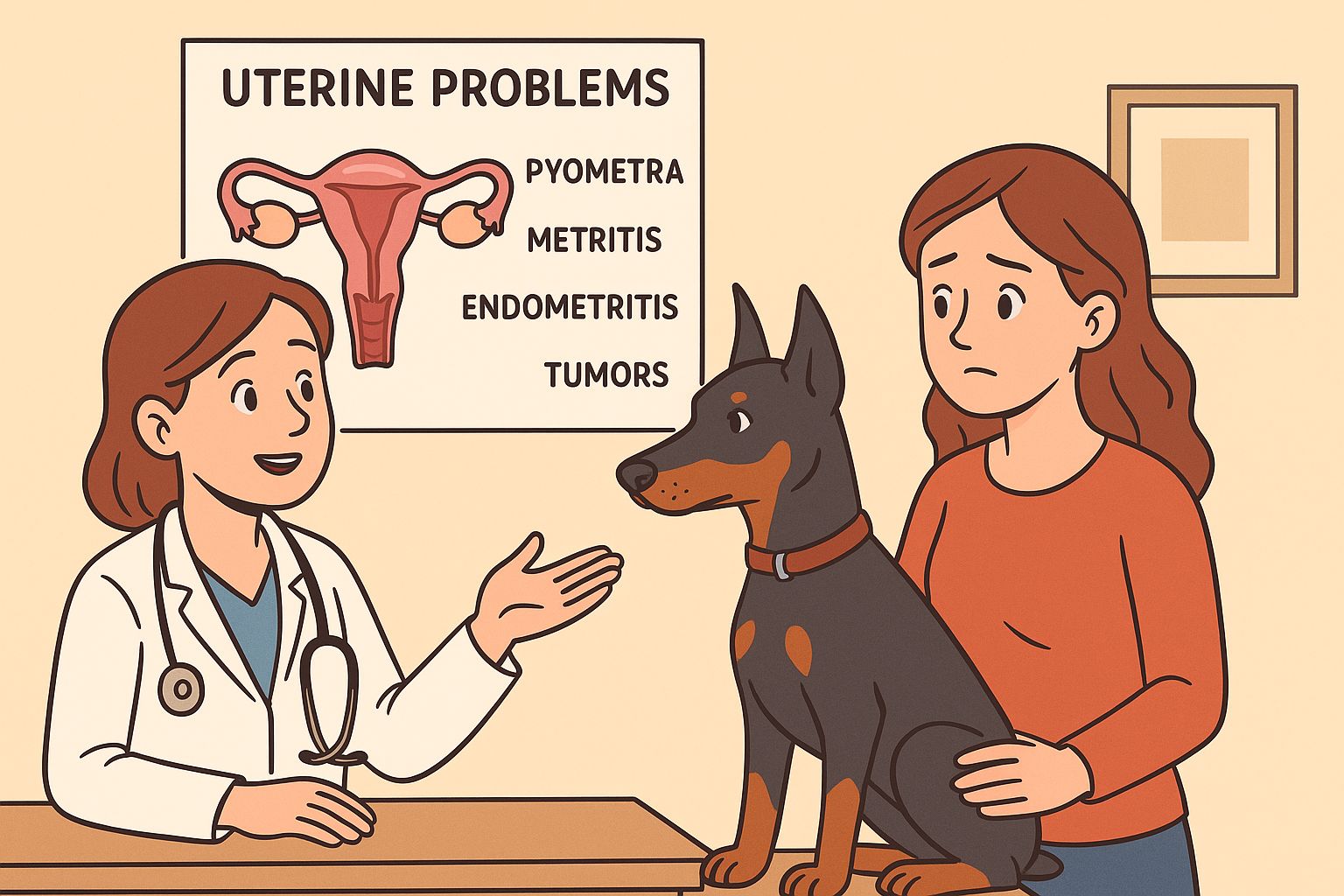
The uterus may not be something we think about every day, but for female dogs (especially breeding dams) its health is absolutely critical. A healthy uterus is what allows life to begin, grow, and be born safely. When things go wrong, they can go wrong very quickly.
Some uterine problems in dogs are life-threatening emergencies that require immediate veterinary attention. Others develop slowly and silently, only showing symptoms when damage is already done.
At Wonder Doberman, we believe in knowing the risks before they happen. Whether your dog is a beloved pet or part of a carefully planned breeding program, understanding uterine health can save lives.
Table of Contents
The Canine Uterus – A Quick Overview
The uterus in a dog is a Y-shaped organ located in the abdomen between the bladder and colon. It consists of:
- Two long horns – where pregnancy develops
- A uterine body – short central portion leading to the cervix
- The cervix – the muscular “gate” between uterus and vagina
During heat, the uterus becomes hormonally primed for pregnancy. If no pregnancy occurs, hormone changes bring it back to a resting state. This cycle repeats roughly every 6–8 months in most dogs.
But every cycle, every pregnancy, every birth takes a toll. Repeated hormonal changes, infections, and injuries can eventually lead to uterine disease.
“Heat cycle frequency varies widely among breeds. For example, Doberman females typically come into heat every 5 to 6 months, while Australian Shepherds usually cycle about every 7 to 8 months. Some breeds may only experience heat once a year or even less frequently, with intervals sometimes extending beyond 12 months.”
Common Uterine Problems in Dogs
Below are the most common—and some rare—conditions that can affect the uterus.
A. Pyometra – A Life-Threatening Uterine Infection
What it is:
Pyometra is a serious and potentially fatal infection of the uterus characterized by an accumulation of pus. It typically occurs during the weeks following a heat cycle when the uterus is hormonally primed but not pregnant. The condition can be classified as either open pyometra, where the cervix remains open allowing pus to drain, or closed pyometra, where the cervix is closed and pus becomes trapped inside the uterus, which is more dangerous.
Causes:
- Hormonal changes during the heat cycle, especially prolonged exposure to progesterone, cause thickening of the uterine lining and reduced immune defenses.
- Bacterial invasion, most commonly Escherichia coli (E. coli), enters the uterus often from the vagina.
- Multiple heat cycles without pregnancy increase risk due to repeated hormonal stimulation and uterine lining changes.
- Certain hormone treatments intended to suppress heat cycles or induce pregnancy may also predispose the uterus to infection.
Signs & Symptoms:
- Increased thirst and urination (due to toxin buildup affecting kidneys).
- Lethargy, depression, and loss of appetite.
- Vaginal discharge that may be thick, yellow, green, or bloody (usually in open pyometra).
- Abdominal swelling or discomfort, especially in closed pyometra.
- Fever may or may not be present.
- Vomiting and dehydration in advanced cases.
Risk Factors:
- All intact females are at risk from their very first heat cycle, but risk rises significantly after about 6 years of age.
- The more heat cycles a female experiences without becoming pregnant, the higher the risk.
- Use of hormone therapies to control cycles or treat infertility can contribute.
Treatment:
- Pyometra is a medical emergency requiring prompt veterinary care.
- The gold standard is surgical removal of the uterus and ovaries (ovariohysterectomy), especially in closed pyometra or severely ill dogs.
- Medical management with antibiotics and prostaglandins may be attempted in young, valuable breeding females, but carries risks and often leads to recurrence.
- Supportive care includes intravenous fluids, pain management, and monitoring for complications.
Prevention:
- Spaying female dogs eliminates the risk entirely.
- For breeding dogs, limiting the number of heat cycles without pregnancy reduces risk.
- Avoid hormone therapies unless absolutely necessary and always under veterinary supervision.
- Close monitoring for any signs of illness in intact females, especially as they age.
B. Metritis – Post-Whelping Uterine Infection
What it is:
Metritis is an acute, often severe infection of the entire uterine lining that occurs shortly after whelping. It can rapidly progress to life-threatening sepsis if not treated promptly.
Causes:
- Retained placenta or dead fetus left inside the uterus.
- Prolonged or difficult delivery (dystocia).
- Contamination from unclean whelping conditions or unsterile assistance.
- Trauma to the uterus during birth.
Signs & Symptoms:
- High fever
- Foul-smelling vaginal discharge (often dark brown, gray, or green)
- Refusal to eat or nurse puppies
- Lethargy, weakness, rapid deterioration
- Swollen abdomen, sometimes with pain on palpation
Risk Factors:
- Large litters or prolonged labor
- C-section with contamination
- Retained afterbirth
- Poor postpartum monitoring
Treatment:
- Immediate veterinary intervention with aggressive broad-spectrum antibiotics.
- IV fluids for dehydration and shock.
- Sometimes surgical removal of the uterus (emergency spay) if infection is severe.
- Supportive care to stabilize the dam and protect surviving puppies.
Prevention:
- Maintain a clean, sanitized whelping area.
- Assist difficult births promptly to prevent prolonged retention of puppies or placentas.
- Use postpartum ultrasound to confirm the uterus is empty.
C. Endometritis – Chronic Uterine Lining Inflammation
What it is:
A long-term, low-grade inflammation of the endometrium (inner uterine lining). Unlike metritis, endometritis is often not immediately life-threatening but can quietly cause infertility and poor litter outcomes.
Causes:
- Low-grade bacterial infections persisting after whelping.
- Repeated breeding without sufficient uterine recovery time.
- Hormonal imbalances, often involving excess progesterone.
- Post-pyometra changes or uterine scarring.
Signs & Symptoms:
- Infertility or repeated failure to conceive.
- Irregular heat cycles.
- Occasional mild vaginal discharge between heats.
- Smaller-than-expected litters or resorptions.
Risk Factors:
- Older breeding females
- History of pyometra, metritis, or SIPS
- Overbreeding without rest cycles
Treatment:
- Culture-guided antibiotics.
- Hormonal therapy to reset the uterine environment.
- Breeding rest for several months or permanent retirement from breeding.
Prevention:
- Allow adequate recovery between litters.
- Monitor fertility closely; investigate repeat failures.
- Avoid breeding females with known chronic uterine inflammation.
D. Subinvolution of Placental Sites (SIPS) – Slow Healing After Birth
What it is:
SIPS occurs when the placental attachment sites inside the uterus fail to heal as they should after whelping. Instead of closing, these sites continue to bleed, leading to prolonged discharge.
Causes:
- Incomplete regression of blood vessels at placental sites.
- Possibly genetic predisposition in some dogs.
Signs & Symptoms:
- Persistent bloody discharge weeks after whelping (bright red or pink, not foul-smelling).
- Otherwise healthy dam with normal appetite and energy.
Risk Factors:
- Young, first-time mothers
- Large litters with many placental sites
Treatment:
- Often self-resolving over several weeks.
- Severe cases may require spay to stop bleeding.
Prevention:
- Monitor all postpartum discharges closely.
- Avoid breeding dogs with a strong history of SIPS.
E. Uterine Inertia – When Labor Stalls
What it is:
Failure of the uterus to contract effectively during labor, preventing the delivery of puppies.
Types:
- Primary inertia – uterus never begins strong contractions.
- Secondary inertia – uterus starts well but becomes exhausted and stops.
Causes:
- Primary: genetic predisposition, small litter (weak stimulus), large litter (overstretched uterus), calcium or hormone imbalance.
- Secondary: prolonged labor, large puppies, malposition, maternal exhaustion.
Signs & Symptoms:
- Lack of productive contractions during expected whelping time.
- Long gaps between puppies with no signs of labor progress.
- Dam may be alert and calm (primary) or tired and distressed (secondary).
Risk Factors:
- Small or giant breeds
- Poor prenatal nutrition
- Overweight dams
Treatment:
- Calcium supplementation (if deficient).
- Oxytocin injections to stimulate contractions (only if no obstruction).
- Emergency C-section if medical management fails or if fetal distress occurs.
Prevention:
- Balanced prenatal diet with appropriate calcium-phosphorus ratio.
- Avoid unnecessary stress or fatigue late in pregnancy.
- Know dam’s normal labor pattern for early intervention.
F. Uterine Rupture – Tear in the Uterine Wall
What it is:
A dangerous and often fatal tear in the uterus, causing internal bleeding and potentially releasing puppies into the abdominal cavity.
Causes:
- Difficult birth with excessive straining.
- Improper use of obstetric instruments.
- Trauma to the abdomen.
- Overstretching from very large litters.
Signs & Symptoms:
- Sudden collapse during labor.
- Severe abdominal pain.
- Rapid breathing, pale gums, signs of shock.
Risk Factors:
- Prolonged obstructed labor
- Inexperienced assistance during delivery
Treatment:
- Immediate emergency surgery to repair or remove the uterus.
- Blood transfusion may be needed.
Prevention:
- Early intervention in cases of dystocia.
- Gentle handling during whelping.
- Avoid high-risk pregnancies without veterinary oversight.
G. Uterine Torsion – Twist in the Uterus
What it is:
A rare but serious condition where the uterus twists along its length, cutting off blood supply to itself and the puppies.
Causes:
- Sudden movement or trauma during late pregnancy.
- Uneven weight of fetuses in uterine horns.
Signs & Symptoms:
- Sudden severe abdominal pain and swelling.
- Restlessness, panting, collapse.
- Loss of fetal heartbeat if advanced.
Treatment:
- Emergency surgery to untwist or remove the affected uterine horn(s).
- C-section to save any viable puppies.
Prevention:
- Avoid rough play or jumping in late pregnancy.
- Monitor for sudden distress in pregnant dams.
H. Retained Placenta or Fetus – What’s Left Behind
What it is:
Failure to expel all placentas or a deceased fetus after whelping, leading to infection and illness.
Causes:
- Weak uterine contractions.
- Abnormal fetal positioning.
- Uterine inertia.
Signs & Symptoms:
- Persistent green or black discharge after birth.
- Fever, lethargy, reduced appetite.
- Possible milk drop in nursing mothers.
Treatment:
- Manual removal by a veterinarian.
- Medications to stimulate contractions.
- Surgery in severe or unresponsive cases.
Prevention:
- Post-whelp ultrasound or X-ray to ensure uterus is empty.
- Assist whelping promptly if progress stalls.
I. Uterine Neoplasia (Tumors) – Growths in the Uterus
What it is:
Abnormal growths within the uterus, which may be benign (leiomyoma) or malignant (adenocarcinoma).
Causes:
- Unknown in most cases; hormonal influence suspected.
Signs & Symptoms:
- Irregular vaginal bleeding or discharge.
- Infertility.
- Abdominal swelling or detectable mass.
Treatment:
- Surgical removal via spay.
- Chemotherapy or radiation if malignant and spread is suspected.
Prevention:
- Early spaying eliminates the risk.
- Routine reproductive health checks in intact females.
J. Adenomyosis – When the Lining Invades the Muscle
What it is:
The uterine lining (endometrium) grows into the muscular wall, causing thickening and reduced uterine function.
Causes:
- Chronic hormonal changes.
- Possibly linked to repeated pregnancies or heat cycles.
Signs & Symptoms:
- Infertility.
- Irregular or abnormal heats.
- Occasionally mild pain.
Treatment:
- Spay is curative.
Prevention:
- No reliable prevention other than spaying.
K. Uterine Prolapse – When the Uterus Comes Out
What it is:
The uterus turns inside out and protrudes through the vaginal opening.
Causes:
- Difficult labor with excessive straining.
- Weak pelvic support structures.
Signs & Symptoms:
- Visible fleshy mass at the vulva.
- Discomfort, licking, inability to nurse comfortably.
Treatment:
- Immediate veterinary care to clean, replace, or surgically remove uterus.
- Antibiotics and supportive care.
Prevention:
- Proper assistance during birth to avoid prolonged straining.
L. Congenital Abnormalities – Born With It
What it is:
Structural malformations of the uterus present from birth, such as agenesis (absence) or hypoplasia (underdevelopment).
Causes:
- Genetic developmental issues.
Signs & Symptoms:
- Infertility detected when breeding attempts fail.
Treatment:
- None; affected dogs should not be bred.
Prevention:
- Avoid breeding from lines with known reproductive malformations.
Causes & Risk Factors
- Age (older intact females are at higher risk)
- Hormonal changes after each heat cycle
- Breeding frequency and timing
- Poor nutrition during pregnancy
- Retained fetal or placental tissue
- Difficult or unassisted births
- Poor hygiene during whelping
- Trauma or rough handling during labor
- Certain infections (especially E. coli)
Signs of Uterine Trouble
Even subtle changes can indicate a problem:
- Abnormal vaginal discharge (color, odor, timing)
- Fever
- Lethargy or depression
- Refusal to eat or nurse
- Excessive thirst/urination
- Swollen abdomen
- Straining without producing puppies
- Foul odor from hindquarters
Diagnosis
Veterinarians may use:
- Ultrasound – for pregnancy monitoring and detecting fluid, retained tissue, tumors.
- X-rays – to confirm puppy number, detect abnormal structures.
- Bloodwork – to check for infection or systemic illness.
- Vaginal cytology & cultures – to identify infection type.
- Hormone tests – in fertility issues.
At Wonder Doberman, we own our own ultrasound machine. This lets us monitor pregnancies and postpartum recovery without unnecessary clinic trips, reducing disease exposure.
Treatment Options
Medical – antibiotics, hormone therapy, calcium supplementation.
Surgical – spay, C-section, tumor removal, uterine repair.
Supportive care – fluids, pain relief, careful monitoring.
Prevention
- Spay non-breeding females.
- Plan pregnancies with health and recovery in mind.
- Avoid unnecessary hormone treatments.
- Keep whelping areas clean and safe.
- Monitor postpartum females daily.
- Use ultrasound/X-ray to confirm no retained puppies or placentas.
Wonder Doberman Perspective
We believe:
- Dam health comes before litter size or show ambitions.
- Any sign of uterine distress is an emergency until proven otherwise.
- Even “perfect” mothers can have sudden complications.
- We never leave a dam alone with puppies in the first weeks—someone is always watching.
- We use responsible breeding intervals and thorough health checks.
Final Thoughts & Disclaimer
Uterine problems in dogs are often invisible until they become dangerous. Knowledge, vigilance, and early action save lives.
This article is for educational purposes only. It does not replace veterinary care.
Breeders, pet owners, veterinarians, everyone can have different opinions and approaches. At Wonder Doberman, these are the practices and values we follow to keep our girls safe and healthy.