
Dobermans and Kids: A Powerful Bond of Loyalty, Love, and Protection
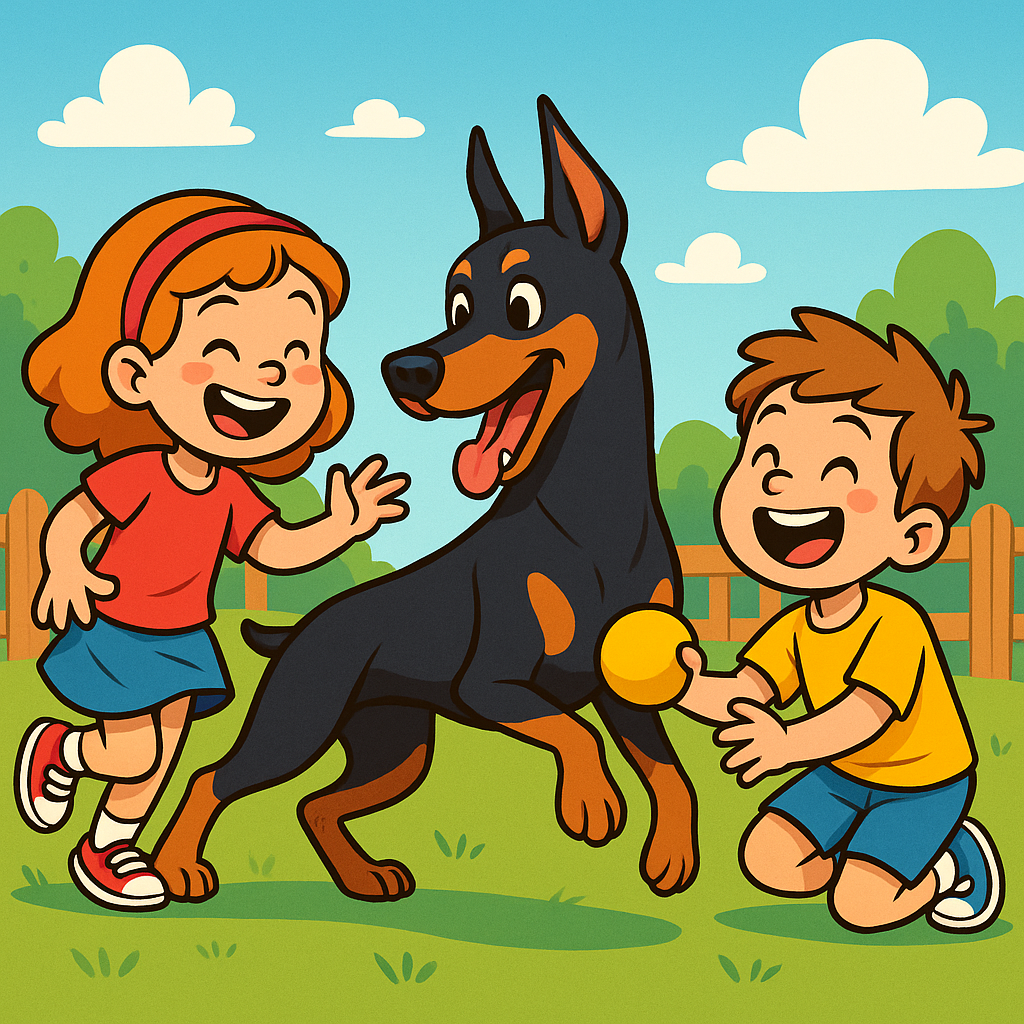
There’s something uniquely heartwarming about the relationship between a child and a dog. When that dog happens to be a Doberman, the connection can be nothing short of magical. At Wonder Doberman, we’ve had the joy of seeing this bond blossom many times over, and we can confidently say: Dobermans and kids make an incredible match. When raised and managed correctly, these elegant, intelligent, and affectionate dogs are among the best breeds you can have around your kids.
But as with any breed, the relationship between a Doberman and a child depends on mutual respect, appropriate training, supervision, and clear boundaries. Let’s explore what makes Dobermans such a wonderful addition to family life, how they instinctively protect their young companions, and what responsibilities come with raising kids and dogs together in harmony.
Table of Contents
Why Dobermans and Kids Are So Great Together
1. A Deeply Loyal Nature
Dobermans are one of the most loyal breeds in the canine world. They don’t just “like” their family they adore them. This loyalty goes deep, and children are no exception. In fact, many Dobermans will bond particularly closely with the younger members of the family. They recognize them as part of their “pack” and often become their fiercest protectors.
This loyalty translates into a constant desire to be near their people. A Doberman will follow your child from room to room, nap near their feet, and sit attentively during playtime. They are not a breed that ignores or tolerates kids, they embrace them fully.
2. Natural Protectors
Protection is wired into the Doberman’s DNA. Originally bred as personal protection dogs, they have a strong sense of responsibility over their loved ones. When children are involved, this instinct becomes even more finely tuned.
We’ve seen Dobermans quietly insert themselves between a child and a stranger, watch visitors with alert eyes when the kids are playing, and even step in when one sibling is teasing another a little too roughly. They know who belongs in their family and who doesn’t. They know the difference between a fun game and a situation that might make a child feel uneasy. And they’re never shy about stepping in if needed.
It’s important to understand that this behavior isn’t about aggression, it’s about vigilance and care. A well-socialized Doberman doesn’t attack unprovoked, but they will absolutely let someone know that boundaries are being crossed.
3. High Emotional Intelligence
Dobermans are one of the most emotionally intelligent breeds. They seem to sense when someone is sad, anxious, afraid, or uncomfortable. Children, with all their emotions and ups and downs, are often drawn to dogs who “get” them and Dobermans certainly do.
We’ve seen them lie quietly next to a child who’s had a hard day, bring toys to cheer them up, or sit in protective stillness while a toddler babbles nonsense in their direction. That emotional connection forms the foundation of a trusting and lifelong bond.
Teaching Kids to Respect Their Doberman
While Dobermans are amazing with kids, that doesn’t mean the relationship should be taken for granted. Any dog, no matter the breed, deserves respect. It’s essential that children learn how to properly interact with dogs, just as dogs are trained to interact appropriately with children.
1. Dobermans Are Not Ponies
Yes, we know the videos online can be adorable: a toddler climbing on the back of a large dog, pretending they’re riding a horse. But let’s be clear: your Doberman is not a pony. They should never be climbed on, used as a stepstool, or sat on.
Even if your Doberman is patient and tolerant, and many are, it doesn’t mean these behaviors are okay. It’s not respectful, it’s potentially painful for the dog, and it creates a dangerous precedent. A dog might tolerate it once, twice, or even a dozen times, but one day they may be sore or overwhelmed and the result can be a growl or worse.
Respect starts with education. Teach your children that dogs need personal space, just like people. Teach them to pet gently, not to pull ears or tails, and to recognize when the dog wants to be left alone. Even the best family dog has limits.
2. No Food or Toy Harassment
Dobermans, like most dogs, should be left alone when they are eating or chewing a toy. It’s best practice to teach kids not to grab food or treats from the dog, reach into the food bowl, or try to take away high-value items unless trained to do so safely.
Resource guarding isn’t common in well-trained Dobermans, but it’s not unheard of, especially in households where boundaries aren’t respected. Even a gentle dog can get possessive if they feel that their valuable things are constantly being threatened.
Teaching kids that food time and chew time are “quiet time” for the dog is essential. Make a rule: when the Doberman is eating or relaxing with a toy, it’s best to observe from a distance unless an adult is supervising play or interaction.
Dobermans Will Stand Up for Your Children
Here’s where things get interesting and maybe even a little controversial for some families. We all have “that” relative. You know the one. The uncle who roughhouses too much. The aunt who pinches cheeks a little too hard. The family friend who thinks teasing kids is part of their personality.
We call him “The Silly Uncle.”
In some households, that uncle might bounce your child on his knee while your child clearly wants down. Or tickle them even after they’ve said “stop.” Or roughhouse in a way that clearly crosses into “not fun anymore” territory.
Let’s be honest: kids are often taught to be polite to adults even when they feel uncomfortable. But your Doberman doesn’t follow those rules.
A Doberman doesn’t care if the person is family. If their child is clearly uncomfortable or trying to get away, your Doberman will read that body language. And if “Silly Uncle” isn’t picking up the hint, your Doberman just might make it very clear: Back off.
Sometimes it’s a low growl. Sometimes it’s stepping in between the child and the adult. Sometimes it’s just an icy glare that stops people in their tracks. The message is always the same: This is my kid. I will not let you make them uncomfortable.
What to Do About It
This situation needs to be handled with care. You have two choices:
- Talk to the Relative. Set boundaries clearly. Let them know that your dog will react if they push the kids too far, and that it’s their responsibility to respect the child’s (and the dog’s) space.
- Give Your Dog a Break. If you know a situation might be overstimulating or filled with unwanted behavior, provide your Doberman a comfortable, quiet space in another room. A crate, a gated-off bedroom, or a quiet backyard area can give your dog the rest they need.
But do not scold your Doberman for wanting to protect. That’s what they were born to do—and that’s what makes them such amazing family dogs.
Supervision Is Always Essential
Even the best Doberman, even the best-trained child, should not be left alone together unsupervised. This is true of any breed, no matter how friendly or trustworthy.
Children can do unpredictable things. Dogs can have bad days. Accidents can happen in seconds.
Supervision ensures that:
- Children are interacting respectfully
- Dogs are showing no signs of discomfort
- You’re there to redirect energy or give breaks as needed
It’s not about mistrust, it’s about responsibility. Just like you wouldn’t leave a toddler alone with a swimming pool, you shouldn’t leave them alone with a dog. Respect for both child and dog means active supervision and management.
How to Raise a Family-Friendly Doberman
If you’re considering adding a Doberman to your home with kids, or you already have one, here are some important tips to raise a well-rounded, confident, and safe family dog.
1. Start with the Right Breeder
A good temperament starts with good breeding. At Wonder Doberman, we focus heavily on breeding dogs with stable, family-friendly temperaments. We test for health, but also for behavior: our dogs are selected for their ability to be calm, attentive, and confident around people, including children.
Ask breeders about their lines. Ask if the parents live with kids. Ask how the puppies are raised. Early socialization matters!
Pro Tip: Start with checking out the breeder directory at the DPCC , DPCA
2. Socialize from Day One
Introduce your Doberman puppy to kids of all ages, in controlled and positive environments. Use treats, toys, and praise to build positive associations. Teach them that children are fun, safe, and not to be feared.
At the same time, teach your kids how to interact with the puppy. Set rules from the beginning.
3. Use Crates and Boundaries
Your Doberman should always have a place to retreat to when they need rest. A crate, gated area, or designated “quiet zone” ensures they can rest undisturbed. Teach children that when the dog is in their space, they are off-limits.
This isn’t punishment, it’s respect. Everyone needs a break sometimes.
4. Invest in Obedience Training
Dobermans thrive with structure and training. Enroll in puppy obedience classes, then continue into more advanced levels. A trained Doberman is not only more manageable but also more confident and secure.
Obedience training is also a great family activity. Have your children participate! Give them a sense of control and partnership with the dog. Let them help with commands, games, and rewards.
Real-Life Observations: Dobermans and Kids in Everyday Life
Doberman owners around the world frequently share similar stories about how naturally tuned-in and gentle their dogs are with children. Whether it’s standing nearby during rough play, quietly watching while kids run around in the yard, or simply placing themselves between a child and a stranger, these behaviors are not unusual in the breed.
Many families describe their Dobermans as “always keeping an eye on the little ones.” They’re often seen sitting calmly during bedtime stories, laying beside a child who’s watching cartoons, or resting at the foot of the crib as if standing guard. Some owners say their Dobermans will alert them if their baby starts crying or becomes distressed, likely because they are so attuned to the sounds and emotions of their family.
What makes these stories consistent isn’t training, it’s instinct. The Doberman’s deep loyalty and awareness make them especially responsive to children’s energy, needs, and vulnerabilities. While every dog is different, this tendency to be present, protective, and emotionally aware is something many Doberman families appreciate and talk about often.
Final Thoughts: The Best Dog for Your Most Precious People
If you’re looking for a dog who will love, guard, and cherish your children with all their heart, the Doberman is a top contender. Their natural protection instincts, emotional intelligence, and deep loyalty make them an incredible family companion.
But that trust and love must be earned through training, supervision, and mutual respect. A Doberman is not a toy, not a pony, not a novelty. They are a proud, intelligent breed that thrives when treated with dignity—and when given a meaningful role in your family.
With the right approach, your Doberman will become not just a pet, but a guardian, best friend, and unforgettable part of your children’s lives.
Quick Tips for Families
- Always supervise interactions between kids and dogs
- Teach kids to respect space, food, and rest time
- Never allow climbing, hitting, or teasing
- Use crates and boundaries to avoid overstimulation
- Address relatives or visitors who disregard kids’ or dogs’ boundaries
- Praise your Doberman for calm, gentle behavior
- Keep training consistent and involve the whole family