
How to Manage Reactivity in Dogs: Understanding the Root, the Types, and the Path to Calm
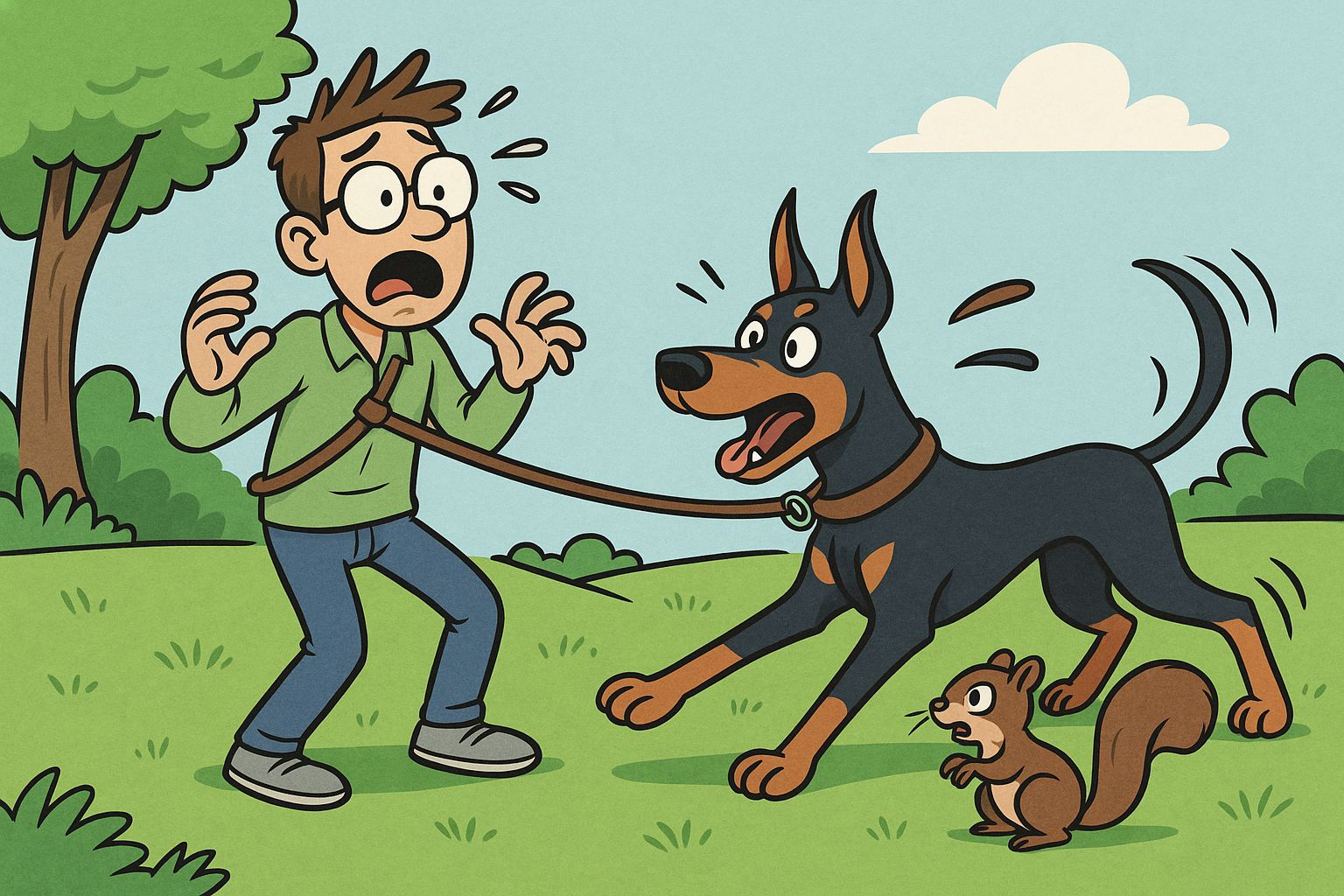
Reactivity is one of the most misunderstood and misinterpreted behavioral challenges in the dog world. Many owners are surprised when their happy-go-lucky puppy suddenly starts lunging, barking, or showing nervousness in specific situations. Some believe their dog has “become aggressive,” while others assume it’s just part of the breed. But the truth is more nuanced than that.
At Wonder Doberman, we understand that reactivity in dogs is not a personality flaw—it’s a communication issue. Dogs don’t “misbehave” out of spite. They react to what they feel, and reactivity is simply an exaggerated response to a stimulus. Whether it’s fear, excitement, frustration, or a mix of all three, reactivity can manifest in many ways and is often highly breed-dependent.
Table of Contents
What is Reactivity in Dogs?
Reactivity is when a dog has an intense, overblown reaction to a particular trigger or situation. That trigger might be another dog, a person, a moving object, or even a sound. The reaction might look like barking, lunging, growling, spinning, whining, or freezing. Some dogs escalate quickly, while others simply can’t seem to focus once their trigger is present.
Reactivity in dogs is not the same as aggression. While some reactive dogs may look aggressive, the core emotion behind their behavior is not always hostility—it could be fear, excitement, frustration, or confusion.
In simple terms, a reactive dog is a dog that struggles to stay calm in specific situations.
Why Do Dogs Become Reactive?
There are several reasons why dogs become reactive, and usually it’s not just one factor—it’s a combination:
1. Genetics and Breed Traits
Some breeds are hardwired for strong responses. Herding breeds like Australian Shepherds or Border Collies may react to movement, while working breeds like Dobermans may respond to stimulation with explosive energy or alertness. Genetics shape how a dog perceives the world.
2. Lack of Early Socialization
Puppies have critical periods during which they learn what is safe and what is threatening. If they don’t encounter various people, sounds, objects, and animals during this window (3 to 16 weeks), they may grow up unsure or fearful of new things.
3. Negative Experiences
A single traumatic or overwhelming event can cause a dog to associate a certain stimulus with danger. For instance, a dog that was attacked by another dog may become leash reactive.
4. Frustration and Overstimulation
Dogs who have high energy but lack outlets for it can become frustrated. Frustration leads to tension, and tension leads to outbursts. This is particularly common in Dobermans and other intense working breeds.
5. Handler Inconsistency
Dogs look to their humans for stability. Inconsistent reactions—sometimes punishing, sometimes ignoring—can confuse a dog and increase stress, which in turn increases reactivity.
The Different Types of Reactivity in Dogs (And How to Recognize Them)
Understanding what type of reactivity your dog has is crucial to managing and addressing it effectively. Each type comes from a different emotional state and requires a different approach.
1. Fear-Based Reactivity
Common Breeds: Australian Shepherds, Shelties, Cattle Dogs, German Shepherds
What It Looks Like:
- Barking and lunging at strangers, dogs, or unfamiliar objects
- Avoiding eye contact or retreating before the explosion
- Tail tucked, ears back, low body posture
Typical Age of Onset:
6 months to 18 months, often around adolescence
Cause:
Fear-based reactivity stems from insecurity or lack of confidence. The dog is not trying to be dominant—they’re scared and trying to make the scary thing go away.
Management & Training Tips:
- Use distance: keep your dog under their threshold
- Reward calm behavior near triggers
- Do not force interactions
- Confidence-building games and structured walks
- Avoid harsh corrections that increase fear
2. Excitement-Based Reactivity
Common Breeds: Dobermans, Labradors, Boxers, young energetic dogs
What It Looks Like:
- Barking, whining, jumping when they see other dogs or people
- Lunging with wagging tail and happy face
- Over-arousal, inability to settle
- Often misread as aggression
Typical Age of Onset:
6 months to 2 years
Cause:
These dogs simply love life! They want to greet or interact but don’t know how to express themselves appropriately. Over time, repeated pulling and frustration on leash can turn this into full-blown reactivity.
Management & Training Tips:
- Teach impulse control (sit before greeting, wait at doors, etc.)
- Use a head halter or front-clip harness for better control
- Teach “Look at That” or “Engage/Disengage” games
- Reward calm behavior around triggers
- Use structured exposure and increase expectations over time
3. Frustration-Based Reactivity (Barrier Frustration)
Common Breeds: Dobermans, Malinois, high-drive dogs
What It Looks Like:
- Barking and lunging on leash, but calm and playful off-leash
- Pacing or whining behind fences or gates
- Escalates with physical restraint (tight leash, crate)
Typical Age of Onset:
Often around adolescence (7 to 18 months), especially in dogs with drive and intelligence
Cause:
The dog sees something they want to interact with (another dog, a ball, a person) but are physically prevented from doing so. This creates tension, which explodes as reactivity.
Management & Training Tips:
- Practice neutrality: teach your dog to stay calm in the presence of triggers
- Give them an outlet: flirt pole, tug, long walks, scent games
- Structured obedience with clear expectations
- Teach leash pressure skills and self-control
- Avoid constantly putting the dog in frustrating situations
4. Protective or Territorial Reactivity
Common Breeds: Rottweilers, German Shepherds, Cane Corsos
What It Looks Like:
- Barking at strangers near home, car, or property
- Standing tall with ears forward
- May escalate to growling or blocking access
Typical Age of Onset:
1 year and older—this often surfaces with maturity
Cause:
Protective dogs react when they feel their family or territory is threatened. This is part instinct and part learned behavior. If you reward a dog for barking at strangers (even unintentionally), they’ll keep doing it.
Management & Training Tips:
- Teach a clear “quiet” cue and reward disengagement
- Crate or confine your dog when guests arrive
- Don’t allow them to patrol fences
- Practice neutrality outside the home
- Teach them that you handle threats—don’t let them take charge
5. Prey-Drive Reactivity
Common Breeds: Huskies, Dobermans, Terriers, Malinois, Shepherds
What It Looks Like:
- Fixating and lunging at small animals, bikes, joggers
- Stalking behavior before the explosion
- Inability to redirect once locked in
Typical Age of Onset:
Varies—can appear very early or emerge with maturity
Cause:
This reactivity is not emotional but instinctual. It’s part of the chase/hunt sequence. You won’t “cure” it—but you can manage it.
Management & Training Tips:
- Use a high-value recall with a long line
- Avoid off-leash areas where prey is present
- Practice impulse control games (leave it, look at me, etc.)
- Use a “watch me” command and reward early focus
- Build neutrality through structured exposure, not flooding
Breed-Specific Example: Dobermans vs Australian Shepherds
Let’s compare two popular breeds that often struggle with reactivity—Australian Shepherds and Dobermans.
Australian Shepherds
- Reactivity usually stems from fear or insecurity
- Sensitive to environmental changes and new people
- Benefit greatly from slow socialization and confidence work
- Often barky and easily startled
- Need reassurance and leadership, not harsh corrections
Dobermans
- Reactivity often comes from overexcitement or protective drive
- Very forward and impulsive
- React not to fear—but to stimulation or chaos around them
- Do well with clear rules, fair consequences, and high expectations
- Thrive on engagement—use their intelligence to your advantage
Knowing the “why” behind your dog’s reactivity will determine your “how” in fixing it.
When Does Reactivity Typically Appear?
Reactivity in dogs often surfaces in phases:
Puppyhood (8–16 weeks)
- May show mild fear or excitement, but typically manageable
- Early socialization is key to preventing future issues
Adolescence (6–18 months)
- Most reactivity begins here
- Dogs are more confident, hormonal, and impulsive
- Energy levels rise while impulse control disappears
Adulthood (2+ years)
- Patterns become fixed without intervention
- May become more severe or situational
How to Manage and Reduce Reactivity in Dogs
1. Know Your Dog’s Threshold
Every dog has a threshold – the distance at which they can see a trigger without overreacting. Work under this threshold and build tolerance over time.
2. Reward Calm Behavior
Reactivity gets attention—but calm behavior should get even more! Reward your dog when they notice a trigger and choose to remain neutral.
3. Stay Consistent
Randomly punishing or ignoring reactivity creates more stress. Be consistent. Use structure, training, and calm leadership.
4. Use Equipment Wisely
A martingale collar can help you manage your dog’s body—but your training is what changes the brain.
5. Don’t Avoid Everything
Total avoidance may help short-term, but long-term success depends on teaching your dog how to cope. Gradual exposure with positive associations builds resilience.
Balanced Training for Reactive Dogs
At Wonder Doberman, we believe in a balanced and thoughtful approach to training. That means:
- Encouraging and reinforcing positive, desirable behavior
- Gently and fairly addressing unwanted behavior
- Providing dogs with the tools, structure, and support they need to succeed
We believe it’s important to teach dogs how to cope and make good choices—not just manage their reactions. Simply ignoring challenging behavior can create confusion, while overcorrecting without guidance can lead to stress. True balance lies in helping dogs feel secure and confident while gently guiding them toward self-control and calm responses.
Final Thoughts: You Can Help Your Reactive Dog
Reactivity isn’t a life sentence. With the right understanding, tools, and approach, most reactive dogs can live calm, fulfilling lives. They may never love crowds or enjoy being rushed by strange dogs at the park—but they can learn to feel safe, trust their handler, and remain composed in daily life.
Whether your dog is reacting out of fear, frustration, excitement, or instinct—your job is to listen, lead, and guide them with confidence.
If you have a Doberman, an Australian Shepherd, or any other breed—knowing what drives their behavior is the first step toward transforming it.
Let’s give our dogs the guidance they crave and the confidence they deserve.
Have questions about your dog’s reactivity? Reach out to us at Wonder Doberman—we’re always here to help!