
The Perfect Walk With Your Dog: Structure, Freedom, and Bonding
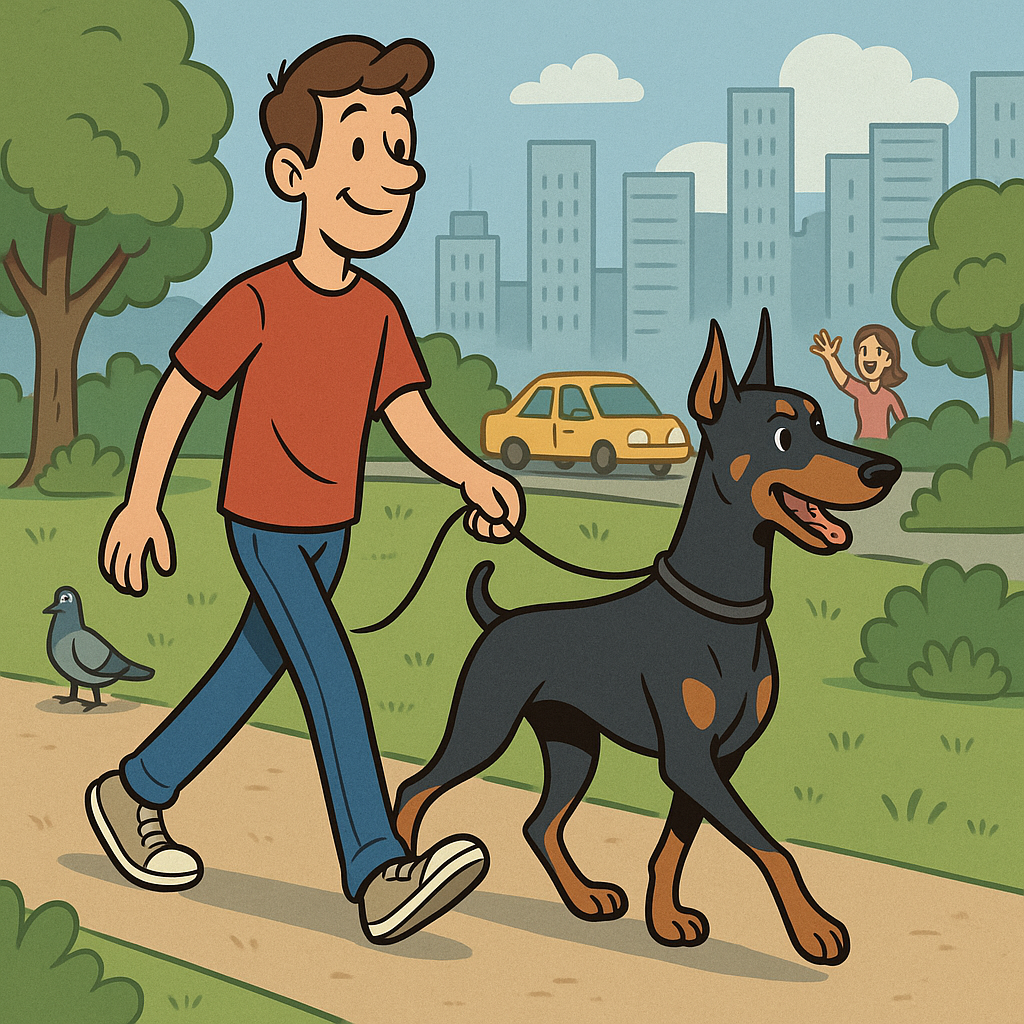
At Wonder Doberman, we train elite-level working dogs capable of competing in high-level obedience, IGP, and advanced service work. But even with all that training under their belts, we still love – and prioritize – something incredibly simple: the walk.
That’s right. Not every outing needs to be about drills, precision, or sport. Sometimes, we clip on a leash and go for a peaceful, “easy-peasy” walk.
But even this easy-peasy walk follows some very clear structure. Because contrary to popular belief, the perfect walk with your dog isn’t about letting your dog drag you down the street doing whatever it wants. Nor is it about forcing your dog to march beside you like a robot while you scroll through your phone.
The perfect walk with your dog is a shared experience. One where both the dog and the human enjoy themselves. One where boundaries exist, but freedom is given when earned. One where the leash remains loose, the energy is calm, and the connection between dog and handler is unbreakable – even in the face of squirrels.
Let’s break down what makes the perfect walk with your dog… and how to get there.
Understanding the Purpose of a Walk
Walks Are Not Just “Exercise”
Most people think the main purpose of a walk is to tire the dog out. While exercise is certainly a bonus, the walk is so much more than that.
A walk is:
- A mental workout: Your dog is exposed to sights, smells, sounds, and stimuli. Navigating all that under your leadership builds focus and confidence.
- A bonding experience: You and your dog move together, trust each other, and face the world as a team.
- An opportunity for training reinforcement: Loose leash walking, impulse control, reactivity management—all are practiced on the walk.
- A routine: Dogs love routine. A structured walk helps anchor their day and fulfill part of their need for guidance and leadership.
Walks For You vs. Walks For Your Dog
This is a huge concept people often miss.
There is a difference between:
- A “dog’s walk”: where sniffing, stopping, exploring, and marking are allowed.
- A “human walk”: where the dog is expected to walk at your pace, beside you, politely and without distractions.
BOTH walks are valid. BOTH walks can and should be part of your routine.
But the key is that you decide which walk you’re having. Your dog shouldn’t get to choose the tone and structure of the walk.
At Wonder Doberman, we switch between the two intentionally. Some walks are all about engagement, obedience, and leash skills. Others are casual and relaxed, allowing the dogs to enjoy a more natural experience while still following the rules.
Rule #1: The Leash Should Always Be Loose
This is non-negotiable.
Whether you’re letting your dog sniff the grass or doing a structured heel, the leash should never be tight.
Why Tight Leashes Are a Problem
- They create tension, both physical and emotional.
- They reinforce pulling: many dogs learn that a tight leash means “go forward.”
- They reduce communication between you and your dog. It becomes a tug-of-war, not a conversation.
- They can cause leash reactivity and aggressive behavior due to frustration or restriction.
A dog who walks on a loose leash is showing respect, attention, and trust.
How to Teach Loose Leash Walking
There are many methods out there to teach loose leash walking, and at Wonder Doberman, we’re not here to shame people for choosing what works best for them. What matters is that the dog learns the rules and the rules are enforced consistently.
Option 1: Stop-and-Go Method
If the leash tightens, stop moving. Wait until the dog looks at you, comes back, or the leash slackens – then continue. Repeat. This teaches the dog that pulling gets them nowhere.
Option 2: Turn Method
The moment the leash gets tight, change direction. Walk the other way. Do it repeatedly until your dog starts paying more attention to you.
Option 3: Balanced Training with Gentle Tools
This approach can include tools that are used correctly and thoughtfully. These tools are never meant to hurt or scare the dog, but to provide clear communication and feedback. When paired with praise and rewards, they help many dogs quickly learn how to walk calmly and safely on a loose leash.
Every dog and every owner is different, and we encourage people to use the training methods they’re most comfortable with as long as the end result is a happy, well-mannered dog and a strong human-dog relationship.
Context is Everything: Harness vs. Collar
One of the most powerful lessons we teach our dogs is the difference in context.
For example:
- Harness = Pulling is okay
- Collar = No pulling allowed
This clarity helps dogs understand what is expected of them and when. It prevents confusion and gives them a chance to thrive in different activities.
How We Use It at Wonder Doberman
- For canicross, we use purpose-made pulling harnesses. Dogs are allowed (and encouraged) to pull hard.
- For IGP or protection training, they also wear specific harnesses where pulling or drive is expected.
- For a walk? We use a martingales. Dogs know this means no pulling, period.
This context training makes a massive difference. Dogs are incredibly smart, and when given clear signals, they’ll respond accordingly. But without consistency, they get confused and push boundaries.
Should You Let Your Dog Sniff?
Yes. But with boundaries.
Sniffing is healthy. It is a dog’s primary way of exploring the world, relieving stress, and expressing natural behavior.
But it should not:
- Be the entire walk
- Be done without permission
- Result in your dog dragging you to sniff something
We often use a release command like “Go sniff!” to let the dog know they’re free to explore for a bit. Then we call them back to our side when it’s time to continue.
This balances structure and freedom beautifully.
Giving your dog a clear signal like “go sniff” makes walks much safer and more controlled. Imagine spotting a toxic plant or a dead animal crawling with parasites you definitely don’t want your dog diving in nose-first. By teaching them to wait for permission before investigating something, you protect them from danger and give yourself peace of mind, knowing your dog understands the rules and will respect them. It turns the walk into a safe, enjoyable experience for both of you.
Marking, Peeing, and Territory
This one’s tricky. Many dogs – especially males – love to mark everything in sight.
But remember:
- Marking is not just peeing. It’s a dominance behavior, a form of claiming space.
- If done excessively or on inappropriate objects (like a stranger’s driveway or someone’s flowers), it’s rude and unbalanced.
- You should control when and where your dog is allowed to mark.
At Wonder Doberman, we allow marking in designated areas, but not during structured walks unless given permission. Even our studs know their manners—they never mark inside a house or new building. They’re allowed to mark in certain outdoor areas, but always within set boundaries. They’ve been taught the rules, and they respect them proudly.
Walk Etiquette and Public Manners
Even a “fun” walk comes with responsibility. Some non-negotiable rules:
- No approaching strangers (unless invited)
- No charging other dogs, even “just to say hi”
- No barking at people, dogs, bikes, or cars
- No stealing food from the ground
We don’t let our dogs act wild just because they’re not in obedience mode. Walks are still part of the training experience, and rules still apply.
A dog who knows how to behave calmly in public is a joy to be around and a walking ambassador for its breed.
Dogs Pulling Carts or Kids: Another Contextual Task
Many people ask us: “If my dog pulls my kid in a cart, won’t it always want to pull on walks?”
Not if you teach context clearly.
Dogs at Wonder Doberman are sometimes trained to pull carts, sleds, or weights for sport or utility. But we never let them generalize that behavior to the leash.
Again, equipment matters:
- Pulling gear = time to work.
- Collar and leash = time to walk politely.
Dogs don’t confuse the two when we’re consistent. Just like a working retriever knows the difference between a training dummy and a baby toy, your dog can learn when pulling is allowed and when it’s not.
Build a Routine for the Perfect Walk with your dog!
Want to make walking a regular, positive experience? Follow these tips:
1. Walk Often
Consistency is key. Walks should happen daily—not just for physical activity but for mental fulfillment and bonding.
2. Use Clear Start and Stop Cues
Say something like “Let’s walk!” to begin. Use “Free!” or “Go sniff!” to release your dog. This builds clarity and structure.
3. Bring Rewards
Use praise, treats, or even toys to reward great behavior. Mark good choices, reinforce calm, and make walks enjoyable.
4. Vary the Environment
Take your dog to new places. Vary the route. Go on nature trails, into town, or around quiet neighborhoods. Exposure is good for the mind.
5. Use Rest Periods
If your walk is longer, give your dog a chance to rest and observe. Sit on a bench and just exist together. Let your dog watch the world and relax near you.
When Walks Go Wrong: Common Mistakes to Avoid
Even experienced dog owners sometimes make mistakes. Here’s what to avoid:
- Letting the dog dictate pace or direction
- Ignoring constant leash pulling
- Letting dogs bark at strangers without correction
- Using retractable leashes in busy areas
- Letting dogs meet nose-to-nose with every dog they see
- Checking your phone the entire time
Remember: walking is a two-way street. It’s about you and your dog, not just one of you.
At Wonder Doberman, Even Perfect Dogs Get to Be Dogs
We often get asked, “Do your dogs ever just relax?”
Absolutely.
We train hard. We play hard. But we also walk.
We have walks where we heel perfectly through town. We also have walks where our dogs get to sniff the trees, stroll through the woods, or enjoy the sunset.
It’s all about balance.
Training is important. But so is joy. The perfect walk combines both.
Final Thoughts: Make the Walk Worthwhile
To sum it up:
- Decide what kind of walk you’re having.
- Set clear expectations.
- Keep the leash loose.
- Allow freedom when earned.
- Enforce boundaries calmly and fairly.
- Make it enjoyable for both of you.
Whether you’re walking a brand-new puppy or a titled champion, the walk remains one of the most important daily rituals you can share.
So clip that leash, take a deep breath, and step into the world together.
The perfect walk with your dog is waiting.