
Albinism in Dogs: The Truth About White Dobermans and Why Ethical Breeders Avoid This Genetic Mutation
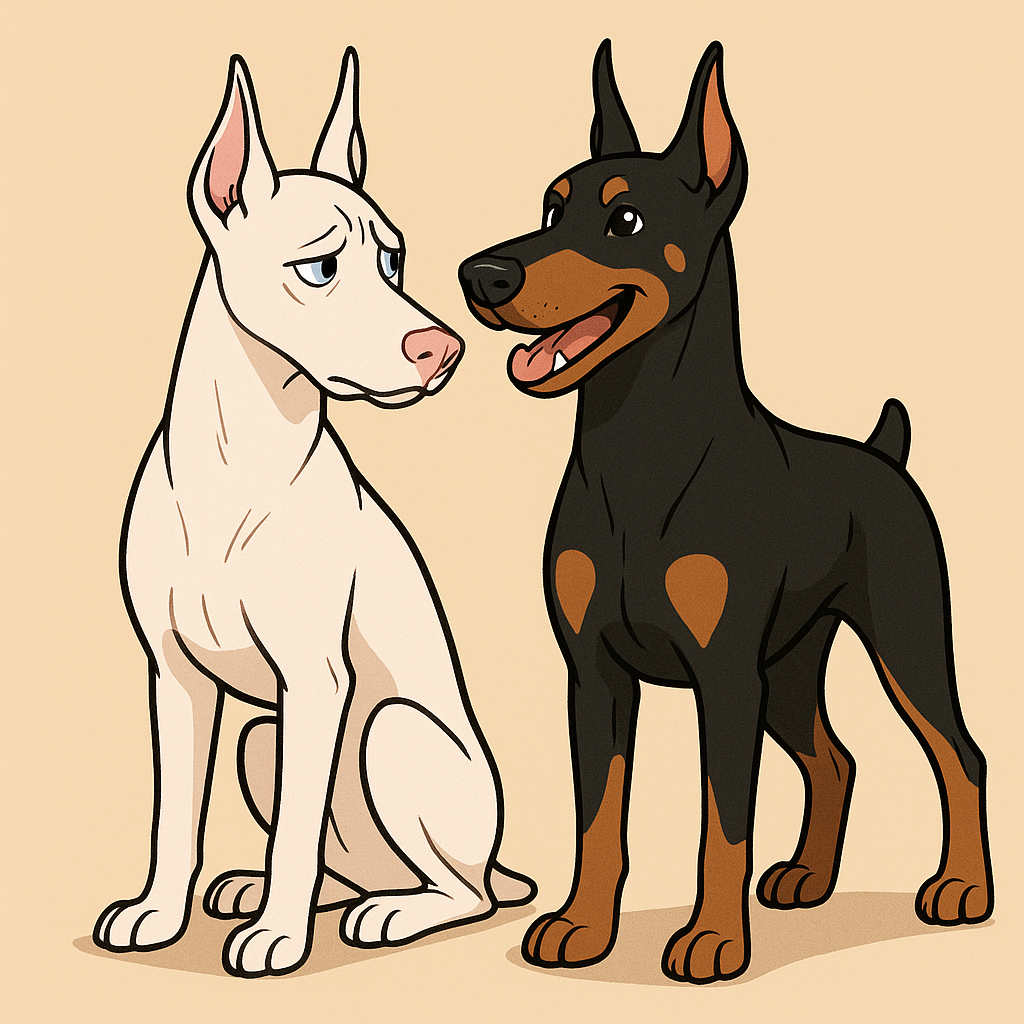
Albinism is a rare and serious genetic condition that affects multiple species, including dogs. While the term “albino” is often misused to describe unusually pale dogs, true albinism involves a complete or near-complete lack of melanin — the pigment responsible for coloration in skin, hair, and eyes. This condition brings a range of health problems, increased risks for the dog, and major concerns for breeders and veterinarians.
In this in-depth post, we will explore what albinism is, the complications associated with albino or white Dobermans in particular, how reputable breeders work to prevent it, and why no responsible dog breeding association accepts albinism as a breed standard. Whether you’re a Doberman lover, a prospective owner, or simply passionate about dog welfare, this post will give you all the critical information you need.
Table of Contents
What is Albinism in Dogs?
Albinism is caused by genetic mutations that inhibit the production of melanin. Dogs with albinism have little to no pigment in their fur, skin, or eyes. There are two main types:
- Tyrosinase-negative (complete) albinism – where the body produces absolutely no melanin. This is considered “true” or “complete” albinism.
- Tyrosinase-positive (partial) albinism – where a small amount of melanin is produced, resulting in very pale coloring but not complete absence of pigment.
In dogs, this condition is incredibly rare, and its inheritance patterns vary. Albinism must be inherited recessively — meaning the dog needs two copies of the mutated gene (one from each parent) to display the condition. This means that both parents must either be albinos themselves or be carriers of the recessive gene.
Albinism in Dobermans: The White Doberman Controversy
When most people hear about albino dogs, one breed tends to come up again and again: the white Doberman.
The First Albino Doberman
The controversy dates back to 1976, when the first known albino Doberman, named “Padula’s Queen Sheba,” was born. Despite not being part of any breed improvement plan and displaying a number of health and behavioral issues, Queen Sheba was bred repeatedly. Many white Dobermans today can trace their lineage back to her. This founding of an “albino line” within the Doberman breed was never part of any official or responsible breeding program.
These dogs are not true albinos in the strictest medical sense (they often still produce a very small amount of pigment), but for all practical purposes, they suffer many of the same health issues. Today, these dogs are often referred to as “Z-factored Dobermans” — a term we’ll explain shortly.
Z-Factor and DNA Testing
The Doberman Pinscher Club of America (DPCA) and American Kennel Club (AKC) have taken a strong stance on preventing the breeding of albino Dobermans.
In cooperation with veterinary geneticists, a Z-factor designation was introduced. This designation is used by the AKC to flag any Doberman whose lineage can be traced back to Queen Sheba. These dogs are automatically marked with a “Z” on their registration paperwork, alerting breeders and buyers to the presence of albino genes in their pedigree.
DNA Testing for Albinism
Today, ethical breeders use genetic testing to determine whether their dogs carry the gene for albinism. The test identifies the SLC45A2 mutation — the same gene responsible for albinism in other animals and humans. This DNA test is widely available and highly recommended, especially in lines that may have undocumented ancestors.
At Wonder Doberman, we test all of our breeding dogs and provide proof of DNA health screenings to each family. We believe transparency is the backbone of ethical breeding.
Health Complications in Albino Dogs
Breeding for albinism, or failing to prevent it, is not just a cosmetic issue. It’s an ethical one because of the serious health and behavioral risks associated with albinism in dogs.
1. Eye Problems
- Photophobia (sensitivity to light): Without melanin in the eyes, albino dogs often squint or avoid bright areas.
- Poor vision: Many albino dogs have trouble seeing in daylight or low light, and depth perception can be compromised.
- Nystagmus: Uncontrolled eye movement can be present in some individuals.
2. Skin and Sun Sensitivity
Melanin helps protect skin from harmful UV radiation. Albino dogs, therefore, are at high risk of sunburn and skin cancer, including:
- Squamous cell carcinoma
- Hemangiosarcoma
These dogs often need to wear dog-safe sunscreen, special clothing, or be restricted to shady areas.
3. Increased Risk of Cancer
Due to lack of pigmentation and UV protection, albino dogs are significantly more prone to tumors, especially around the eyes, nose, and belly where the skin is most exposed.
4. Immune System Compromise
Some studies and anecdotal reports suggest that albino dogs may have a weaker immune system, although this may also be related to the overbreeding and lack of genetic diversity in lines where albino traits are perpetuated.
5. Neurological and Behavioral Issues
- Fearfulness and anxiety
- Poor social responses
- Aggression due to impaired vision
- Sensory confusion or overstimulation in bright environments
In many cases, the behavior of albino dogs can mimic that of visually impaired or deaf dogs, even if hearing is normal.
Why Albino Dogs Are Not Breed Standard
Every major dog breed association — including the AKC, CKC, UKC, and FCI — recognizes albinism as a disqualifying fault or undesirable mutation. Here’s why:
1. Appearance Standards
Breed standards are written to describe the ideal example of the breed. Albino dogs fall far outside of this, with their:
- Pink noses and eyelids
- Blue to pink eyes
- Washed-out, cream-colored coats
This is not a variation — it’s a mutation.
2. Health Implications
Promoting dogs with known health liabilities for the sake of “uniqueness” is irresponsible. Ethical breeding prioritizes:
- Function
- Health
- Temperament
- Longevity
3. Lack of Working Capability
Dobermans were bred for protection, obedience, and working roles. Albino dogs are often visually compromised, mentally fragile, and easily overwhelmed. Their ability to fulfill breed purpose is reduced, if not eliminated.
4. No Place in Improvement Programs
Reputable breeders focus on preserving and improving the breed — not on promoting rare colors that come with a host of medical and ethical concerns. Albinism is not a trait that helps a breed. It’s a trait we must work to avoid.
Why Ethical Breeders Never Intentionally Produce Albinos
1. Welfare Comes First
Albino dogs suffer. Their quality of life is often reduced by a range of physical and psychological issues. Breeding a dog knowing you are increasing the likelihood of these problems is unethical.
2. The Public Is Misled by Appearance
Some buyers are attracted to white or “rare” Dobermans without understanding the costs. Unscrupulous breeders may even market them as “rare whites” or “champagne Dobermans” and charge premium prices.
These are not rare treasures. They are genetic mistakes perpetuated by ignorance or greed.
3. It Damages the Breed’s Reputation
When the general public sees an anxious, unhealthy, or nearly blind Doberman, they assume this is what all Dobermans are like. That’s not only unfair — it’s a tragedy for the breed’s future.
4. Preserving Genetic Health
Albino or white Dobermans trace back to a single foundation female. That means the gene pool is narrow, and inbreeding is rampant among “white Dobermans.” More inbreeding leads to more health issues, more behavioral problems, and more heartbreak for owners.
What You Can Do As a Dog Lover or Potential Buyer
- Never support breeders selling albino or white Dobermans — even if they look cute or “unique.”
- Ask for DNA test results before buying a puppy from any breeder.
- Educate yourself and others on the risks of albino dogs.
- Report unethical breeders to local breed clubs or authorities.
- Support breed preservation efforts that prioritize health, temperament, and functionality.
Check our post on how to choose a reputable breeder here
What Wonder Doberman Does
At Wonder Doberman, we believe in health-first breeding. That’s why:
- We DNA test all our dogs for the albino gene (SLC45A2).
- We do not and will never breed Z-factored Dobermans.
- We educate our clients about breed health and ethics.
- We support responsible ownership, not trends.
Our commitment is to the Doberman breed as it was meant to be: strong, elegant, healthy, and driven — not fragile and photosensitive.
Albinism in Other Dog Breeds
While most associated with Dobermans, albinism can occur in other breeds. These include:
- Collies
- Great Danes
- Boxers
- German Shepherds
- Labrador Retrievers
- Pekingese
- Beagles
- Schnauzers
However, in nearly all cases, albino individuals are rare, unhealthy, and ethically discouraged from breeding.
AKC’s Position on Albino Dobermans
The American Kennel Club (AKC), along with the Doberman Pinscher Club of America (DPCA), considers the albino gene a disqualifying trait. You can read more from the DPCA here:
Albino or white Dobermans are not eligible for conformation showing and are discouraged from participating in most breed advancement programs.
Final Thoughts
Albinism in dogs is a genetic condition with serious implications — and nowhere is this more evident than in Dobermans. While some may be drawn to their striking appearance, it’s vital to remember that behind the pale coat and blue eyes lies a vulnerable animal more prone to suffering.
Ethical breeders work to eliminate this mutation through education, testing, and careful pairings. At Wonder Doberman, we stand with this mission. We believe that love for the breed means preserving its integrity, not compromising it for aesthetics.
Disclaimer
This article is intended for educational purposes only. It is not a substitute for professional veterinary or genetic counseling. If you suspect your dog has a genetic disorder or are considering breeding, consult a qualified veterinarian or geneticist. Wonder Doberman does not support the breeding of albino or Z-factored dogs and urges all dog lovers to prioritize animal welfare over appearance.